Get in touch with JINYOU Cable Company

-
CALL US +86 181 1623 2461
-
EMAIL sales@jinyougroup.cn
ISO Certified
Building Wire
Copper Building Wire — BV, BVR, ZR and NH Series | Jinyou Cable
Quotes are returned within 24 hours on business days. Small-batch orders ship in 10-20 business days. 300/300 V, 300/500 V and 450/750 V, 0.5-400 mm² across the family, per-series ranges in the matrix.
PVC insulated building wire is ordered from five things at once, and getting any one of them wrong turns the reel into scrap on site:
- Designation — BV, BVR, BVV, BVVB, RVS, or a ZR-prefixed or NH-prefixed variant
- Voltage grade — in mm², because the AWG conversion is never exact
- Voltage grade — 300/300 V, 300/500 V or 450/750V
- Colour set — fixed by standard for protective and neutral conductors
- Reel length — a cost driver, not an afterthought
Every construction here is a copper wire product for AC distribution inside residential, commercial and industrial buildings. It is not a power cable for distribution outside the building envelope, and that boundary is set out near the end of this page.
Voltage grades
300/300 V, 300/500 V and 450/750 V
Single-core range
1.5-400 mm² at 450/750 V
Series
Plain, stranded twin, flame-retardant ZR, fire-resistant NH, nylon-sheathed, sheathed flexible, installation wire
Minimum order
100 meters per size and colour
Lead time
10-20 business days small batch, 20-30 business days production
Quotation
Returned within 24 hours on business days
Who you are buying from: Jinyou Cable has been manufacturing in Shanghai since 2006. Public company, NEEQ 830994. OEM and ODM to your specification, including cable parameter adjustment. After-sales response 7×24.
Send Your Building Wire Specification
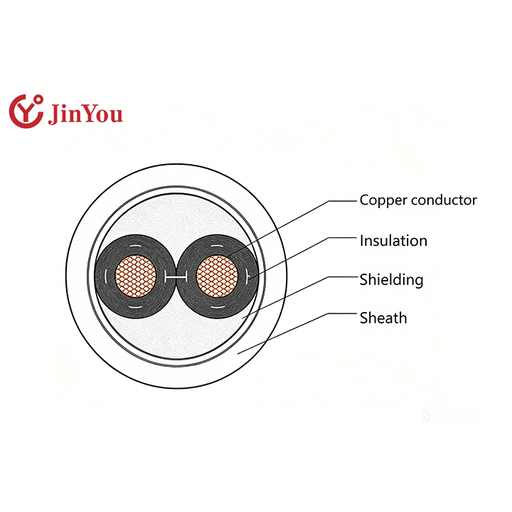
450/750V
Max Voltage Grade
400mm²
Single-core Range
24 Hrs
Quote Turnaround
7×24
After-Sales Support
How this page answers the quality question
Quality on a building wire order is settled by a number, not by an adjective. This page publishes the conductor resistance limits a reel has to meet, the test methods that decide them, and the routine test record that travels with the order. A high quality claim is not checkable; a resistance limit is.
The Jinyou Building Wire Series and What Each Designation Constrains
A GB designation is not a product name. Every letter constrains one physical property, and the order of the letters is fixed. Read left to right and the code tells you the conductor, the insulation, the sheath and the shape before you open a datasheet.
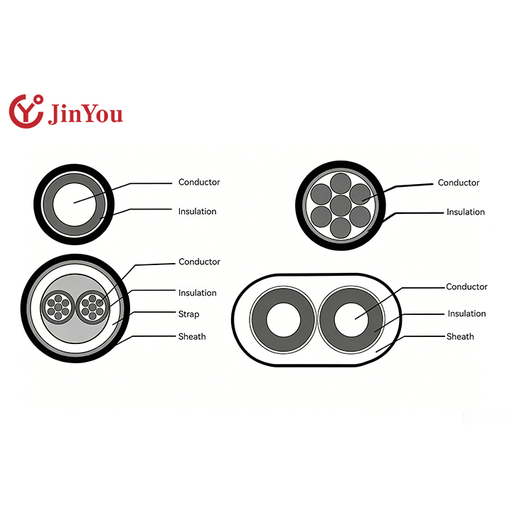
Building Wire Designation Decoder
| Letter position | What it constrains | Example |
|---|---|---|
| B (leading) | Fixed-wiring family: the wire is intended for installation, not for appliance cords | BV, BVR, BVV |
| V (first) | Insulation material is PVC | BVV |
| V (second) | A PVC sheath is present over the insulation | BVVR |
| R | Conductor is flexible, IEC 60228 Class 5, rather than solid | BVR |
| B (trailing) | Flat construction rather than round | BVVB |
| S | Cores are twisted together | RVS |
| L | Conductor is aluminium rather than copper | ZR-BLV |
| N (in BVN) | A nylon jacket is applied over the PVC insulation | BVN (FVN) |
| ZR- (prefix) | Flame-retardant characteristic code | ZR-BV |
| NH- (prefix) | Fire-resistant characteristic code | NH-BV |
The letter readings above follow GB/T 5023 and IEC 60227, which are the standards that define the system. Where a supplier catalogue and the standard disagree about what a letter means, the standard governs.
Reading a complete designation
A designation on its own is only half a specification. Take a line item written ZR-BVVB 3 × 2.5 and it decodes field by field:
| Field | Reads as | What it fixes |
|---|---|---|
| ZR- | Flame-retardant characteristic code | The fire-performance property required, which still needs its combustion standard and class stated |
| B | Fixed-wiring family | Installation cable, not an appliance cord |
| V | PVC insulation | The insulation material, and with it the 70 °C conductor temperature |
| V | PVC sheath | The cable can be run without a conduit |
| B | Flat construction | Sits under plaster or against a surface |
| 3 × | Three cores | Line, neutral and protective conductor in one cable |
| 2.5 | 2.5 mm² nominal cross-section | Sets the acceptance limit at 7.41 Ω/km for a Class 1 or Class 2 conductor |
Two things are still missing from that line item, and both belong on the purchase order: the voltage grade and the colour set. Neither is implied by the code.
Where the neighbouring designations differ
| Designation | Conductor | Sheath | Shape | The one difference from its neighbour |
|---|---|---|---|---|
| BV | Solid, IEC 60228 Class 1 | None | Round, single core | The baseline. Stiff, holds its form in a conduit, terminates cleanly under a screw. |
| BVR | Flexible, Class 5 | None | Round, single core | Same wire as BV with a flexible conductor, for fixed routes that need bending rather than pushing. |
| RV | Flexible, Class 5 | None | Round, single core | The same conductor class as BVR, specified for connecting equipment and panels rather than for the building’s fixed wiring. |
| BVV | Solid or stranded | PVC | Round, multi-core | BV plus a sheath and more cores, so it can be run without a conduit. |
| BVVB | Solid or stranded | PVC | Flat, 2 or 3 cores | BVV made flat, so it sits under plaster or against a surface without a bulge. |
| RVS | Flexible, Class 5 | None | Twisted pair | Two cores twisted together instead of laid parallel, at the lowest 300/300 V grade. |
Seven series: the types of building wire and where each one belongs
Plain series
BV, BVR, BVV, BVVB and RV. Solid, stranded or flexible copper under PVC insulation, unsheathed for conduit or sheathed for surface and buried-in-plaster runs.
RVS stranded twin: lighting drops and bell wire circuits
Two twisted cores at 300/300 V for lighting drops and bell circuits, where the pair has to stay together through a tight route.
ZR- flame-retardant
ZR-BV, ZR-BVR, ZR-BVV, ZR-BVVB and the aluminium-conductor ZR-BLV, ZR-BLVV and ZR-BLVVB.
NH- fire-resistant
NH-BV, NH-BVY and NH-BVVB. A different property from flame retardancy, measured by a different test family — the distinction is set out below.
BVN (FVN) nylon-sheathed
A nylon jacket over the PVC insulation, 0.5-16 mm², for pulls where abrasion and oil resistance matter. BYN (FYN) is the polyethylene-insulated variant.
RVV, RVVP and RVVSP
Sheathed flexible constructions for equipment connection, with RVVP and RVVSP adding a shield. Published by name; specification confirmed per enquiry.
AV installation wire, and the only 90 °C option in the family
AV, AVR, AVRB, AVRS, AVVR, AV-90 and AVA-90 are PVC insulated installation wires at 300/300 V. They carry the only raised temperature ratings Jinyou publishes for this family, which matters if you are arriving from a 90 °C specification.
Single-Core and Multi-Core Construction: Conductor Class and Insulation Routes
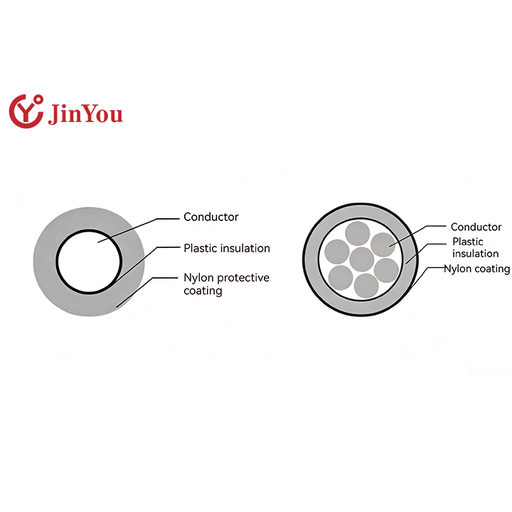
A single core cable is one conductor inside one layer of insulation, and everything else in this family is a variation on how that conductor is built. Conductor class is the specification line that decides how the wire behaves in your hands. IEC 60228 defines it, and it is independent of the designation letters — you can order the same nominal cross-section in three different classes and get three different cables.
Class 1 — solid
One wire per conductor. Pushes through a conduit without collapsing and seats firmly under a terminal screw. Least forgiving of repeated bending.
Class 2 — stranded
Seven wires or more, depending on size. Bends around obstructions without kinking while keeping the same electrical acceptance limit as Class 1.
Class 5 — flexible
Many fine wires, with the maximum individual wire diameter capped by the standard. For panel wiring, equipment tails and anywhere the cable will be moved during installation.
Conductor class across BV, BVR and RV: solid, stranded and flexible
The received wisdom is that flexibility costs you electrically. In the building wire range that is not what the standard says.
| Property | Class 1 solid — BV | Class 2 stranded — BV under type 60227 IEC 01, harmonised H07V-R | Class 5 flexible — BVR and RV, harmonised H07V-K |
|---|---|---|---|
| Published range | BV 1.5-400 mm² at 450/750 V | The same 60227 IEC 01 type admits it; confirmed per enquiry | BVR 2.5-70 mm² at 450/750 V, RV confirmed per enquiry |
| Maximum resistance at 20 °C, 2.5 mm² | 7.41 Ω/km | 7.41 Ω/km | 7.98 Ω/km |
| Maximum resistance at 20 °C, 10 mm² | 1.83 Ω/km | 1.83 Ω/km | 1.91 Ω/km |
| Maximum resistance at 20 °C, 50 mm² | 0.387 Ω/km | 0.387 Ω/km | 0.386 Ω/km |
| Conductor temperature | 70 °C | 70 °C | 70 °C |
| Where it earns its place | Conduit runs, screw terminals, long straight pulls | Larger sizes, where a solid conductor stops being manageable to pull and dress | Fixed routes with bends, distribution boards, equipment tails, anything handled repeatedly |
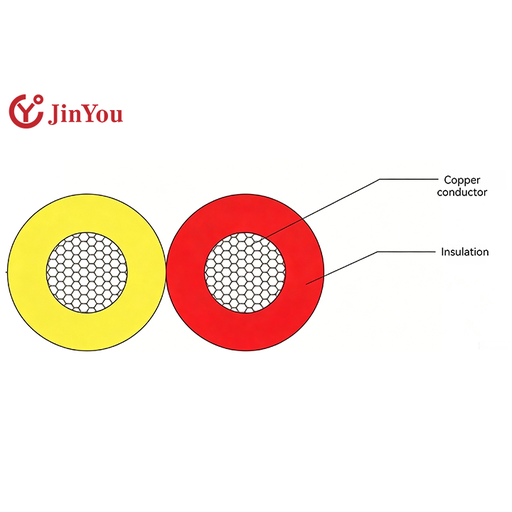
Two things in that table are worth pausing on. Class 1 and Class 2 share the same acceptance limit all the way to 150 mm², so stranding a conductor costs you diameter and buys you bend performance without costing resistance, and at 50 mm² the Class 5 limit is fractionally lower than both.
The common assumption is wrong: flexible is not always the electrically weaker choice in this range.
The trade-off is dimensional and mechanical, and unlike a resistance penalty it shows up in conduit fill and termination rather than in volt drop.
Copper or aluminium
The ZR-BLV, ZR-BLVV and ZR-BLVVB designations carry an aluminium conductor, marked by the L in the code. Aluminium changes three things at once and the trade is rarely only about price.
- A larger cross-section is needed to reach the same conductance, so conduit fill and bending space both go up.
- Terminations must be rated for aluminium, and the preparation is different.
- The published aluminium range is narrower than the copper range: 2.5-400 mm² on ZR-BLV, 2.5-10 mm² on the sheathed aluminium constructions.
Flame-Retardant (ZR), Fire-Resistant (NH) and Sheathing Options
ZR and NH are the two most misread prefixes in the whole designation system, and the mistake is expensive: they describe different properties, verified by different test families, for different jobs.
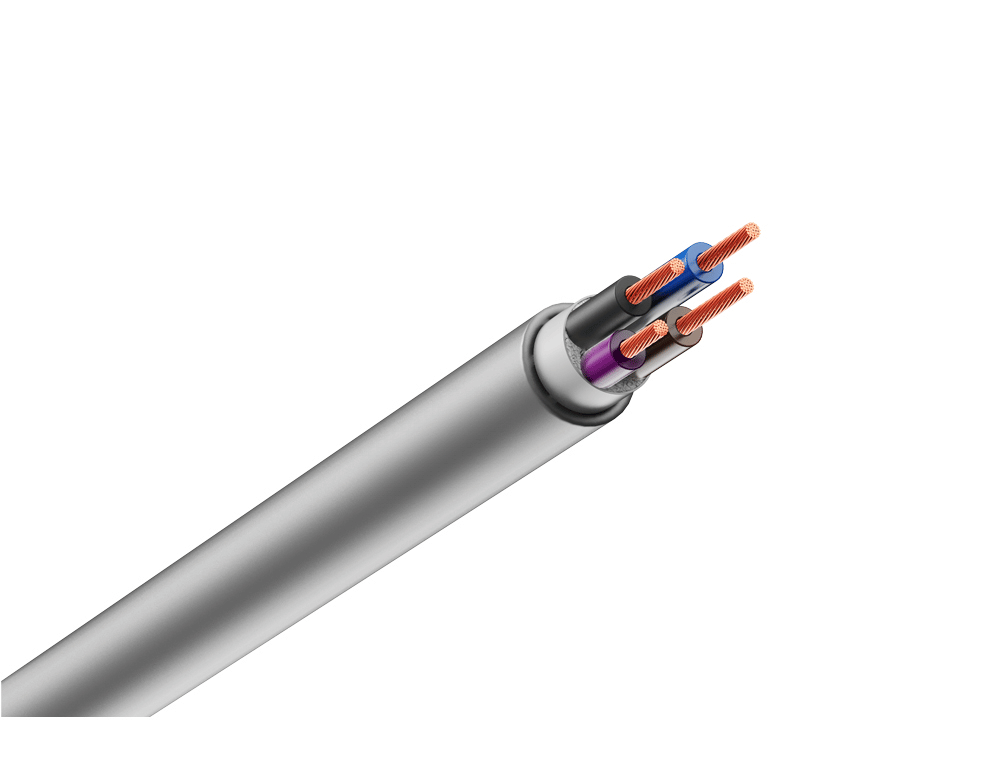
Flame retardant — ZR
The concern is fire spreading along the cable route. The relevant test family measures flame propagation on vertically mounted samples: IEC 60332-3-24, for example, is a type-approval test on bunched cables at Category C, defined by a nominal non-metallic volume of 1.5 L/m and 20 minutes of flame application, assessed by how far the damage extends.
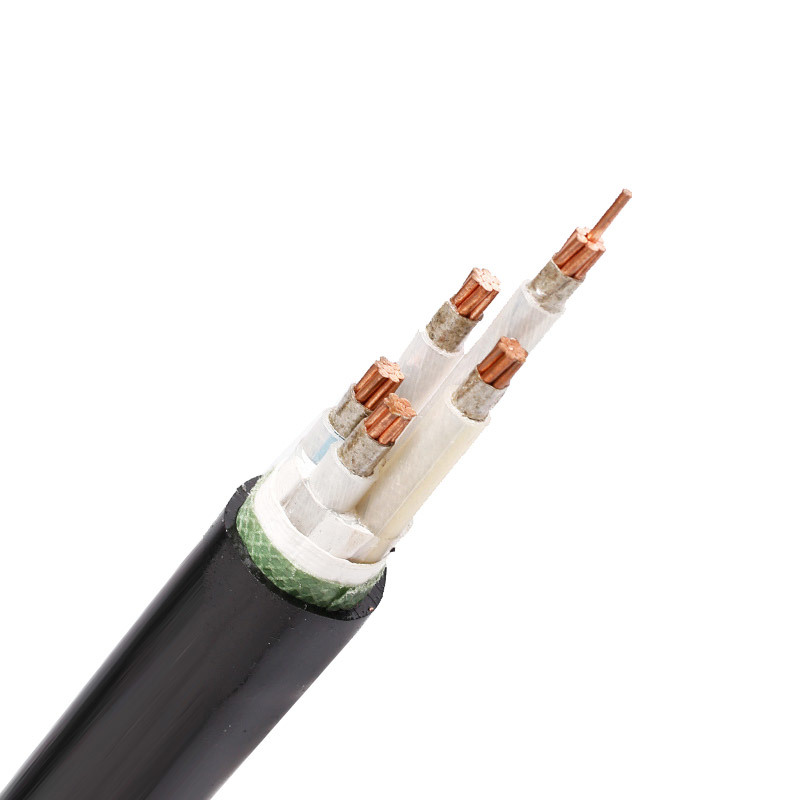
Fire resistant — NH
The concern is the circuit continuing to work during a fire. That is a different test family: IEC 60331-2 checks circuit integrity under fire with mechanical shock at not less than 830 °C, for cables rated up to 0.6/1.0 kV and not exceeding 20 mm overall diameter.
A prefix on its own is not a test result
Under the GB framework the flame-performance characteristics of a wire are governed by their own standards — GB/T 19666, the general rules for flame retardant and fire resistant cables, and GB 31247 — separately from the product standard that defines the wire itself. Within that framework the characteristic codes have defined meanings, with Z denoting single-cable flame retardance and ZA to ZD denoting bunched-cable classes A to D.
A complete flame-performance representation is five things
Which means the useful unit is not the prefix on its own:
- the characteristic code
- the cable model
- the specification
- the combustion standard number
- the product standard number
So the useful question on an enquiry is not whether a wire is called ZR. It is which of the two properties the project needs, and which combustion standard and class the specification is written against. State that and the offer can be built to it.
Circuit types and the designation that fits
- Lighting and general socket circuits in conduit take BV solid on straight runs, and BVR where the route bends.
- Distribution board and panel wiring takes RV or BVR, because the conductor is handled repeatedly during installation.
- Surface-run branch circuits take BVV round or BVVB flat, so no conduit is required.
- Lighting drops and bell circuits take RVS twisted pair at 300/300 V.
- Circuits carrying a stated fire-performance requirement take ZR or NH, specified with the combustion standard and class as set out above.
- Appliance and equipment tails take RVV sheathed flexible, or RVVP where a screen is required.
Sheathing, and what each option is for
| Construction | Designation | Where it belongs |
|---|---|---|
| Unsheathed | BV, BVR, RV | Inside conduit or trunking, where the containment is the mechanical protection |
| PVC sheathed, round | BVV, ZR-BVV | Surface runs and multi-core drops without a conduit |
| PVC sheathed, flat | BVVB, ZR-BVVB | Under plaster and against surfaces, where a round profile would show |
| Nylon jacketed | BVN (FVN) | Long conduit pulls and locations with oil or abrasion exposure |
| Shielded flexible | RVVP, RVVSP | Equipment connection where the circuit needs a screen |
Building Wire Specification Matrix
Building wire types and building wire sizes are the two questions a specification has to settle before anything else, so both are in one table. Every row below is a designation Jinyou publishes with a voltage grade, a core count and a cross-section range. Models published by name only are named in the capability block above and carry no numeric cells here, because inventing the cells would defeat the purpose of the table.
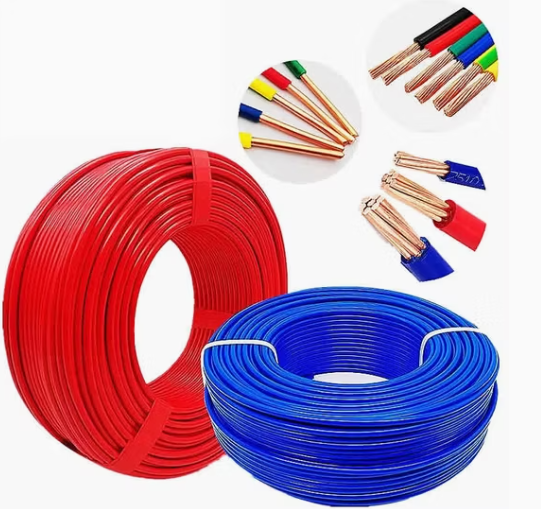
| Designation | Conductor | Sheath | Rated voltage Uo/U | Cores | Nominal cross-section | Nearest AWG at the low end | Common applications |
|---|---|---|---|---|---|---|---|
| BV | Copper, solid | None | 300/500 V | 1 | 0.75-1 mm² | 1 mm² ≈ 17 AWG (1.04 mm², +4%) | Light branch circuits in conduit |
| BV | Copper, solid | None | 450/750 V | 1 | 1.5-400 mm² | 1.5 mm² ≈ 16 AWG (1.31 mm², −13%) | Fixed wiring, conduit runs, sub-mains |
| BVR | Copper, flexible Class 5 | None | 450/750 V | 1 | 2.5-70 mm² | 2.5 mm² ≈ 14 AWG (2.08 mm², −17%) | Fixed wiring on routes that bend |
| BVV | Copper, solid/stranded | PVC | 300/500 V | 2, 3, 4, up to 5 | 0.75-10 mm² | 4 mm² ≈ 12 AWG (3.31 mm², −17%) | Surface multi-core runs without conduit |
| BVVB | Copper, solid/stranded | PVC, flat | 300/500 V | 2, 3 | 0.75-10 mm² | 6 mm² ≈ 10 AWG (5.26 mm², −12%) | Under plaster and against surfaces |
| RVS | Copper, flexible | None, twisted pair | 300/300 V | 2 | 0.5-6 mm² | 0.5 mm² ≈ 20 AWG (0.52 mm², +4%) | Lighting drops, bell circuits |
| NH-BV | Copper | None | 450/750 V | 1 | 2.5-400 mm² | 10 mm² ≈ 8 AWG (8.37 mm², −16%) | Circuits with a fire-resistance requirement |
| NH-BVY | Copper | PVC, round | 300/500 V | 1, 2, 3, 4, 5 | 2.5-35 mm² | 16 mm² ≈ 6 AWG (13.3 mm², −17%) | Sheathed fire-resistant runs |
| NH-BVVB | Copper | PVC, flat | 300/500 V | 2, 3 | 2.5-10 mm² | 2.5 mm² ≈ 14 AWG (2.08 mm², −17%) | Flat fire-resistant surface runs |
| Designation | Conductor | Sheath | Rated voltage Uo/U | Cores | Nominal cross-section | Nearest AWG at the low end | Common applications |
|---|---|---|---|---|---|---|---|
| ZR-BV | Copper, solid | None | 300/500 V & 450/750 V | 1 | 0.75-1 & 1.5-400 mm² | 25 mm² ≈ 3 AWG (26.7 mm², −6%) | Flame-retardant fixed wiring |
| ZR-BVR | Copper, flexible Class 5 | None | 450/750 V | 1 | 2.5-400 mm² | 35 mm² ≈ 2 AWG (33.6 mm², +4%) | Flame-retardant routes that bend |
| ZR-BLV | Aluminium | None | 450/750 V | 1 | 2.5-400 mm² | 50 mm² ≈ 1/0 AWG (53.5 mm², −7%) | Flame-retardant runs where aluminium is specified |
| ZR-BVV | Copper | PVC | 300/500 V | 1 | 2.5-10 mm² | 4 mm² ≈ 12 AWG (3.31 mm², −17%) | Sheathed flame-retardant runs |
| ZR-BLVV | Aluminium | PVC | 300/500 V | 1 | 2.5-10 mm² | 6 mm² ≈ 10 AWG (5.26 mm², −12%) | Sheathed flame-retardant aluminium runs |
| ZR-BVVB | Copper | PVC, flat | 300/500 V | 2, 3 | 0.75-10 mm² | 10 mm² ≈ 8 AWG (8.37 mm², −16%) | Flat flame-retardant surface runs |
| ZR-BLVVB | Aluminium | PVC, flat | 300/500 V | 2, 3 | 2.5-10 mm² | 2.5 mm² ≈ 14 AWG (2.08 mm², −17%) | Flat flame-retardant aluminium runs |
| BVN (FVN) | Copper | Nylon over PVC | Confirmed per enquiry | 1 | 0.5-16 mm² | 16 mm² ≈ 6 AWG (13.3 mm², −17%) | Long conduit pulls, oil and abrasion exposure |
| Nominal cross-section | Class 1 solid | Class 2 stranded | Class 5 flexible |
|---|---|---|---|
| 0.5 mm² | 36.0 Ω/km | 36.0 Ω/km | 39.0 Ω/km |
| 0.75 mm² | 24.5 Ω/km | 24.5 Ω/km | 26.0 Ω/km |
| 1.5 mm² | 12.1 Ω/km | 12.1 Ω/km | 13.3 Ω/km |
| 2.5 mm² | 7.41 Ω/km | 7.41 Ω/km | 7.98 Ω/km |
| 4 mm² | 4.61 Ω/km | 4.61 Ω/km | 4.95 Ω/km |
| 6 mm² | 3.08 Ω/km | 3.08 Ω/km | 3.30 Ω/km |
| 10 mm² | 1.83 Ω/km | 1.83 Ω/km | 1.91 Ω/km |
| 16 mm² | 1.15 Ω/km | 1.15 Ω/km | 1.21 Ω/km |
| 25 mm² | 0.727 Ω/km | 0.727 Ω/km | 0.780 Ω/km |
| Nominal cross-section | Class 1 solid | Class 2 stranded | Class 5 flexible |
|---|---|---|---|
| 35 mm² | 0.524 Ω/km | 0.524 Ω/km | 0.554 Ω/km |
| 50 mm² | 0.387 Ω/km | 0.387 Ω/km | 0.386 Ω/km |
| 70 mm² | 0.268 Ω/km | 0.268 Ω/km | 0.272 Ω/km |
| 95 mm² | 0.193 Ω/km | 0.193 Ω/km | 0.206 Ω/km |
| 120 mm² | 0.153 Ω/km | 0.153 Ω/km | 0.161 Ω/km |
| 150 mm² | 0.124 Ω/km | 0.124 Ω/km | 0.129 Ω/km |
| 185 mm² | 0.101 Ω/km | 0.0991 Ω/km | 0.106 Ω/km |
| 240 mm² | 0.0775 Ω/km | 0.0754 Ω/km | 0.0801 Ω/km |
| 400 mm² | 0.0465 Ω/km | 0.0470 Ω/km | 0.0486 Ω/km |
Conductor temperature. The long-term conductor temperature is 70 °C across the fixed-wiring series above, which is the PVC figure IEC 60227 and GB/T 5023.3 carry. The AV installation wires are a separate 300/300 V family and are rated separately: we rate AV-90 and AVA-90 at 90 °C, and we rate AV-90 and AVR-90 at 105 °C only under the published condition — an environment that prevents thermoplastic flow and permits a reduction in insulation resistance, on a shortened total working time.
Cross-section conversion. Metric and AWG series do not coincide, so every conversion above gives the nearest AWG size and the area difference. A nominal match is not an equivalence, and the difference runs to 17 % at the sizes most often substituted.
Conductor acceptance limits
Maximum conductor resistance at 20 °C for plain annealed copper, from IEC 60228. This is the number your incoming inspection can be written against.
Values are maximum permitted resistance under IEC 60228, applied to the conductor in the finished cable, with the standard’s Annex B correction factors applied when the measurement temperature is not 20 °C. They are the acceptance limit the wire is built to, and the edition in force is stated on the routine test record issued with the order.
Core colour identification
Colour is a specification line because the rules are fixed by standard, not by preference. IEC 60445 — which absorbed the former IEC 60446 in 2010 — sets them out.
Green-and-yellow is used always and exclusively for the protective conductor, and on any 15 mm length one of the two colours covers between 30 % and 70 % of the surface.
A neutral or midpoint conductor is identified blue, preferably light blue.
Line conductors use brown, black or grey, with brown preferred for new installations.
In a sheathed construction the same rules apply to each core wire inside the sheath, which is why the enquiry checklist asks for the colour set rather than a single colour. A three-core run needs three decisions, not one.
BV and BVR Against THHN, THWN-2, H07V-U and BS EN 50525: Cross-System Designation Reference
BV cable vs THHN wire is the comparison a specifier reaches for first, and it is the one nobody publishes. What follows is a designation vocabulary map.
Read This as Vocabulary, Not as Approval
It maps designations between systems so you can tell what a supplier is offering against what your specification says. It is not a statement that any construction listed is acceptable for installation in any named jurisdiction. Acceptance there rests on approval, listing or declared performance for that market, product by product.
Why the North American Row Names a Usage Rule
THHN and THWN-2 are product types whose construction and rating sit in a separate North American product standard, outside the scope of this comparison. What the row gives you is the vocabulary plus the wiring rule that governs where the conductor may be used.
- State your destination market in the enquiry.
- State the document scope required there.
- The offer is then built to it rather than to a default.
Where This Comparison Usually Goes Wrong
Three misreadings account for most of the confusion, and all three are settled by the designation system itself rather than by opinion. The mistake is rarely the conversion arithmetic; it is assuming the two systems describe the same construction. Unlike THHN, a BV conductor carries no nylon jacket, whereas the BVN family does — which is the row most buyers get wrong.
- BV is not a multi-conductor cable. It is a single-core, unsheathed, solid-conductor construction. A bundled multi-core PVC construction is BVV or BVVB.
- BV is not the flexible one. The flexible members of the family are BVR and RV. Adding an R is what buys flexibility.
- The conductor is copper. An aluminium conductor is signalled by an L in the code, as in ZR-BLV.
| System | Designation | Reference Document | Conductor Class | Rated Voltage | Published Size Range | Insulation and Jacket | Installation Method |
|---|---|---|---|---|---|---|---|
| GB and IEC | BV — type 60227 IEC 01 | IEC 60227-3 / GB/T 5023.3 | Class 1 or 2 | 450/750 V | 1.5-400 mm² | PVC insulation, no jacket | In conduit or trunking |
| GB and IEC | BVR and RV — type 60227 IEC 02 | IEC 60227-3 / GB/T 5023.3 | Class 5 | 450/750 V | 1.5-240 mm² for the IEC type | PVC insulation, no jacket | In conduit, panels, equipment tails |
| Harmonised European | H07V-U and H07V-R | BS EN 50525-2-31 | Class 1 and Class 2 respectively | 450/750 V | 1.5-400 mm² | PVC insulation, no jacket | In conduit or trunking |
| Harmonised European | H07V-K | BS EN 50525-2-31 | Class 5 | 450/750 V | 1.5-240 mm² | PVC insulation, no jacket | Panels and equipment wiring |
| United Kingdom national | 6491X single-core | BS EN 50525-2-31 | As BS EN 50525-2-31 | 450/750 V | Per the national type | PVC insulation, no jacket | Per BS 7671 wiring rules |
| United Kingdom national | 6181Y, 6192Y and 6193Y sheathed types | BS 6004:2012+A1:2020 | Per BS 6004 | 300/500 V | Per the national type | PVC insulation and PVC sheath | Per BS 7671 wiring rules |
| North American | THHN and THWN-2 | Usage governed by NEC Article 310 (NFPA 70) | Solid or stranded, AWG series | 600 V | AWG sizes, 18 AWG upward | PVC insulation under a nylon jacket | In conduit or raceway |
| Metric Size | Nearest AWG | AWG Nominal Area | Difference | Direction of the Error if Swapped |
|---|---|---|---|---|
| 1.5 mm² | 16 AWG | 1.31 mm² | −13 % | AWG size is smaller than the metric size it replaces |
| 2.5 mm² | 14 AWG | 2.08 mm² | −17 % | AWG size is smaller |
| 4 mm² | 12 AWG | 3.31 mm² | −17 % | AWG size is smaller |
| 6 mm² | 10 AWG | 5.26 mm² | −12 % | AWG size is smaller |
| 10 mm² | 8 AWG | 8.37 mm² | −16 % | AWG size is smaller |
| 16 mm² | 6 AWG | 13.3 mm² | −17 % | AWG size is smaller |
| 25 mm² | 3 AWG | 26.7 mm² | +7 % | AWG size is larger |
| 35 mm² | 2 AWG | 33.6 mm² | −4 % | AWG size is smaller |
| 50 mm² | 1/0 AWG | 53.5 mm² | +7 % | AWG size is larger |
| 70 mm² | 2/0 AWG | 67.4 mm² | −4 % | AWG size is smaller |
| 95 mm² | 4/0 AWG | 107 mm² | +13 % | AWG size is larger |
Two structural notes belong with that table. H07V-U, H07V-R and H07V-K were withdrawn from BS 6004 when the CENELEC harmonisation documents were converted, and are now specified in BS EN 50525-2-31; BS 6004:2012+A1:2020 was rescoped to 300/500 V PVC insulated and PVC sheathed national types such as 6181Y, 6192Y and 6193Y.
A United Kingdom specification that still reads 6491X is therefore pointing at a 450/750 V single-core non-sheathed cable now built to BS EN 50525-2-31, not at a surviving BS 6004 type. Quote it against the harmonised row above, not against the sheathed row.
The international type designations are the spine that makes the first three rows comparable at all. BV is type 60227 IEC 01 and BVR and RV are type 60227 IEC 02, under IEC 60227-3 and GB/T 5023.3. Their harmonised counterparts are H07V-U and H07V-R, and H07V-K, specified under BS EN 50525-2-31 — counterparts under a different document, not the same designation, which is why the offer names both.
Metric and AWG Sizes Do Not Coincide
The metric series is defined by nominal area and the AWG series by a geometric progression of diameters, so no metric size equals an AWG size. Substituting on the nearest name rather than the nearest area is where a conversion quietly goes wrong.
At the sizes that matter most on a branch circuit the nearest AWG size is the smaller one, by up to 17 %. That is why an order should carry the metric size and the acceptance limit rather than a converted name.
The Boundary That Matters Most
Each designation is accepted under its own national wiring rules, so a GB designation is not a drop-in substitute. BV and BVR are dry-location 70 °C PVC constructions with no wet-location equivalent to THWN-2, so a wet or direct-burial line item cannot be swapped across.
Quality Control Route
The recurring complaint about imported wire is not really about price. It is that a buyer who suspects a conductor is undersized has no way to prove it, and a supplier who says the wire is fine ends the conversation.
“I called the manufacturer rep and he said he would look into it. Got back to me and said their wire was fine. Well, I know for a fact that they had less copper than General did.” An Electrical Contractor Describing A Suspected Undersized Conductor, On A United States Electrical Code Forum
Nothing in that exchange was resolvable, because neither side had a number to point at. This section is built so the same conversation ends with a measurement instead.
01
Controls Applied Before The Wire Is Made
- Conductor purity and resistivity are tested on incoming material.
- Insulation and sheath compounds are analysed for temperature resistance, ageing resistance and mechanical strength, including tensile strength and elongation at break.
- Supplier qualification documents are verified before material is released to production.
02
Checks You Can Run On Arrival, Without A Laboratory
Government cable inspections separate observable checks from laboratory tests, and the observable set is short enough to run on the loading dock.
- The certificate and the printing on the cable body agree on manufacturer, model, voltage grade, standard, date and length.
- Insulation or sheath is smooth and uniform along the reel, without lumps, thin spots or eccentricity.
- The conductor is clean and bright when the insulation is cut back, not dull, dark or discoloured.
03
Settling A Conductor Dispute Properly
The maximum conductor resistance at 20 °C in the matrix above is the acceptance criterion, and it is measurable rather than arguable. The measurement itself is a defined test, not a meter reading: GB/T 3048.4 in China and ASTM B193 in the United States both require a specified specimen with its length and cross-section measured, instrumentation of stated accuracy, and correction when the measurement temperature is not the reference temperature.
04
The Document To Ask For
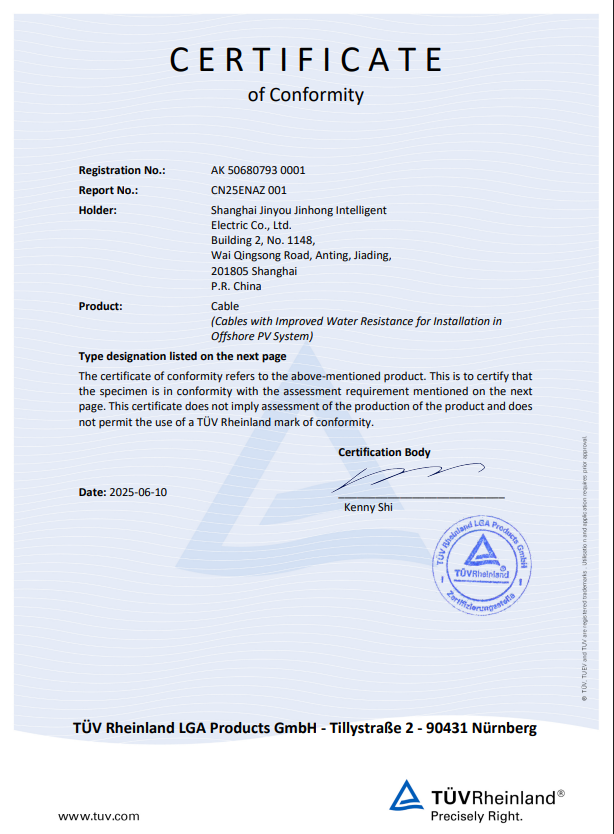
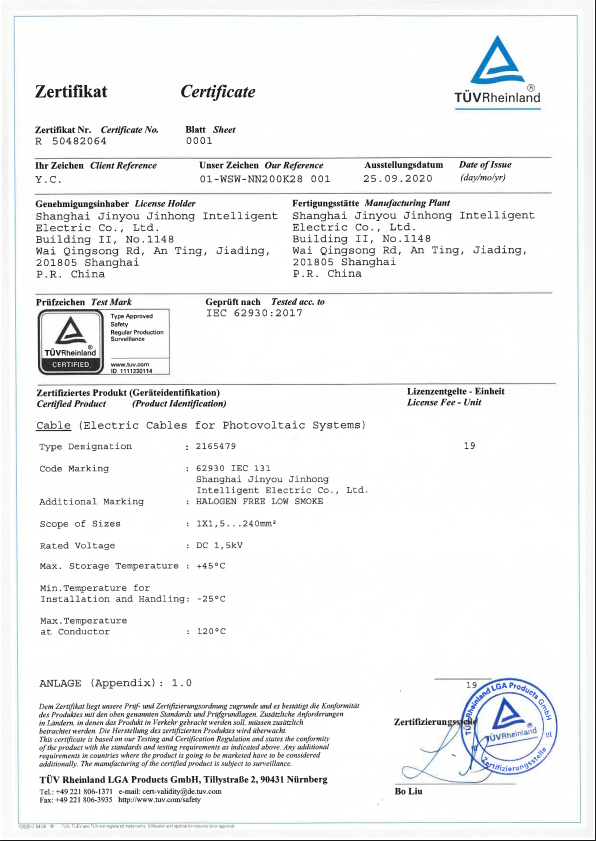
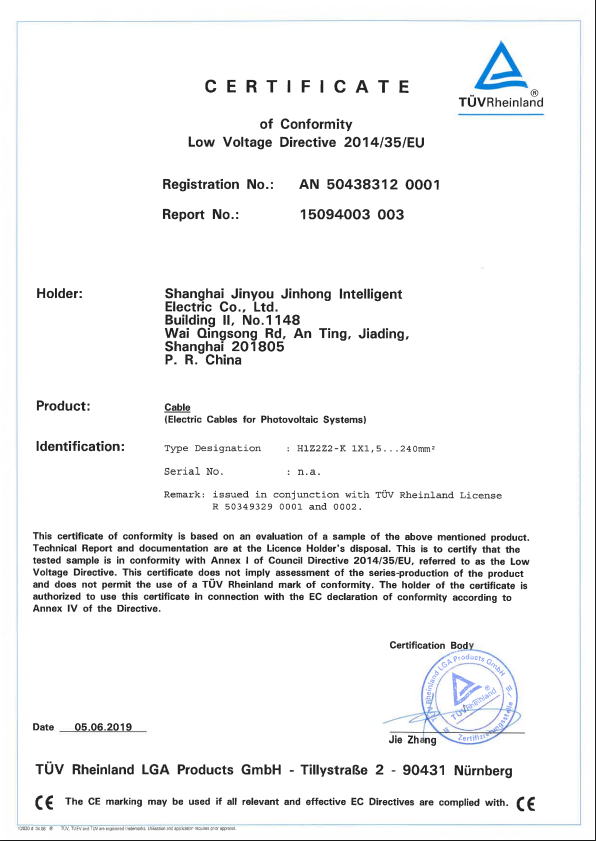
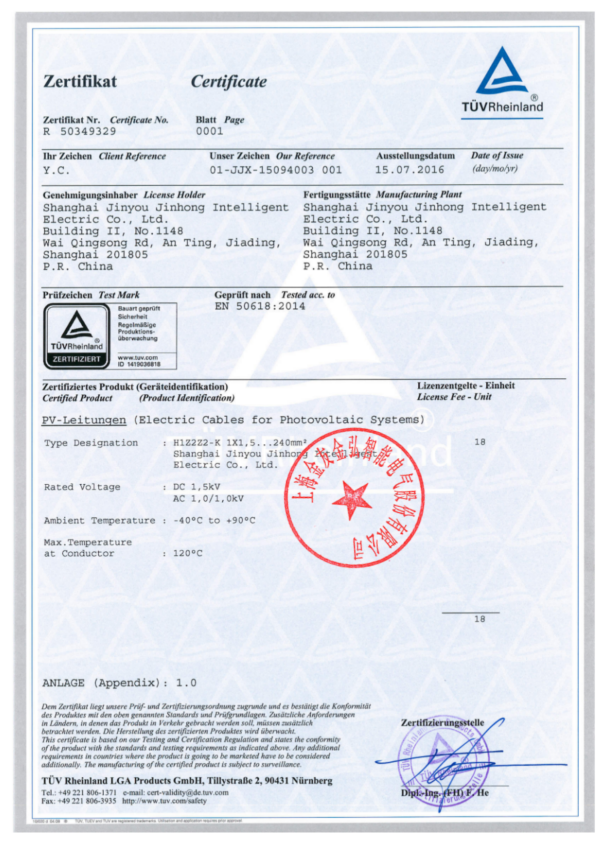
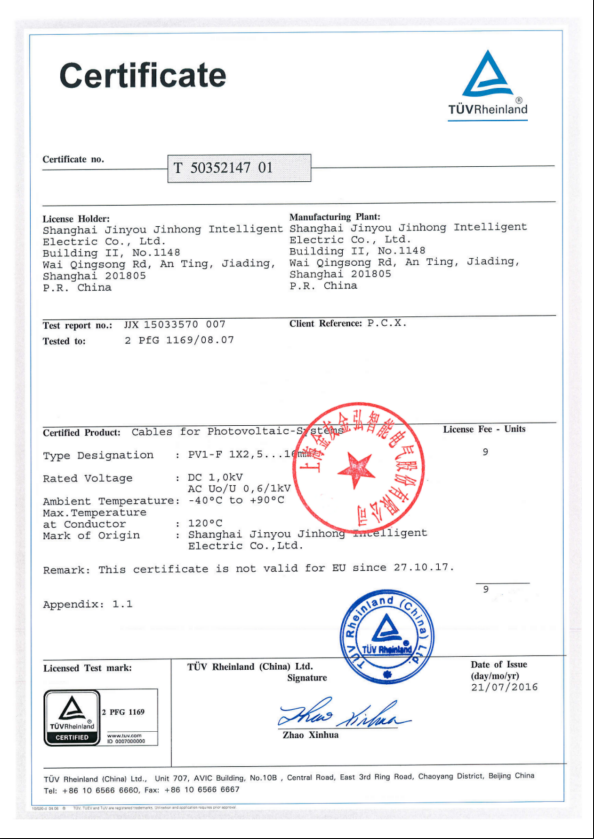
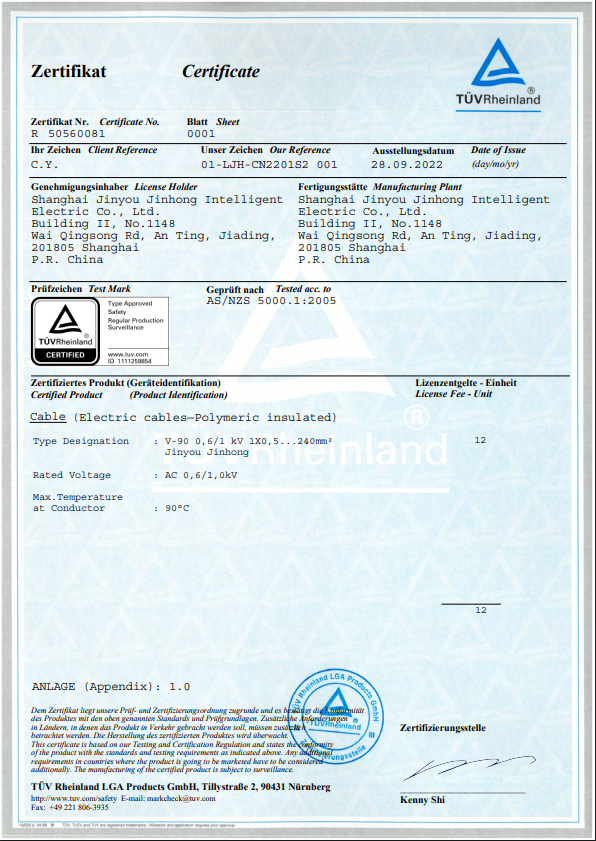
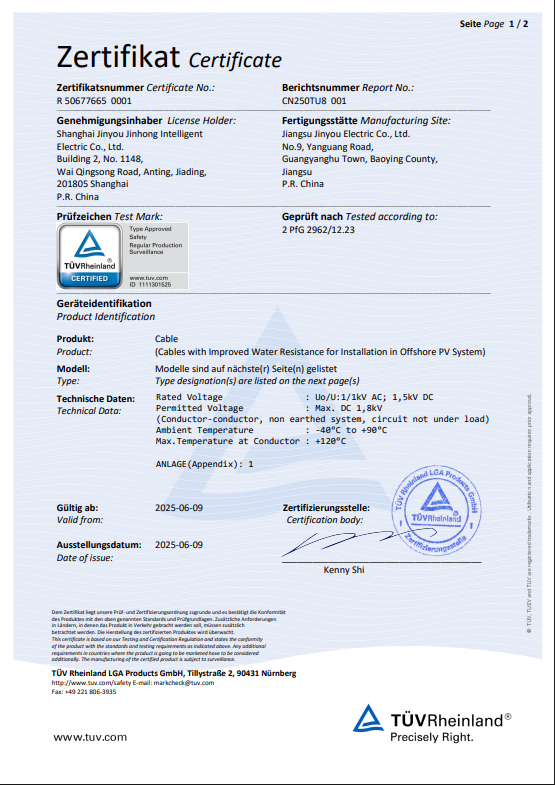
The routine test record against the IEC 60228 limit for the size and class you ordered. It converts an opinion into a document, and it is the same arithmetic whoever performs it. The same approach applies across our quality testing and traceability practice for other cable lines.
×
Where PVC Building Wire Is the Wrong Choice
PVC insulation has boundaries, and a supplier who pretends otherwise costs you a failed installation rather than a lost order. Six cases sit outside this product.
01
Sustained High Temperature
Above the 70 °C conductor rating of the standard series, the material is the limit rather than the design. Silicone and fluoropolymer insulated constructions cover that range.
02
Direct Burial and Prolonged Outdoor Exposure
Ultraviolet exposure and permanent moisture call for a sheathed and weather-qualified construction, not an unsheathed fixed-wiring conductor.
03
Continuous Flexing
Drag chains, robot arms and any reciprocating route need a cable designed for a bending cycle count. That is a different product family with a different conductor construction, and robot cable and drag chain cable are separate lines rather than a variant of this one.
04
Photovoltaic Direct-Current Circuits
Solar strings are specified against their own cable family, with its own temperature, ultraviolet and voltage requirements. Our solar cable family covers that case, and the solar cable standards that govern it are documented separately, because they do not extend to building wire.
05
Measurement and Signal Circuits
Where the circuit carries a signal rather than power, pair or triad construction and a screen become the specification, not the cross-section. That is instrumentation cable territory.
06
In-Vehicle and Charging Circuits
Vehicle power and charging circuits are built to their own temperature, shielding and voltage rules. Those are covered by our EV high-voltage cable and automotive cable lines.
Building Wire Engineering & Calculation Tools
Metric to AWG Size Converter
Metric and AWG are different series. Neither one contains the other, so every conversion leaves a difference in conductor area. This gives you the nearest AWG size, the size either side of it, and how much copper the substitution adds or removes.
Conductor Resistance Acceptance Checker
A conductor either meets its maximum resistance at 20 °C or it does not. Enter the size, the conductor class and the resistance you measured, and this compares it against the IEC 60228 limit for that size and class. The limits are stated at 20 °C, so a reading taken at any other temperature has to be corrected before the comparison means anything.
Copper Content and Material Floor Calculator
Copper is the largest single input in a building wire price, and the conversion from size and length to copper mass is public arithmetic. Run it and you can tell whether a quotation moved because the metal moved or because the offer did.
GB Designation Decoder
A GB designation is not a product name. Every letter constrains one physical property, and the order of the letters is fixed. Type a designation and this reads it back to you field by field, so a BV order does not arrive as BVR.
FAQ
Building Wire FAQ
Building wire is the conductor that distributes power inside a structure, from the distribution board to sockets, lighting and fixed appliances. In the GB and IEC vocabulary it is a PVC insulated cable of rated voltage up to and including 450/750 V, supplied unsheathed for conduit runs or sheathed for surface work.
Each letter constrains one property. B marks the fixed-wiring family, the first V is PVC insulation, a second V is a PVC sheath, R makes the conductor flexible and a trailing B makes the construction flat. The decoder near the top of this page lists the full set.
The conductor. BV is solid, IEC 60228 Class 1; BVR is flexible, Class 5, built from many fine wires. The acceptance limits are close rather than identical — 7.41 against 7.98 Ω/km at 2.5 mm², and 0.387 against 0.386 Ω/km at 50 mm² — so the choice is about bending and termination rather than about electrical performance.
Both use the flexible Class 5 conductor. The difference is where each is specified: BVR is the fixed-wiring member of the family, published here at 2.5-70 mm² and 450/750 V, while RV is the connecting wire for equipment and panel work. If the run is part of the building’s fixed installation, BVR is the designation to quote.
BVV is BV with a PVC sheath over the insulation and more than one core, which lets it be run on a surface without a conduit. BV on its own has no sheath and relies on the containment around it for mechanical protection.
No. BV is a single-core, unsheathed construction with a solid conductor. The multi-core PVC constructions in this family are BVV, which is round, and BVVB, which is flat.
No. BV corresponds to the international type 60227 IEC 01, whose harmonised European equivalents are its harmonised counterparts H07V-U and H07V-R, while THHN is a North American designation with a nylon jacket and different temperature and location ratings. The cross-reference table on this page sets the comparison out column by column, including the size difference, which reaches 17 % at the sizes most often substituted.
Jinyou publishes BV at 300/500 V for 0.75-1 mm² and at 450/750 V for 1.5-400 mm². The 300/300 V grade in the family belongs to the RVS twisted pair and the AV installation wires, not to BV.
Single-core in conduit when the containment is already there and the run is straight. Multi-core sheathed when there is no conduit, when several cores follow the same route, or when the cable is clipped to a surface. Cost follows conduit and labour more than it follows the cable.
Flame retardancy is about fire not spreading along the cable route, and it is verified by flame-propagation testing. Fire resistance is about the circuit continuing to work during a fire, verified by circuit-integrity testing at high temperature. ZR marks the first, NH marks the second, and a project that needs one does not automatically need the other.
The construction standard for single-core non-sheathed PVC cables for fixed wiring is IEC 60227-3, adopted in China as GB/T 5023.3; the same series is written GB/T5023 in some specifications. Conductor class and the resistance limits come from IEC 60228, and flame-performance characteristics are governed separately under GB/T 19666 and GB 31247.
A manufacturer. Jinyou has been manufacturing in Shanghai since 2006 and is a public company, NEEQ 830994. OEM and ODM work covers specification, function and cable parameter adjustment, and incoming material is tested for conductor resistivity and for insulation and sheath properties before production.
Minimum order 100 meters per size and colour. Because each colour is a separate production run, the minimum applies per colour rather than to the order as a whole.
Small-batch orders ship in 10-20 business days after specification confirmation, and production runs are scheduled at 20-30 business days, confirmed with your quotation. Payment is 30% deposit by T/T, with the 70% balance before shipment, and sample lengths are free of charge with the courier freight on your account.
Ten inputs: designation, cross-section, cores, voltage grade, conductor class, colour set, length per reel, total quantity per size and colour, the target standard or listing, and the destination market with the document scope required there. Send those and the quotation comes back within 24 hours on business days.

