Get in touch with JINYOU Cable Company

-
CALL US +86 181 1623 2461
-
EMAIL sales@jinyougroup.cn
Energy Storage Cables
Energy Storage Cables for BESS Systems | JINYOU Cable
JINYOU Cable reviews battery energy storage system cables and wiring assemblies for electrical duty, equipment interfaces, installation routes, destination markets, and release documents. Send a cable schedule, single-line diagram, connection map, drawing, or bill of materials; the review separates confirmed inputs from open decisions before quotation. Choose BESS Cable or Energy Storage Wiring Harness without assuming one generic battery cable fits every battery rack, cabinet, inverter, battery management system, or grid connection.
01 //
Cable and harness routing
02 //
Drawing and BOM review
03 //
Project-specific quotation
04 //
Global shipment planning
Energy Storage Cable Project at a Glance
Best starting document
Cable schedule, connection map, drawing, BOM, or system-node list
Primary decision
Individual BESS cable, multi-branch wiring harness, field wiring, or a mixed connection plan
Quotation trigger
Electrical duty, interface, route, quantity, test scope, destination, and required date
Prototype planning
Confirm after drawing approval, material availability, acceptance scope, and quantity review
Small-batch planning
Confirm after construction, terminations, test scope, quantity, and material status are defined
Production planning
Confirm against the released configuration, order quantity, and required ship date
Energy Storage Cable Systems and Applications
Battery energy storage cables cross electrical boundaries. Energy moves between racks, DC distribution, power conversion equipment, transformers, and grid interfaces. Additional wiring supports battery management, controls, bonding, auxiliary power, and service interfaces.
-
01. BATTERY
Battery modules or racks
Power, sensing, monitoring, and local interface requirements
-
02. DISTRIBUTION
DC distribution
Current path, protection context, polarity, connection length, and restraint
-
03. CONVERSION
PCS or inverter
Equipment entry, termination, routing, service access, and conversion boundary
-
04. CONTROLS
BMS and controls
Communication, sensor, auxiliary, shielding, protocol, and interface questions
-
05. INFRASTRUCTURE
Site and grid boundary
Installation jurisdiction, interconnection, grounding, export, and project documents
-
Cabinet and rack connections
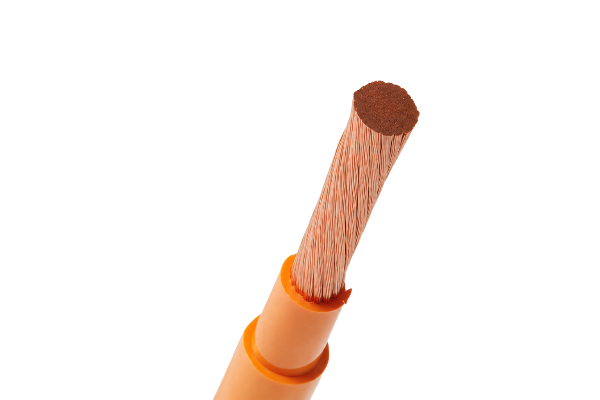
Define the endpoints, circuit purpose, voltage and current basis, polarity, route, available bend space, and removal path. These inputs decide whether an individual power cable, a cable assembly, or a branched harness is the better starting point.
-
Container and site routes
State whether the run is inside equipment, on a tray, in conduit, exposed, buried, or split across methods. Grouping, ambient conditions, mechanical restraint, cable management, access, and civil layout affect the selection basis.
-
Renewable energy integration
For solar-plus-storage, utility-scale battery storage, microgrid, commercial, or industrial projects, identify the actual system boundary. A photovoltaic cable specification, a BESS cable requirement, and the alternating-current export connection should not be treated as interchangeable.
Some storage technology combines functions, uses integrated busbars, or carries data over a power path, so a separate communication path is not always required. Other BESS applications need separate power, communication, sensing, or auxiliary wiring. IEEE 2686-2024 frames stationary battery-management-system functions, but equipment design decides which circuits exist; this map prevents quotation assumptions.
BESS Cable and Wiring Harness Product Options
Choose the path by circuit duty and controlled project information. Both routes can include connectors, terminals, or cable assemblies. IPC/WHMA-A-620E prescribes manufacturing practices and acceptability criteria for cable and harness assemblies, while ISO 10007 frames configuration control; for this page, the purchasing distinction is an individual cable circuit versus a released multi-component assembly.
Do not release by label alone
An individual BESS cable and a released harness are not interchangeable. The wrong choice risks connector mismatch, added site work, or a drawing revision after quotation, so request a product-path review before release.

Product path 01
BESS Cable
Begin with this path when the main requirement is a defined battery storage cable or power cable between two system points. The engineering review uses circuit duty, conductor basis, cable length, installation method, environment, terminal or connector interface, marking, test requirements, and packaging length.
Prepare
system voltage, continuous and peak current, protection context, route, grouping, ambient conditions, voltage-drop target, endpoint details, quantity, and destination.

Product path 02
Energy Storage Wiring Harness
Choose this option when one released assembly must organize several wires, cables, branches, connectors, terminals, labels, protective coverings, or mounting points. We compare the connection map, pinout, bill of materials, wire list, branch geometry, assembly direction, acceptance plan, and revision.
Prepare
drawing or connection map, both sides of every mating interface, circuit function, pinout, branch dimensions, installation orientation, quantity, inspection scope, and required records.
Product-path decision matrix
| Project condition | Likely starting path | Reason to review before release |
|---|---|---|
| One circuit between two defined endpoints | BESS Cable | Electrical duty, cable construction, route, length, termination, and packaging drive the requirement. |
| Several branches, connectors, labels, or protective parts | Energy Storage Wiring Harness | Pinout, branch geometry, BOM, orientation, and revision become part of the assembly definition. |
| Route or equipment position is still changing | Early engineering review | A finished cable or harness can freeze length and interface decisions before the cabinet or site layout is ready. |
| Some terminations must be completed on site | Mixed factory-and-field plan | The boundary must state which work is factory released and which work remains with the installer. |
| Integrated busbar or communication-over-power architecture | System architecture review | A dedicated communication harness may be reduced or omitted, while power, sensing, auxiliary, or service functions still need definition. |
Cable, Connector, and Harness Configuration
ISO 10007 informs configuration management; here, solution definition begins with project inputs rather than a borrowed competitor data sheet. The table shows what the buyer supplies, the decision affected, and the required RFQ entry. JINYOU confirms the offered construction and order scope in writing after review.
Interface control prevents false fit
A connector family name alone is incomplete. The RFQ should identify mating part, terminal, wire range, cavity assignment, keying, polarity, orientation, lock, seal, equipment revision, and whether substitution needs written approval. For an energy storage harness, put these fields beside the corresponding drawing and BOM revision.
BESS Cable Selection and RFQ Specifications
This BESS Cable Request for Quotation (RFQ) Input Matrix turns early project information into a review packet. Values in this table are supplied by the buyer or project engineer; they are not JINYOU product ratings. Its output still feeds the project technical specification, conductor-sizing work, protection design, interconnection checklist, and authority review.
Engineering boundary
This matrix is an early-stage procurement tool. It is not a substitute for conductor sizing, voltage-drop calculation, fault-force analysis, protection coordination, interconnection approval, or complete-system safety evaluation. If a field is unknown, mark it “open” and identify the person or project document that will close it.
Send Your Cable Schedule for Review
Local buyer tools-
BESS Cable RFQ Checker
Check all 16 input groups and create a focused list of missing items before you request pricing.
Open the RFQ checker -
Cable vs Harness Selector
Compare circuit count, branching, interfaces, site work, revision control, and service access to choose a starting product path.
Compare the two paths -
RFQ Brief Builder
Organize known values, open decisions, files, quantities, destination, and schedule into copyable inquiry text.
Build an RFQ brief -
Lead-Time Planning Board
Map drawing approval, components, prototype, small batch, production, documents, and shipment dependencies without treating policy windows as guarantees.
Plan schedule inputs
Pricing, Lead Times, And Delivery Terms
An effective supplier quotation separates product definition from commercial assumptions. Unit price alone does not show setup, controlled components, tests, records, packaging, freight, or revision cost. Submit prototype, initial, and annual quantities separately.
Cost Drivers To Make Visible
DATA MATRIX
Conductor And Cable Content
Cross-section, total length, number of circuits, cable construction, colors, print, cut length, and scrap or setup assumptions shape the material basis.
Interfaces And Assembly Work
Controlled connectors, terminals, seals, lugs, glands, branches, splices, labels, coverings, fixtures, and assembly complexity affect sourcing and work content.
Verification And Records
Sample or first-article scope, inspection frequency, electrical or dimensional checks, reports, certificates of conformance where applicable, and traceability fields belong in the written scope.
Quantity And Release Pattern
Prototype, small batch, production lot, blanket order, and annual forecast can require different setup, material commitment, and delivery planning.
Packaging And Logistics
Reels, coils, kits, individual protection, labels, pallet limits, destination, transport mode, Incoterms, and customs documents affect delivered cost.
Schedule And Change Control
Material availability, controlled components, drawing revisions, test scope, expedite requests, and approval time can move the confirmed ship date.
Quotation And Lead-Time Checkpoints
CHECKPOINTS
| Stage | Quotation Must Confirm | Release Condition |
|---|---|---|
| Quotation | Response target, review owner, stated assumptions, and open technical items | Your request contains enough information to define product path, scope, quantity, and destination. |
| Custom-harness prototype | Earliest feasible ship date and any prototype-specific material or test constraints | Drawing approval, connector and material availability, test scope, payment, and revision status are confirmed. |
| Cable small batch | Feasible batch date for the defined construction and quantity | Construction, length, termination, marking, test, quantity, and material status are confirmed. |
| Production run | Production and shipment window for the released order | The written quotation controls the schedule for the released configuration and order quantity. |
MOQ, Samples, Payment, And Shipment

Quantity
State the required order quantity; the quotation confirms the offered minimum for the defined cable type and configuration.
Samples
Ask whether stock samples or custom sample reels are available; the quotation confirms charges and freight.
Expedite
Ask whether expedited production or air shipment is feasible and whether a premium applies. Feasibility is confirmed during scope review.
Payment
State the requested method and schedule; the pro forma invoice confirms accepted terms.
Trade Terms
State the requested Incoterm and destination; the quotation confirms the offered term.
Documents
Specify required shipping and conformity records; the quotation confirms the order-level document package.
Quality Control and Order Documentation
Specify the requirement, characteristic, acceptance basis, frequency, and record. This page claims no unverified certificate, laboratory, test method, or system approval. Your quotation identifies the order-level plan.

1. Configuration to release
Agree the governing cable schedule, connection map, drawing, BOM, wire list, pinout, label schedule, and revision index. Record which components are controlled and which substitutions require written approval.
2. Acceptance plan
Name the requested visual, dimensional, interface, polarity, continuity, electrical, marking, packaging, or document checks only when the project requires them. State the acceptance criteria and whether the check applies to a sample, first article, each assembly, or a defined lot sample.
3. Evidence and traceability
Define the record fields the buyer needs: order, item, drawing revision, component identity, lot or serial information where required, inspection result, report, certificate of conformance where applicable, and approval authority.
4. System boundary
A cable, terminal, connector, or harness record supports that item at its approved scope. It does not by itself establish compatibility, interconnection approval, cybersecurity, or safety of the integrated battery energy storage system.
Engineering Review and Order Workflow
Seven input groups for a clean handoff
- IN.01 Electrical duty
- IN.02 Mechanical route
- IN.03 Environment
- IN.04 Interfaces and BOM
- IN.05 Acceptance and records
- IN.06 Quantity and packaging
- IN.07 Destination and schedule
Send the cable schedule, drawing, BOM, connection map, system nodes, target market, quantity, destination, and required date. Mark preliminary files and the revision intended for quotation.
Engineering review separates BESS cable, energy storage wiring harness, field termination, and system-responsibility boundaries, then returns the missing electrical, mechanical, interface, environment, acceptance, or commercial inputs.
Your quote states product scope, assumptions, MOQ, sample or prototype scope, schedule, payment, trade terms, inspection or test requirements, records, packaging, and shipment basis.
Confirm the governing drawing/BOM revision, controlled interfaces, open substitutions, and whether a sample or first article is needed before production release.
An approved configuration and quoted inspection or documentation scope become the order reference. Any nonconforming point is handled against the written acceptance item; this page does not invent a separate remake policy.
Match product identification, packaging, commercial documents, applicable test or conformity records, shipment method, destination, and the trade term stated in the quotation.
A complete packet can facilitate early discussion by reducing hidden assumptions, but an early-stage project can still start. Send known values, label unknown fields, identify the design owner, and state when each open decision is expected. The result is a review list, not an unapproved cable design.
Energy Storage Cable Tradeoffs And Alternatives
Before freezing a product path, compare installation flexibility, reliability, interface control, service work, inventory, route, and approved documents.
Bronze Total-Cost Decision Framework
Compare material content, route, restraint, installation labor, revision risk, inspection, documents, logistics, service access, replacement work, and schedule. Do not convert these fields into a fixed saving or payback: NREL treats conductors inside system electrical balance-of-system, and the evidence does not isolate a transferable cable-only return.
JINYOU Cable for Renewable Energy Projects
Shanghai Jinyou Jinhong Intelligent Electric Co., Ltd, branded as JINYOU Cable, was established in 2006 in Shanghai, China. It designs and manufactures cable solutions for renewable energy applications, including solar power, energy storage, and electric vehicles.
For this new-site category, rely on the written product and order scope. Current models, ratings, conformity documents, inspection or test scope, and order records should be matched to the quotation and relevant product page.
[ DATA.REQ ]
Send Your BESS Cable Requirements
A review packet may be based upon available data. Start with the file or system information you already have. The quotation will identify the product path, confirmed scope, open technical items, MOQ, schedule, payment, trade term, inspection or test requirements, records, packaging, and shipment basis.
01 Drawing-ready project
Attach the cable schedule or connection map, released drawing, BOM, wire list, pinout, electrical and environment inputs, quantity, acceptance requirements, destination, and requested schedule.
02 Early-stage project
List the system nodes, circuit functions, voltage and current basis, approximate lengths, route, mating interfaces, target market, quantity range, destination, and open design decisions.
[ ACT.SEC ]
The request must contain enough information to define product path, scope, quantity, and destination; open technical items will be listed.
Request a Project-Specific Quotation
Until your organization approves the method for sharing controlled drawings, do not upload them. No nondisclosure, warranty, free-sample, or remedy term is implied by this page.
01
How do I choose the right energy storage cable?
How do I choose the right energy storage cable?
Define the circuit endpoints, AC or DC duty, voltage, continuous and peak current, length, voltage-drop limit, route, grouping, temperature, movement, protection, termination, destination, and required evidence. Include the project conductor calculation when available; otherwise keep sizing as a separate engineering action.
02
What is the difference between AC and DC energy storage cables?
What is the difference between AC and DC energy storage cables?
DC cables serve battery-side circuits; AC cables serve converted-power circuits. Actual selection still depends on duty, route, termination, protection, and project rules.
03
Can standard PV wire be used in a BESS installation?
Can standard PV wire be used in a BESS installation?
A search for “battery storage cable for solar” does not make the two requirements interchangeable. Compare voltage, current, temperature, route, grouping, movement, exposure, terminals, equipment entry, environmental properties, installation rules, marking, and approval evidence for the intended circuit and jurisdiction.
04
How do cable routing and cable management affect a BESS?
How do cable routing and cable management affect a BESS?
Routing changes heat, restraint, bend space, abrasion risk, access, length, and replacement work. Specify the complete route and support method.
05
Are cable cleats required in a BESS installation?
Are cable cleats required in a BESS installation?
That depends on circuit arrangement, installation method, available fault current, supports, spacing, loads, and project rules. Provide the restraint requirement and fault context; do not infer a universal cleat type or spacing from a product page.
06
Can BESS cables be installed above ground?
Can BESS cables be installed above ground?
Yes, when site design, supports, exposure, protection, thermal limits, access, and installation rules allow an above-ground route.
07
What information is needed to size a battery storage cable?
What information is needed to size a battery storage cable?
A battery storage cable size review needs voltage, current duty, length, voltage drop, route, grouping, temperature, installation method, terminal range, protection, and project requirements. IEC 62933-5-2:2025 supplies system-safety context; this matrix only collects inputs.
08
Can JINYOU build an energy storage wiring harness from our drawing or BOM?
Can JINYOU build an energy storage wiring harness from our drawing or BOM?
JINYOU can review a drawing, BOM, connection map, wire list, and pinout for quotation. An energy storage wiring harness diagram should add mating interfaces, branch dimensions, circuit duty, orientation, protection, labels, acceptance scope, quantity, and revision. Your quote confirms the offered construction and open items.
09
Can JINYOU support BMS cable harnesses?
Can JINYOU support BMS cable harnesses?
Submit the BMS architecture and identify sensing, communication, control, auxiliary power, shielding or grounding, protocol, connector, pinout, route, and validation owner. Because some architectures combine paths, the actual connection map controls the quotation.
10
What connector and test information should an RFQ include?
What connector and test information should an RFQ include?
State both mating parts, terminal, wire range, pinout, keying, polarity, orientation, locks, seals, substitution rule, and access. For each check, name its method, acceptance limit, frequency, report, and approval owner; keep component acceptance separate from system compliance.
11
How should I state the required order quantity?
How should I state the required order quantity?
State the quantity needed for each defined cable or harness configuration. The quotation confirms the offered minimum after construction, length, components, test, packaging, and quantity review.
12
Can I order a sample or custom reel?
Can I order a sample or custom reel?
Ask whether a stock sample or custom reel is feasible. State the required construction, length, quantity, records, and destination for quotation.
13
How long do prototypes, small batches, and production orders take?
How long do prototypes, small batches, and production orders take?
Timing is quoted after drawings, construction, quantity, materials, tests, payment, packaging, and destination are reviewed. The written quotation controls the planned ship date and any change after revision.
14
Which payment and delivery terms are available?
Which payment and delivery terms are available?
State the requested payment method, schedule, Incoterm, destination, and any expedite need. The pro forma invoice and quotation confirm the accepted terms.

