Get in touch with JINYOU Cable Company

-
CALL US +86 181 1623 2461
-
EMAIL sales@jinyougroup.cn
BIPV Cable for Roof and Facade Systems
Jinyou Cable helps project teams select BIPV cable for DC routes through roof, facade, canopy and other building-envelope assemblies. Send the route drawing, electrical inputs and evidence requirements so our team can review the published building-photovoltaic cable model against your project scope.
REVIEW ROUTE FIT
- GF-YJYJR-B1(d1,t0,a1) Published building-photovoltaic model
- 1–2 Published number of cores
- 2.5–6 mm² Published nominal cross-sectional range
- 8 inputs Structured RFQ fields before model review
- Custom OEM Project-specific photovoltaic cable support
- 24 hours Inquiry response commitment
BIPV Cable Routes Through Roof and Facade Assemblies
A BIPV route depends on the building assembly surrounding it, not on the word “solar” alone. The BIPV application label is not a substitute for a BIPV cable installation review covering the route, interfaces and electrical circuit.[5][6]
Map the module lead, concealed channel, roof-edge transition and the first accessible electrical enclosure. The cable review needs the route drawing and the way the roofing function is restored around every transition.
Show mullions, transoms, cavities, service zones and the direction in which cable can be inspected or replaced. A vertical facade route also needs the planned support spacing, bend points and exit into the building electrical system.
Identify exposed spans, protected channels and the hand-off to the balance-of-system equipment. UV, temperature, water paths and mechanical protection must be described as installation conditions rather than assumed from the BIPV label.
Locate combiners, DC disconnects, rapid-shutdown equipment where applicable, inverters and maintenance access. Those components establish circuit boundaries; the cable must be reviewed as one element within the complete photovoltaic system.
A BIPV cable diagram should trace the route from module lead to the first accessible enclosure. Use that marked route with the electrical schedule when preparing the PV cable specification.
Confirm the building function.
State which photovoltaic element replaces or performs the work of a conventional building component.
Trace the DC route.
Mark every concealed section, support point, penetration, connector and enclosure transition.
Define the electrical circuit.
Provide voltage, current, conductor arrangement, polarity, protection and grounding or bonding design.
Keep maintenance visible.
State how the route can be inspected, isolated and replaced without turning cable access into an envelope-repair project.
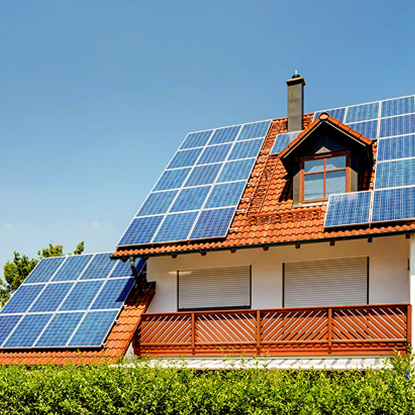
Within a BIPV system, solar cell assemblies and PV panels carry an electrical function while forming or replacing building materials. This dual role separates the project from a solar system mounted above a finished roof.
- Use “PV system” for the complete electrical arrangement rather than for the cable alone.
- Use “PV technologies” when comparing module approaches, then return the RFQ to the actual route and interfaces.
- Use “renewable energy” and “solar energy” as sector language, not as a cable specification.
Engineering Boundary
Cable specification does not replace the building-envelope, electrical-protection or code design. The project engineer and authority having jurisdiction retain those decisions; Jinyou uses the confirmed inputs to review cable construction and evidence.
BIPV Route-to-Cable Fit Matrix
Classify the route before requesting a model. The matrix separates building-integrated photovoltaic applications from rooftop solar cable and utility scale solar cable scope without assuming that project size selects the construction.
| Project route | Envelope relationship | Inputs that control cable review | Commercial next step |
|---|---|---|---|
| PV roof tile or shingle | The PV product replaces or performs a roof-covering function. | Tile lead exit, channel, waterproof transition, support, heat exposure, access and circuit design. | Submit the roof detail and electrical schedule for building-PV model review. |
| PV glass or curtain-wall facade | The photovoltaic product is part of the wall, glazing or cladding assembly. | Mullion or cavity route, connector space, vertical support, drainage, fire-zone transitions and service access. | Submit facade shop drawings, module interface and cable schedule. |
| PV canopy, awning or balustrade | The PV element performs a building or shade-element function. | Exposed span, transition into structure, bend points, water path, mechanical protection and accessible isolation. | Define exposed and concealed route segments separately. |
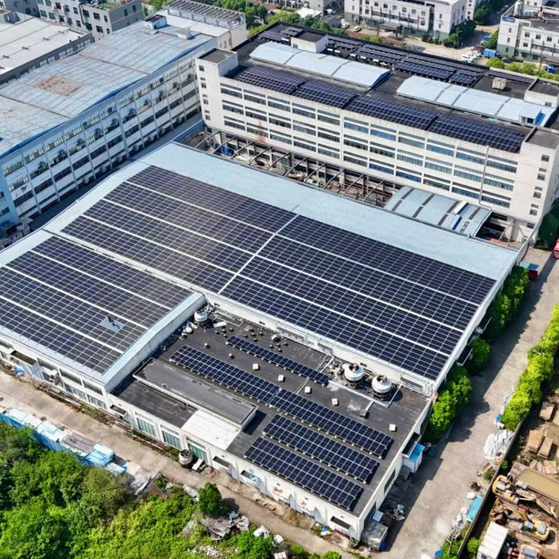
| Building-applied rooftop PV | Modules sit above the building envelope on a separate mounting system. | Array wiring, roof exposure, support, penetration, inverter route and local code. | Route this to the rooftop solar cable specification scope. |
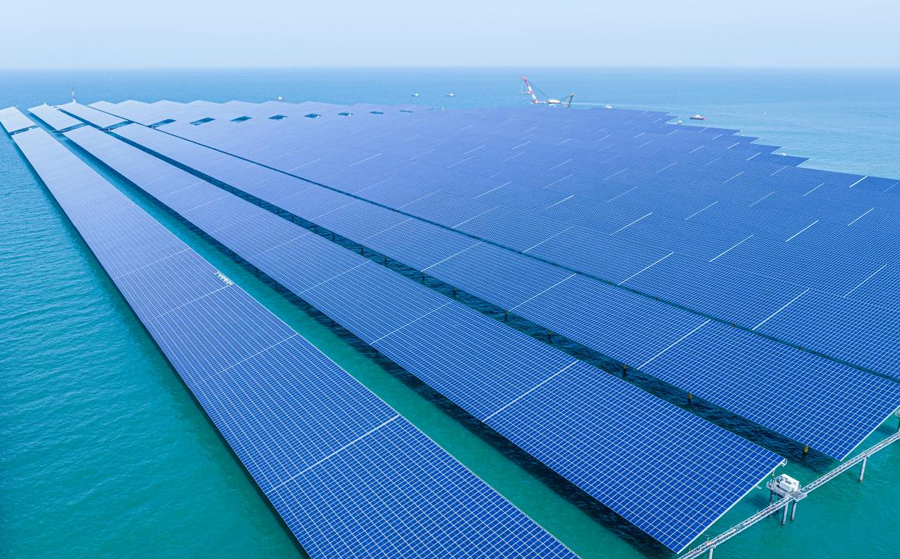
| Ground-mounted solar farm | The array is not a building component. | String or collection route, trench or tray, environmental duty, voltage drop, current, connector and project standard. | Route this to the solar farm cable or utility-scale specification scope. |
| Interior building transition | The DC route moves from the envelope into a building service area. | Penetrations, segregation, fire compartments, mechanical protection, disconnect location and jurisdictional requirements. | Coordinate the cable request with the electrical and envelope design teams. |
Selection Logic That Prevents Category Drift
- Use “BIPV” when the photovoltaic product retains a building-related function, not whenever PV is installed on a building.
- Use “rooftop” for an array placed above the roof assembly when the modules do not replace the roof covering.
- Use “utility scale” or “solar farm” for ground-mounted generation and collection routes, then specify the actual installation environment.
- Review every transition separately when one project moves through exterior, concealed and interior zones.
Jinyou Building Photovoltaic Cable Model
The Jinyou photovoltaic cable family page includes one row specifically for building photovoltaic systems. Its family data table is not a substitute for exact-model construction and evidence review.
SYSTEM SPECIFICATIONS
| Published field | Manufacturer-page value | How to use it in an RFQ |
|---|---|---|
| Building-PV model | GF-YJYJR-B1(d1,t0,a1) | Keep the complete string on the inquiry and purchase specification. |
| Number of cores | 1–2 | State the required core arrangement and circuit topology. |
| Nominal cross-sectional area | 2.5–6 mm² | Submit the calculated conductor size; do not select solely from route type. |
| Published name | DC cables for building photovoltaic systems | Use as the application label, then add construction and evidence requirements. |
| Family operating range | -40°C to 90°C | Compare with the actual ambient, surface and enclosed-channel temperatures. |
| Family maximum conductor temperature | 120°C | Request the exact-model data sheet and applicable duty statement. |
| Family insulation resistance at 20°C | ≥1014 Ω·cm | Define the requested test document and acceptance basis. |
| Family bending radius | ≥5D | Mark tight transitions and available installation space on the route drawing. |
| Family short-circuit statement | ≤250°C for 5 seconds | Coordinate fault-duty review with the project electrical design. |
| Family voltage statement | 0.6/1 kV AC; DC 1000 V; DC 1800 V between conductors | State system voltage, grounding arrangement and the exact required cable rating. |
| Family test-voltage statement | AC 6500 V for 5 minutes, no breakdown | Request a model-bound test scope when this evidence is required. |
| Inquiry response | Within 24 hours | Attach the eight RFQ inputs to reduce clarification cycles. |
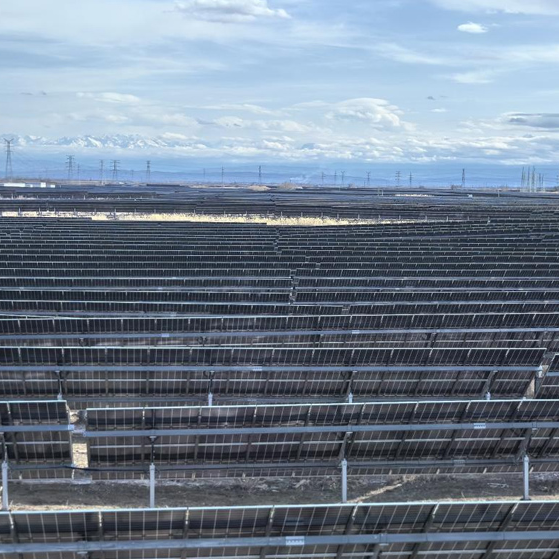
8-Field BIPV RFQ Input Card
A useful BIPV cable inquiry works as a route brief rather than a keyword list. These eight fields give engineering, quality and procurement teams a shared starting point.
Name the PV roof, facade, glazing, cladding, canopy or shading element and explain which conventional building function it replaces.
Attach the marked route from module lead to combiner, disconnect or inverter, including concealed channels, penetrations, bends and accessible enclosures.
Provide maximum system voltage, operating current, string arrangement, grounding design, protection topology and calculated fault duty.
State conductor material, number of cores, nominal cross-section, allowable voltage drop and any dimensional limit at the interface.
List minimum and maximum temperatures, UV, water, ozone, chemicals, ventilation, mechanical exposure and expected installation movement.
Identify module leads, connectors, terminals, supports, joints, fire or weather transitions and the planned inspection or replacement path.
Name the destination market, project code basis, cable standard and any module, building or system standard the design team is coordinating separately.
List data sheets, certificates, test reports, samples, labels, packing, document language and approval points required before production.
Product-Family Performance and Evidence Tiers
Evidence-Scope Difference
The differentiator is evidence scope: exact-model identity, product-family reference and project confirmation stay separate. The trade-off is a longer clarification list before quotation in exchange for a cleaner purchase specification.
| Evidence tier | Useful content | Decision it supports | Control at quotation |
|---|---|---|---|
| Exact published model row | GF-YJYJR-B1(d1,t0,a1), 1–2 cores, 2.5–6 mm², building-photovoltaic DC application. | Creates the initial model candidate. | Preserve the full model and requested construction in writing. |
| Product-family reference | Published temperature, voltage, insulation-resistance, bending and short-circuit statements. | Frames technical clarification. | Bind each required value to the exact offered model or construction. |
| Project specification | Route, conductor calculation, connectors, installation method, environment, code and acceptance criteria. | Determines whether the candidate fits the designed system. | Make the approved project inputs part of the quotation and purchase specification. |
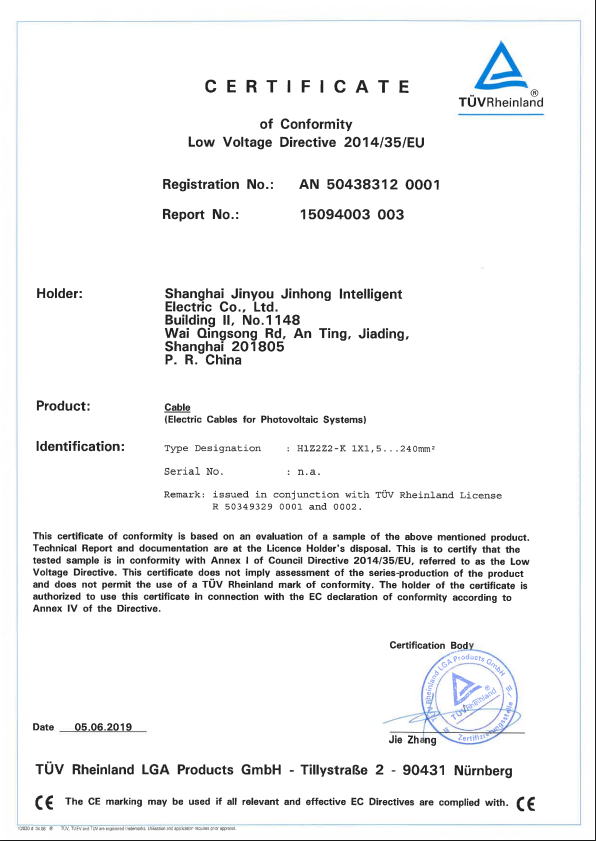
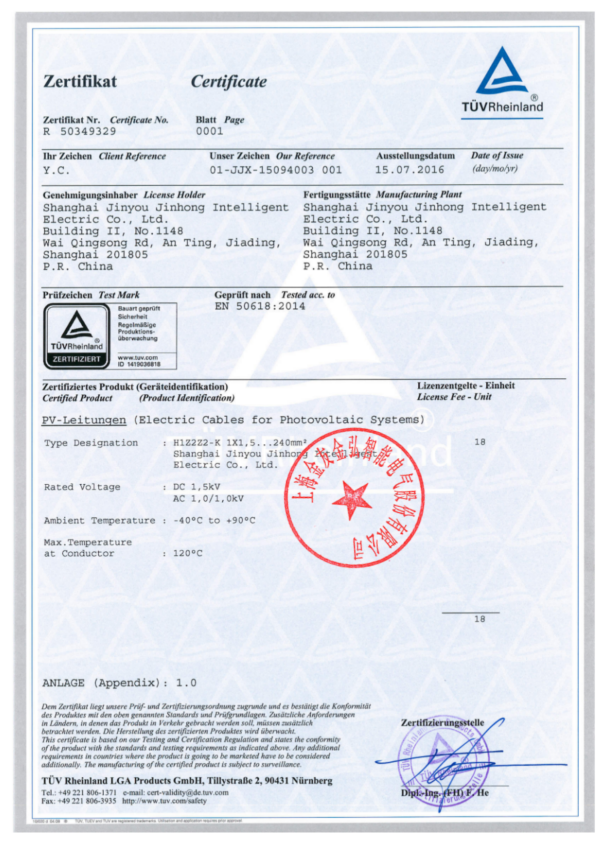
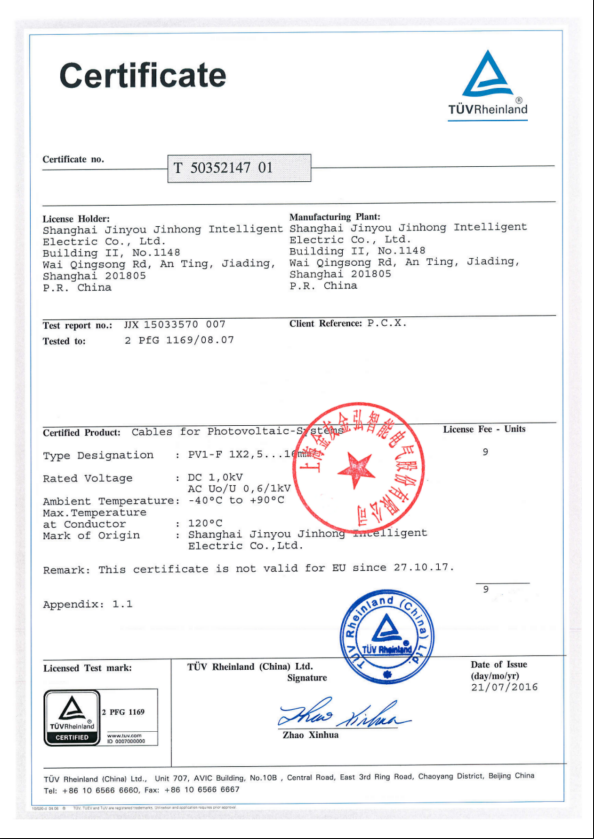
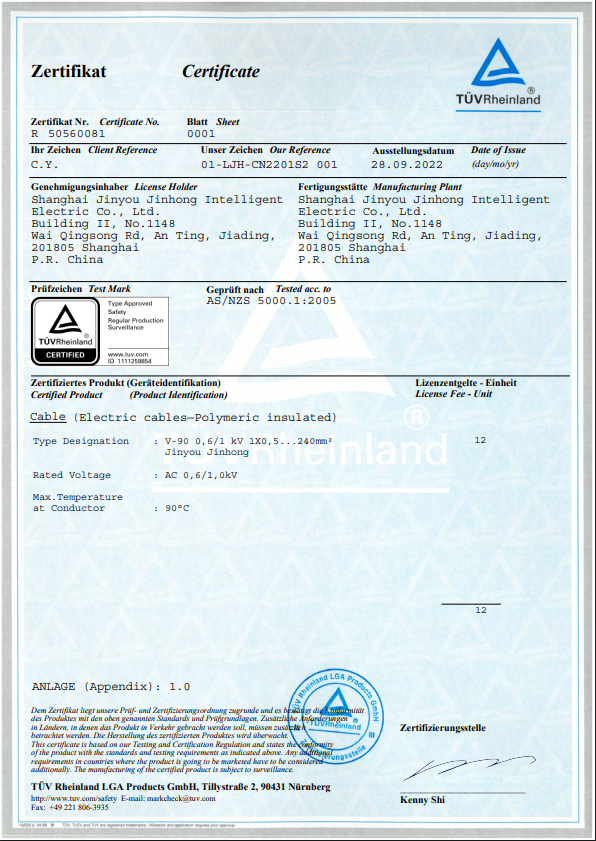
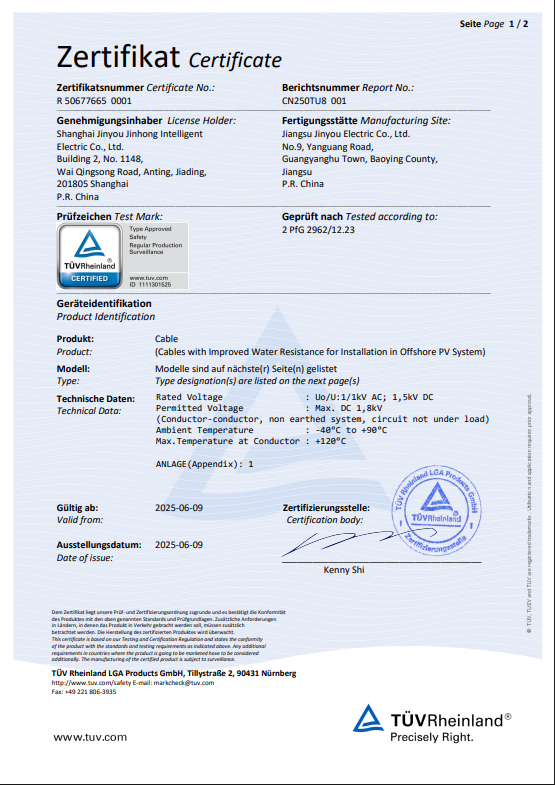
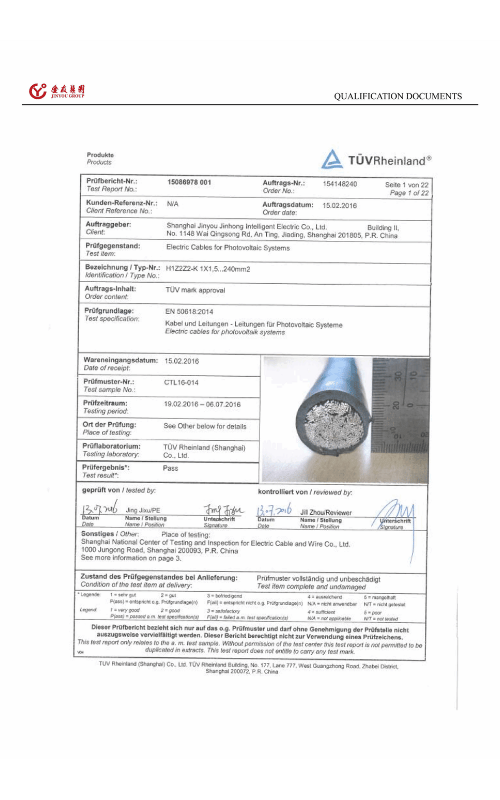
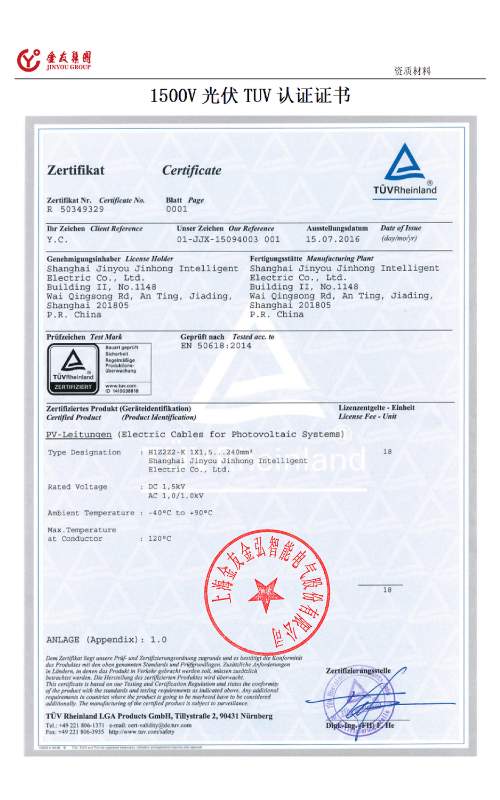
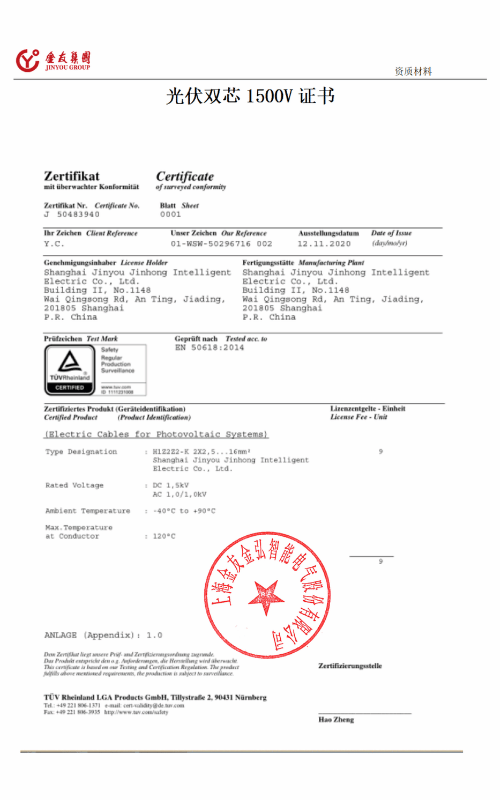
| Certificate or test evidence | Named model or construction, standard, issuer, report number, scope, date and result. | Supports quality and compliance review. | Check that the evidence covers the item being purchased and the destination requirement. |
Quotation Drivers
Price follows conductor construction, cross-section, ordered length, marking, packaging, testing and customization. Send the complete specification and quantity so Jinyou can return a comparable written quotation instead of a generic cable price.
IEC Scope Check
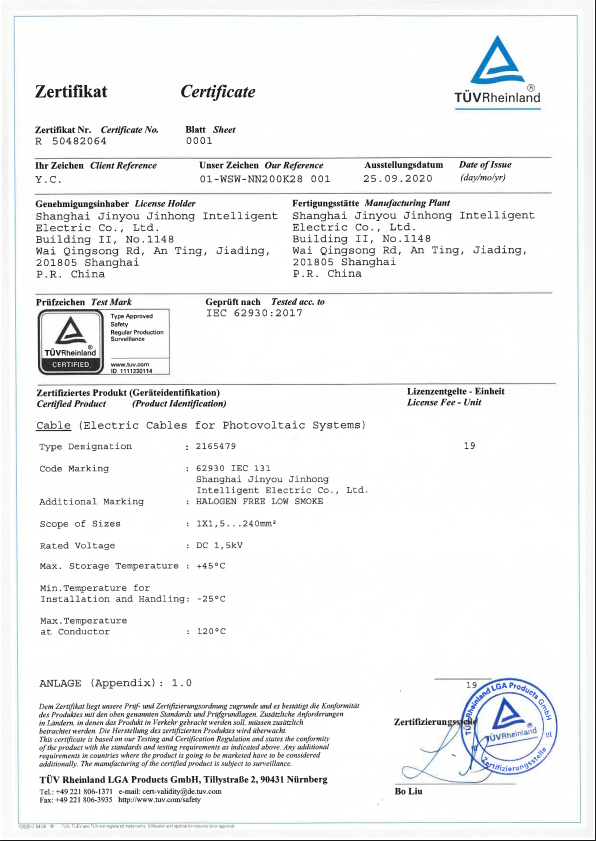
IEC 62930:2017 applies to single-core cross-linked insulated PV power cables on the DC side up to and including 1.5 kV DC. The published Jinyou building-PV row allows 1–2 cores, so a request for IEC 62930 evidence must be matched to the exact offered core construction rather than inherited from the application name.
Building Product and Cable Evidence
IEC 63092-1:2020 addresses BIPV modules used as building products. Use it to coordinate the module and building-product workstream, while the cable workstream carries its own construction, installation and evidence requirements.
BIPV, Rooftop and Utility-Scale Cable Scope
A route name starts the commercial discussion; it is not a substitute for electrical design. Keeping the three scopes separate prevents a facade inquiry from becoming a generic solar cable quote and stops a solar-farm route from inheriting building-envelope assumptions.
BIPV Cable
Start with the building component, concealed or protected route, interfaces and maintenance access. Coordinate photovoltaic, building-envelope and electrical requirements in one route brief.
Rooftop Solar Cable
Start with array wiring above the roof, mounting, exposure, penetrations, inverter location and the applicable project code. Keep the roof waterproofing design separate from the cable performance claim.
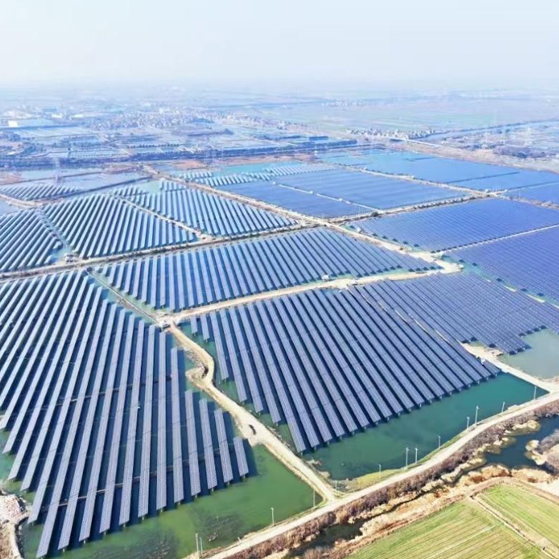
Solar Farm Cable
Start with string, branch, collection, tray or buried route; system voltage; current; voltage drop; connector; soil or weather exposure; and utility-scale acceptance requirements.
Shared Inputs Across All Three Scopes
- Electrical schedule, conductor calculation and maximum system voltage.
- Installation method, route length, support, bend and mechanical-protection plan.
- Ambient and local exposure conditions, including the hottest enclosed segment.
- Connector, terminal, combiner, disconnect and inverter interface.
- Destination jurisdiction, requested standard and evidence package.
Fast Classification Test
If removing the photovoltaic product would require an equivalent conventional building component, the project fits the BIPV definition used by IEA PVPS.[2] If modules sit above a roof or on the ground as a separate array, route the inquiry to the rooftop or utility-scale cable scope before product selection.
OEM Specification Support from Jinyou Cable
Shanghai Jinyou Jinhong Intelligent Electric Co., Ltd. was established in 2006 and is based in Shanghai. Jinyou Cable designs, manufactures and sells cable solutions for solar power, energy storage and electric vehicles, with products supplied to partners in over 40 countries.
We design and manufacture photovoltaic cables for project-specific installation environments. We provide custom OEM support from specification review through production and testing.
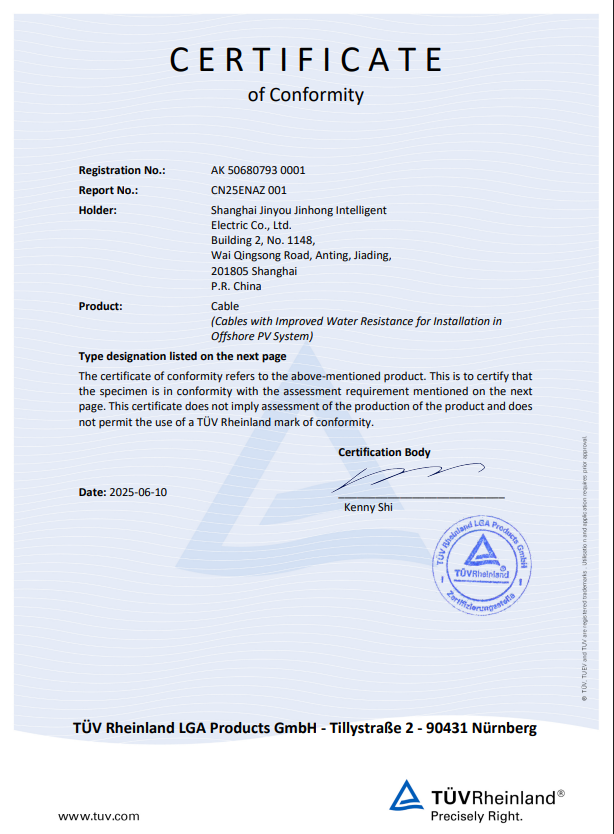
We review photovoltaic cable requirements for installation environments that do not fit a generic product description.[1] The review starts with the electrical design, route, interfaces, evidence and quantity rather than changing a model name in isolation.
Our Shanghai facility uses automated production machinery and testing systems to support consistent cable manufacture and quality control. The exact production and inspection plan belongs in the accepted order scope.
From Inquiry to a Reviewable Cable Scope
Receive the route brief.
We collect the eight RFQ fields, drawings and requested evidence.
Resolve scope conflicts.
We separate module, building-envelope, electrical-system and cable requirements so each has an owner.
Review the model candidate.
We compare conductor, cores, size, voltage, environment and interfaces with the proposed construction.
Confirm evidence.
We identify the data sheet, certificate, report, sample or approval document required by the buyer.
Issue a written quotation.
The offer records the product scope, quantity, customization, testing, packaging and commercial terms.
Freeze the approved specification.
Production follows the written model, construction, marking and acceptance package agreed for the order.
OEM Specification Package
| Package element | Buyer input | Jinyou review output |
|---|---|---|
| Product identity | Application, requested model and construction | Offered model and construction description |
| Electrical scope | Voltage, current, size calculation and circuit | Product match and clarification list |
| Route scope | Drawing, environment, interfaces and access | Installation-related product conditions |
| Evidence scope | Standards, certificates, tests and document format | Document list tied to the offered item |
| Commercial scope | Quantity, delivery point, packing and timing need | Written quotation and order boundary |
“Innovation and reliability are essential to building a sustainable future.”
— Jinyou Cable
BIPV Engineering Tools
BIPV Cable FAQ
What makes a photovoltaic project BIPV?
The photovoltaic product must generate electricity and serve as a building component. If removing it requires replacement by an equivalent conventional building component, the project fits the dual-function definition used by IEA PVPS.[2]
What is the difference between BIPV and BAPV?
BIPV places the photovoltaic product within the building envelope or another building element. Building-applied PV places modules above or outside that envelope on a separate mounting system, so the route and interface questions differ.
Can the same cable be used for a facade, rooftop array and solar farm?
Do not select from the application label alone. Compare the exact construction with the voltage, cores, conductor size, route, environment, interfaces and required standard for each project.
How is BIPV wiring concealed within a building?
Routes may use mullion, transom, cavity, seam or other protected channels before entering accessible electrical enclosures. The drawing should still preserve support, bend, drainage, separation, inspection and replacement access.
Does BIPV cable make the roof or facade waterproof?
No cable substitutes for the waterproofing design of a roof or facade system. Specify the approved module interface, glands, seals, penetrations and drainage detail, then review the cable for the resulting exposure and route.
Is GF-YJYJR-B1(d1,t0,a1) an IEC 62930 cable?
The Jinyou page lists that model as 1–2 cores and 2.5–6 mm² for building photovoltaic systems. IEC 62930:2017 applies to single-core PV power cables, so request exact-model evidence for the offered core construction instead of assuming compliance from the application name.
Which conductor size should be requested?
Submit the project engineer’s calculation with current, route length, allowable voltage drop, grouping, temperature and installation method. The published building-PV row covers 2.5–6 mm², but the final size must come from the circuit and route design.
Which information produces a comparable BIPV cable quote?
Send the eight-field RFQ card: building function, route drawing, DC circuit, conductor request, service environment, interfaces and access, jurisdiction and standards, plus evidence and delivery requirements.
How quickly will Jinyou respond to an inquiry?
We respond to inquiries within 24 hours. Attach the route, electrical inputs, quantity and document request so that the first reply can focus on technical clarification.
Can Jinyou support a custom OEM photovoltaic cable request?
Yes. Jinyou’s custom OEM scope covers standard photovoltaic cables and specialized products for project-specific installation environments; the offered construction and evidence are confirmed in the written quotation.

