Get in touch with JINYOU Cable Company

-
CALL US +86 181 1623 2461
-
EMAIL sales@jinyougroup.cn
Utility-Scale DC Solar Cable Solutions | Jinyou Cable
A utility scale solar cable request becomes useful when it identifies the exact DC position, electrical basis, route conditions, connector interface and required evidence. For solar PV and broader renewable energy procurement, Jinyou Cable reviews these inputs against an H1Z2Z2-K reference construction without implying that one photovoltaic cable covers the AC or medium-voltage collection system.

1500 V DC
reference system voltage
H1Z2Z2-K
reference construction
Custom OEM
project-specific review
Since 2006
Shanghai cable manufacturer
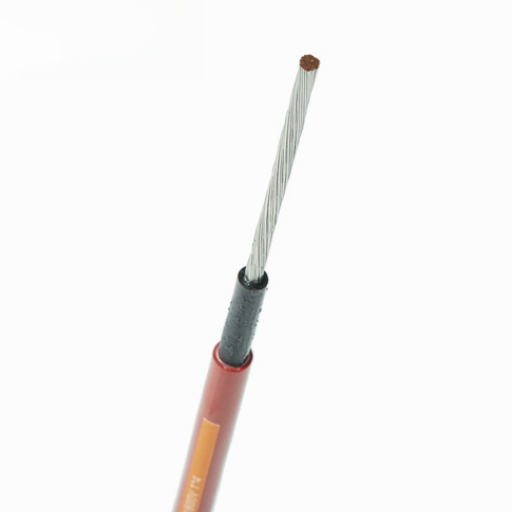
56 strands
Class V annealed tinned copper reference
5.5 ± 0.2 mm
reference outer diameter
40+ countries
client-confirmed export experience
7–15 days
production lead-time commitment
Utility-Scale DC Solar Cable Capabilities
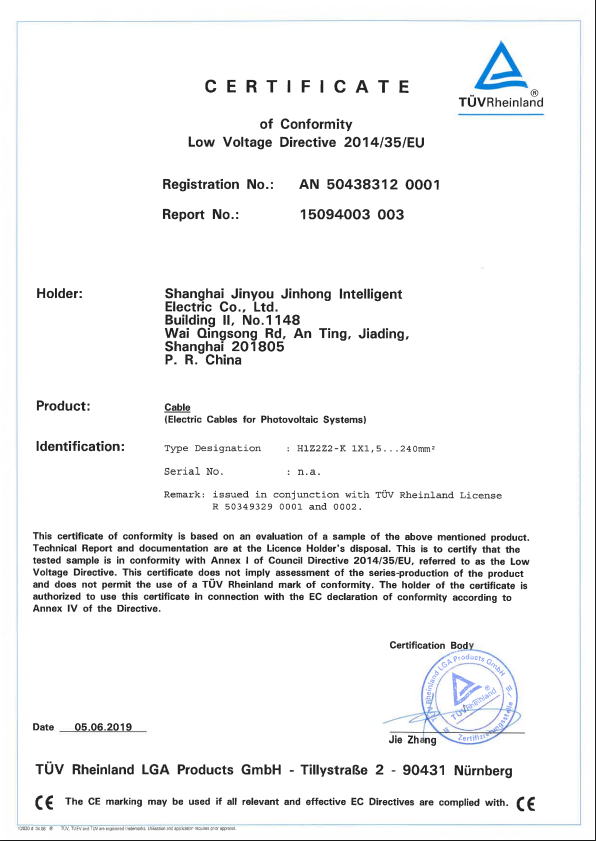
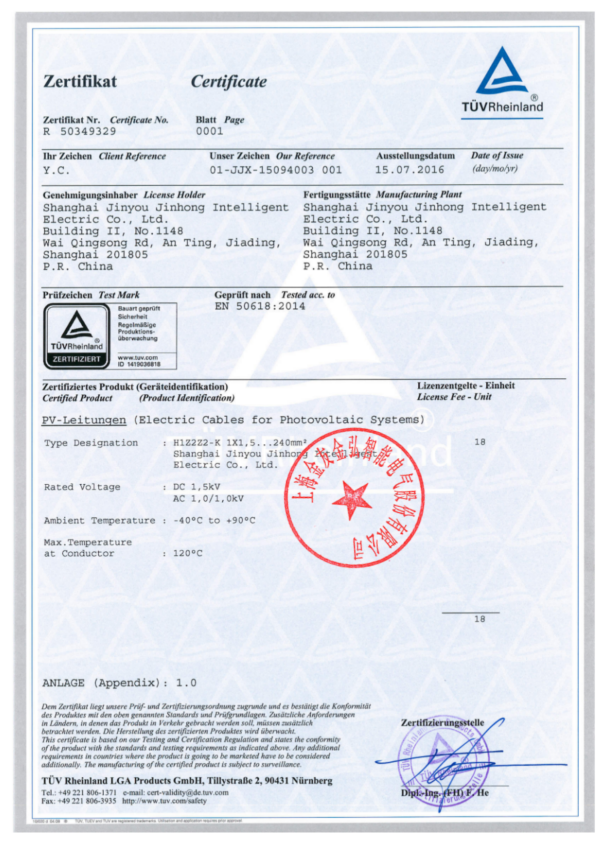
Scope confusion creates project risk because a DC product name can be mistaken for the entire collection system. Jinyou Cable uses the IEC 62930 photovoltaic-side scope and the EN 50618 product context to frame module, string, combiner box and inverter-side review while adjacent power cables remain separate.
Identify whether the cable sits at a solar panel lead, string home run, combiner interface or inverter-side DC connection.
Use the H1Z2Z2-K solar cable values as a controlled starting point, not as an automatic project approval.
Confirm conductor, insulation, outer sheath, color, marking, bundle or reel packaging and document requirements in writing.
Send the same engineering and procurement inputs to each solar cable supplier so quotations address a comparable scope.

Conductor, Insulation, and Sheath Configuration
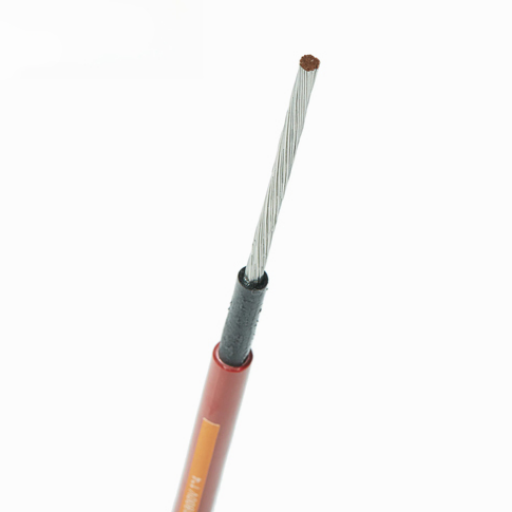
A conductor or outer-diameter mismatch creates termination and release risk because the cable construction must align with the named project interface. Jinyou Cable therefore keeps the 56-strand conductor and 5.5 ± 0.2 mm outer-diameter values bound to the supplied reference row rather than treating an EN 50618 context as proof that every size shares them.
The reference conductor is described as Class V, also searched as class 5, annealed tinned copper. The insulation and sheath dimensions belong to the supplied reference row and cannot be transferred to every cross-section or custom solar cable without confirmation.
Environmental labels need exact proof
Do not infer UV, ozone, ozone-resistant, halogen-free, low smoke, low smoke zero halogen, XLPE, AD8 or 120°C performance from the product name. If a solar installation requires one of these properties, place it in the acceptance schedule and request the exact product record.
Configuration Parameters
Conductor
Class V annealed tinned copper, 56 strands, each no larger than 0.31 mm
Insulation
0.70 mm nominal and 0.53 mm minimum reference thickness
Outer sheath
0.80 mm average and 0.58 mm minimum reference thickness
Required Schedule
- Conductor area in mm² or AWG basis
- Required cross-link construction evidence
- Outer diameter tolerance for the connector
- Insulation and sheath color
- Project marking language
- Required datasheet revision
Project Marking, Color, and Packaging Options
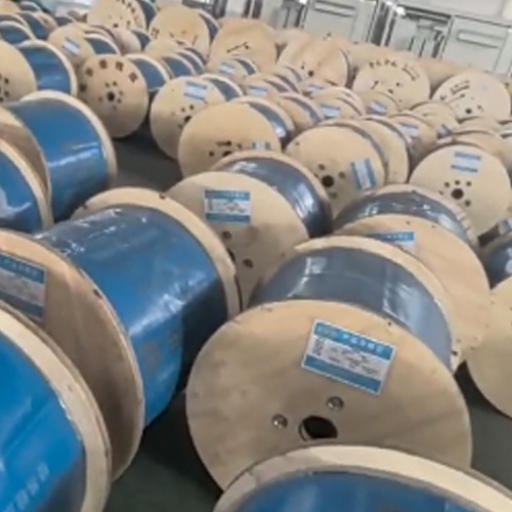
Ambiguous marking or packaging creates receiving risk because the reel, bundle and document identity can drift from the approved specification. Jinyou Cable binds OEM color, marking and traceability fields to the written quotation and packing list; any EN 50618 designation remains tied to the exact released product record.
Sheath color
- Input needed
- Color reference and circuit-identification rule
- Confirmed in
- Approved specification and sample where required
Cable marking
- Input needed
- Product designation, voltage, size, manufacturer text, lot or meter marking
- Confirmed in
- Marking artwork and quotation
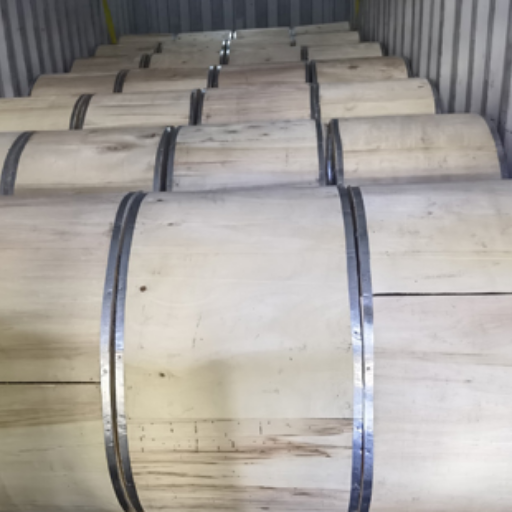
Packaging
- Input needed
- Coil, reel or project bundle preference plus handling limits
- Confirmed in
- Packing list and written order scope

Traceability
- Input needed
- Lot, reel, test and document references required by quality
- Confirmed in
- Document register and shipment records
Utility-Scale DC Cable RFQ Input Matrix
The table captures the supplied H1Z2Z2-K reference construction and test conditions. The EN 50618 designation context does not change that boundary: these measurements are first-party reference values for a 1500V solar cable request, not an installation-specific ampacity or voltage-drop result.
| Specification | Reference value | Use boundary |
|---|---|---|
| Rated system voltage | DC 1500 V | Reference product-page value |
| Conductor | Class V, 56 strands, each ≤0.31 mm | Annealed tinned copper reference construction |
| Insulation thickness | 0.70 mm nominal / 0.53 mm minimum | Reference construction only |
| Sheath thickness | 0.80 mm average / 0.58 mm minimum | Reference construction only |
| Outer diameter | 5.5 ± 0.2 mm | Confirm against selected size and connector entry range |
| Voltage withstand | 6.5 kV for 5 minutes, no breakdown | Reference test condition, not operating voltage |
| DC resistance | ≤5.09 Ω/km at 20°C | Reference test value, not project voltage drop |
| Tensile strength and elongation | ≥8.0 N/mm² and ≥125% | Reference mechanical values for insulation and sheath |
| Input | Engineering owner | Procurement or quality output |
|---|---|---|
| System position and circuit boundary | Mark array, string, combiner or inverter-side DC position | Controlled scope description |
| Jurisdiction and acceptance path | Name governing project requirements | Required listing, mark and record |
| Voltage, current and conductor basis | Provide design values and calculation basis | Comparable cable configuration |
| One-way routing length | Provide route and voltage-drop target | Total length and allowance basis |
| Installation and thermal environment | Provide air, duct, tray or soil conditions | Required environmental evidence |
| Grouping and spacing | Provide circuit arrangement and derating basis | Project review assumptions |
| Connector interface | Name manufacturer, family, model and cable entry range | Mating and termination document request |
| OEM and logistics | Define color, marking, packaging, quantity and schedule | Written commercial scope |
| Quality documents | Define type, routine, batch and traceability records | Document register |
Pricing Drivers and Delivery Planning
Quote ambiguity creates schedule risk because material, length, testing and packing inputs can describe different scopes. Jinyou Cable records those drivers in the written quotation, with a production lead time of 7–15 working days after the specification is complete.
Copper basis, conductor area, insulation and outer sheath construction define the material scope.
Route totals, production lengths and bundle or reel splits shape the order basis.
Custom identification, print content and traceability fields need written release.
Required records, witnesses and batch documentation should be named before quotation.
Reel limits, protection and destination inputs belong in the logistics scope.
Any revised cable, connector, route or schedule input must update the written specification and quotation.
Production Control and Cable Testing
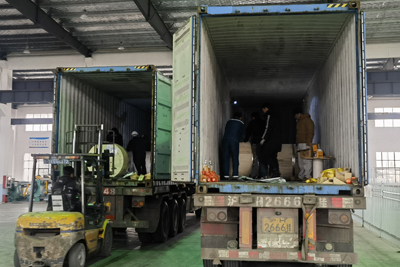
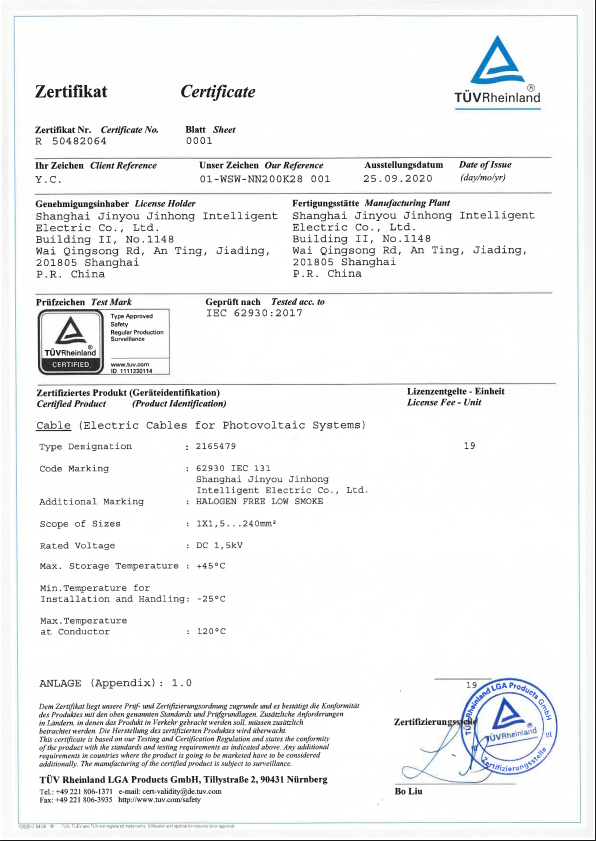
Quality ambiguity creates release risk because a company profile is not a product record. Jinyou Cable is a solar cable manufacturer for solar energy applications and has manufactured cable since 2006, serves customers across more than 40 countries, uses automated production and testing systems, and verifies the requested PV cable against the IEC 62930, UL or other project record.
Incoming material review
We bind conductor and compound identity to the production lot and order specification.
In-process checks
We control construction dimensions, surface condition and marking during production.
Electrical and mechanical tests
We confirm the test items, conditions and acceptance values required for the ordered cable.
Record review
We match results, lot identity, reel or bundle identity and document revision before release.
Certification record check
We verify the exact mark, file or listing record requested for the named product and intended use.
Shipment document closure
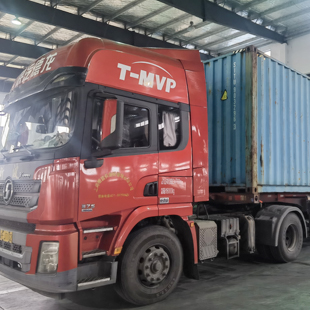
We confirm which reports and traceability documents accompany the shipment.
Documents to confirm in the quote
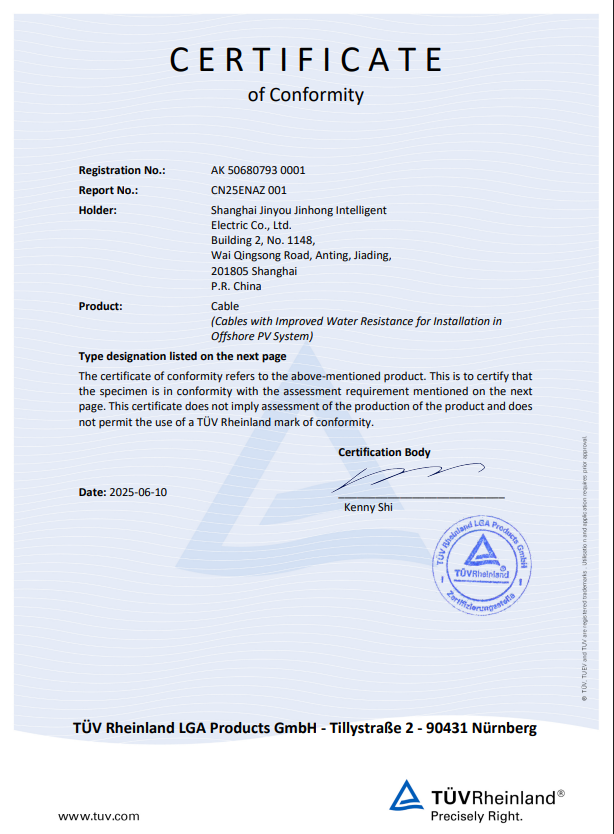
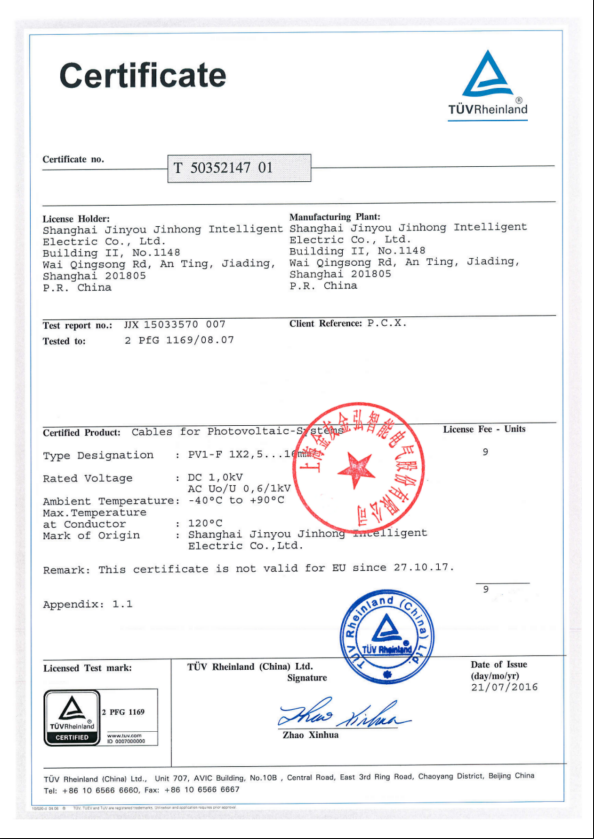
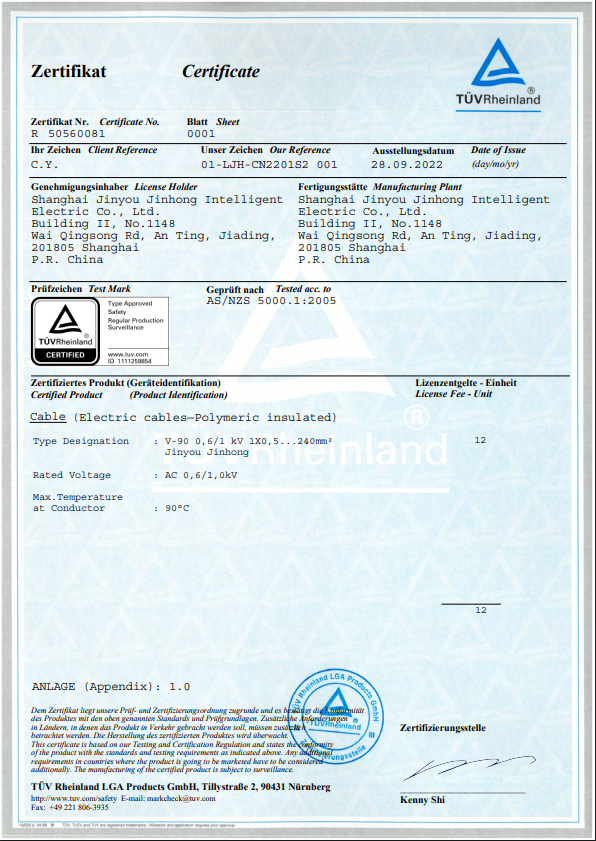
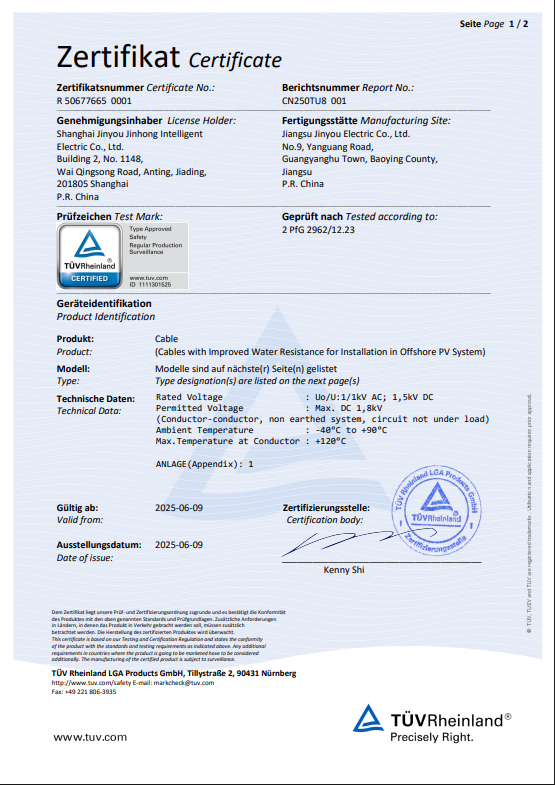
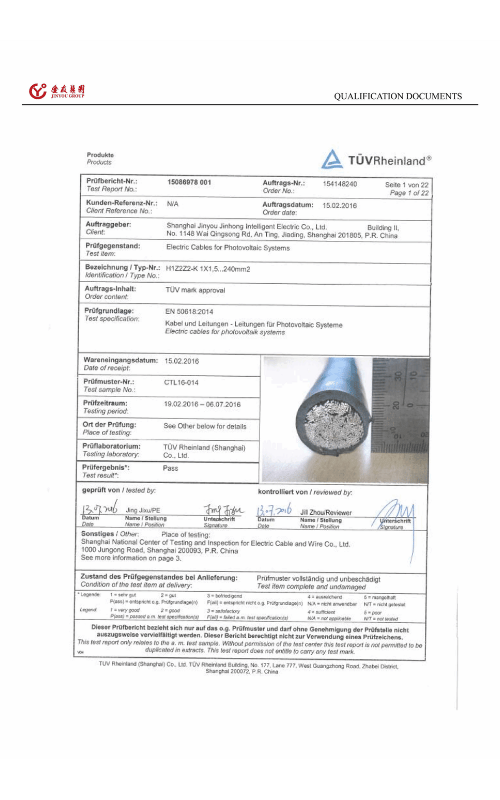
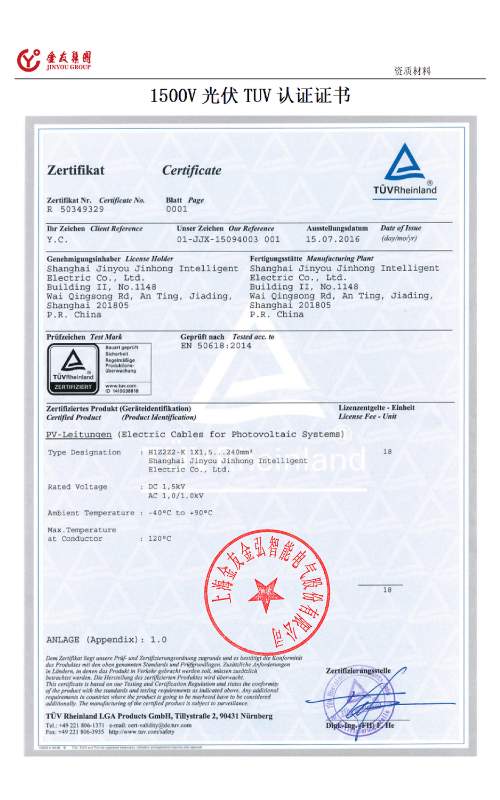
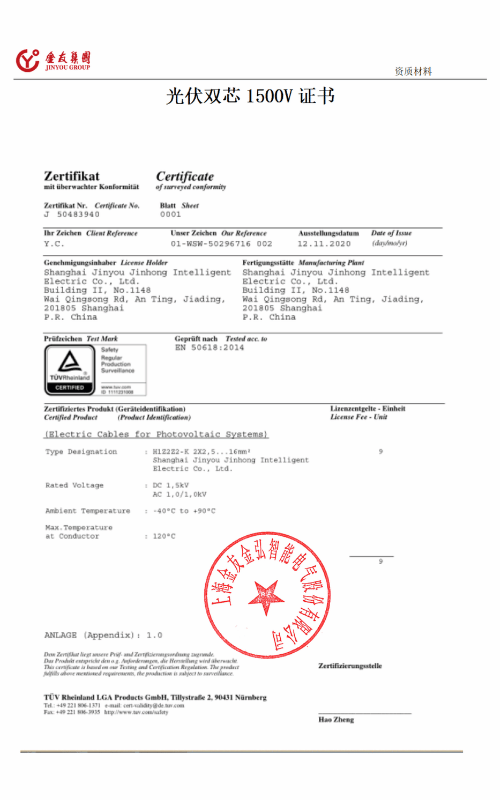
Request the current datasheet, approved drawing, cable marking, applicable IEC, EN 50618, UL or other project record, and the required routine or batch test report. A TUV or TÜV reference is not treated as product approval unless the exact certificate identity, scope and validity are verified.
How We Work: Engineering Review to Shipment
Revision mismatch creates production and delivery risk because engineering decisions, supplier confirmations and commercial terms can drift apart. For that reason, Jinyou Cable binds the released construction, IEC 62930 or other adopted requirement, testing scope and quotation to the same revision chain.
We begin with system position, electrical basis, route, environment, connector, quantity and documents.
We separate photovoltaic DC cable from AC, medium-voltage and cable management scope.
We match conductor, insulation, sheath, outer diameter, marking and packaging inputs.
We record technical assumptions, testing, documents, delivery terms and payment terms.
We run the confirmed production and inspection scope against the released specification.
We close traceability, packing and shipment documents before dispatch.
DC Connection Scope for Utility-Scale PV Projects
A blurred system boundary creates interface risk because solar panels, the array, combiner and inverter do not share one universal cable decision. Jinyou Cable uses the 1500 V DC reference only where the construction and project inputs match the photovoltaic-side position. The IEC 62930 and EN 50618 context remains limited to that photovoltaic-side qualification and does not select the AC route.
Solar panels
Record the module lead and connector interface.
String and array
Define the DC run, routing and grouping.
Combiner
Confirm the combiner box termination and cable entry.
Inverter
Close the DC interface before the separately qualified AC path.
Adjacent route
Rooftop solar cable
Building fire, concealed routing and mechanical protection need an independent project review.
Adjacent route
BIPV cable
Facade or roof-integrated routing introduces building-envelope interfaces that this page does not own.
Separate system
Collection and grid path
AC and medium-voltage cable solutions begin with a separate one-line diagram and voltage class.
Project Qualification Risk Map
Engineering release rule: release the cable only when construction, project sizing, environmental use, market-access evidence and connector assembly all point to the same project revision.
-
1. Construction
Exact product, dimensions and marking
-
2. Sizing
Current, length, voltage drop and fault duty
-
3. Environment
Installation, temperature, soil, water and grouping
-
4. Market access
Applicable mark, listing and searchable record
-
5. Assembly
Connector pair, contact, tooling and records
Project Resources
Engineering Review & Qualification Tools
What cables are used in a utility-scale solar farm?
The photovoltaic DC side can include module leads, string or array runs, combiner connections and inverter-side DC cable. AC and medium-voltage collection power cables belong to separate electrical scopes. Do not collapse those scopes into one cable schedule: each handoff may have its own voltage class, installation condition, termination method and approval record.
Is photovoltaic cable enough for the whole solar farm?
No single photovoltaic cable automatically covers every circuit. Map the array, combiner, inverter, transformer and grid interfaces before assigning cable types.
Where is H1Z2Z2-K cable used in the DC circuit?
IEC 62930 describes single-core cross-linked insulated and sheathed cable for the photovoltaic DC side up to 1.5 kV DC. The actual installation still needs product-specific and project-specific acceptance.
Which site conditions change cable sizing and allowable current?
Installation method, grouping, ambient or soil temperature, soil thermal resistivity, spacing and route length can change the result. The responsible engineer should check voltage drop, derated ampacity and short-circuit duty together.
What is the difference between H1Z2Z2-K and PV1-F?
They are designation and standard-context questions, not interchangeable purchase labels. State the governing project requirement and ask for the exact product record instead of assuming equivalence.
Can the supplied reference cable be installed underground?
The current reference data does not prove direct-burial suitability. Submit the trench, conduit, water, soil, temperature, cable tray transition and mechanical-protection conditions for review.
Does an H1Z2Z2-K reference establish United States market approval?
No. United States acceptance requires the applicable product-specific mark, listing and record for the intended use; IEC or EN context alone is insufficient.
Why must photovoltaic connectors be qualified as an exact mating pair?
Physical fit does not prove certified compatibility. The connector family, part numbers, contact, cable outer diameter, approved tool and assembly instructions must align.
What should an EPC include in a solar cable RFQ?
Include system position, jurisdiction, voltage, current or cross-section, one-way length, routing, thermal environment, grouping, connector, OEM details, quantity and required documents.
Which test records and documents should be confirmed?
Confirm the approved datasheet and drawing, product marking, applicable certificate or listing record, lot traceability and the required type, routine or batch test reports.
How do conductor, quantity and packaging affect the quotation?
Conductor basis and cross-section affect material, while total length, order split, marking, reel or bundle plan, testing and documents affect production and delivery scope.
How are custom colors, markings and urgent orders confirmed?
Release color and marking through the written specification. Urgent-order feasibility is reviewed case by case after complete cable specifications are received.

