Get in touch with JINYOU Cable Company

-
CALL US +86 181 1623 2461
-
EMAIL sales@jinyougroup.cn
PV Power Cable
PV Power Cable Solutions for Solar Projects
JINYOU Cable is a solar cable manufacturer for EPC teams, distributors, and equipment buyers looking to turn a PV power cable request into a defined product and commercial scope. Before quotation, we match the cable family, construction, evidence package, and delivery terms to the destination market and project inputs.
- 01 Project-specific cable-family review
- 02 OEM marking and packing scope
- 03 Product-evidence checklist
- 04 25-35 working-day production planning
Request a PV Cable Quote
Provide: destination market, system voltage, conductor size or gauge, environment, quantity and any owned documents.
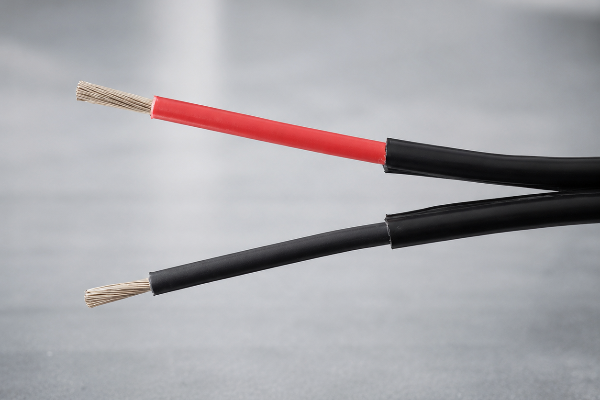
Destination market and governing project requirements
- System voltage, conductor size or AWG, circuit function, quantity
- Outdoor environment, routing, packing, connector, and termination scope
- Product records, test documents, and markings required for approval
Company base
Shanghai cable manufacturer established in 2006
Product focus
Photovoltaic cable families for renewable energy projects
OEM review
Construction, marking, color, packing, and document scope
Production planning
25-35 working days after specification and commercial approval
Samples
Standard sample availability checked against stock before dispatch
Manufacturing scope
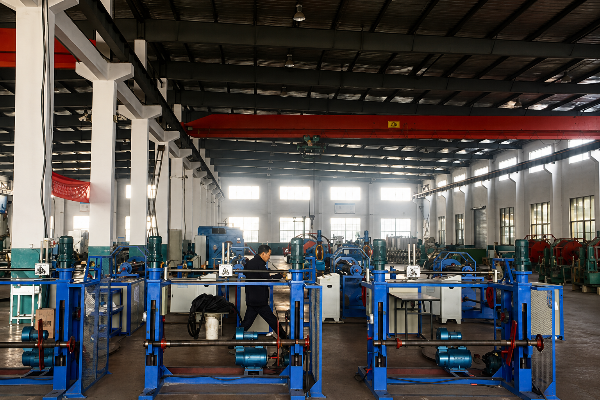
Since 2006, we have designed and manufactured cables in Shanghai. We provide custom OEM services for solar power, energy storage, and electric-vehicle applications. Our Shanghai production facility uses automated machinery and testing systems for custom-designed cables.
PV Power Cable Core Range And Adjacent Solar Cable Solutions
Before specifying a solar photovoltaic cable, compare search labels such as solar panel cable, photovoltaic wiring, and solar power cable against the circuit function; those labels can collapse several categories. A familiar designation can be mistaken for blanket approval, yet H1Z2Z2-K and PV1-F are not interchangeable quotation labels. IEC 62930:2017 describes single-core, cross-linked insulated and sheathed cable for the DC side of photovoltaic power systems; one designation is not a substitute for the exact product record.
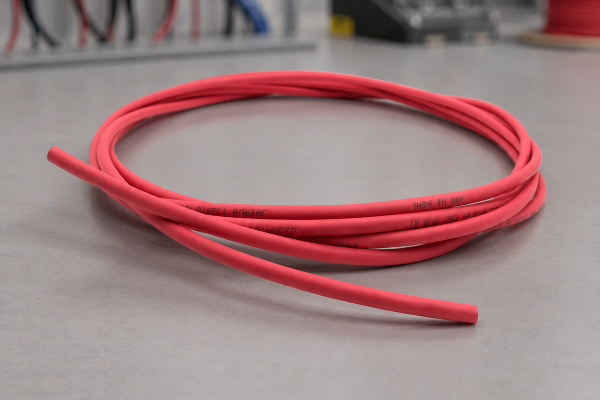
Use this family as a project reference when the tender or design calls for H1Z2Z2-K. We confirm the exact construction, size, voltage, marking, and product record in the quotation rather than applying one reference row to the full range.
PV1-F remains a distinct requested family in replacement, installed-base, and market-specific enquiries. We do not treat it as an automatic synonym for H1Z2Z2-K.
When a drawing names the circuit function but not a harmonized family, we review the DC-side application, conductor, insulation, outer sheath, voltage, environment, and evidence requirement before a product is quoted. This separates the wire used to connect solar panels on the DC side from cable selected for another part of the solar system.
A current-carrying PV conductor is not a grounding or bonding conductor. The ground path belongs to the electrical design and needs its own material, cross-section, identification, and approval basis.
Control, monitoring, and signal circuits have different electrical and interface duties from string power cable. Send the equipment interface and circuit function so the request is not routed into the wrong cable family.
Wet, offshore, desert, high-temperature, and other exposed solar applications require an exact construction and qualification review. A generic outdoor claim is not enough for those conditions.
Core Range Versus Adjacent Categories
| Project Need | Starting Product Category | Information That Decides Fit |
|---|---|---|
| Module strings to combiner box or inverter | Single-core solar DC cable or PV wire | Market, voltage, current, cable size, route, environment, and connector system |
| Protective bonding | PV grounding cable | Grounded and ungrounded system design, conductor material, identification, and local rules |
| Monitoring, control, or auxiliary circuit | Control or signal cable | Interface, shielding, core count, voltage, and device requirement |
| Alternating-current collection or export | Project-specified AC power cable | Voltage class, installation method, conductor, ampacity study, and protection design |
| Long underground route | Qualified underground cable category | Direct burial marking or listing, moisture, soil, protection, and jurisdictional acceptance |
| Distribution portfolio | Market-specific product mix | Standard direction, labels, packaging, order bands, evidence package, and destination |
SYS // REVIEW
What JINYOU Reviews
We review the application first, then the product family. That order prevents a familiar cable name from replacing the electrical design, installation rules, or exact product record.
Conductors, Insulation, Sheaths, And Cable Configuration
Changes in the bill of materials affect electrical performance, termination fit, flexibility, environmental resistance, and pricing. Define what is fixed by the project and what JINYOU may propose for review.
// SYS.01
Conductor
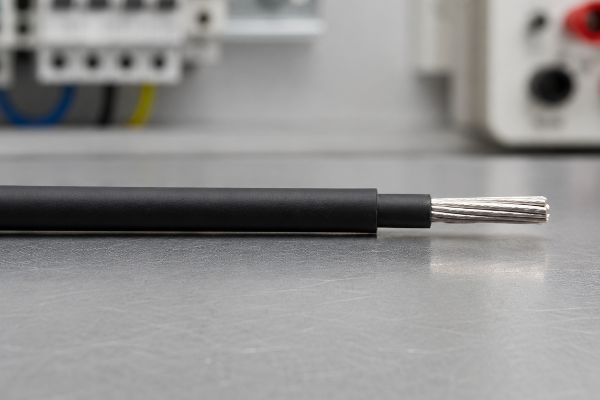
State copper, tinned copper, aluminum, or another specified conductor material; add the cross-section in mm² or AWG and the applicable strand class. Copper and aluminum require their own verified terminal, connector, and installation interfaces; a copper conductor, stranded copper, and fine-strand construction do not share every termination.
- Material and plating
- Nominal cross-section or gauge
- Strand class and flexibility need
- Maximum current and design basis
// SYS.02
Insulation System
State the required product standard and exposure instead of requesting “solar insulation” alone. Confirm cross-link chemistry, cross-linked polyethylene, halogen content, temperature class, UV resistance, and moisture behavior before approving a product construction.
- Insulation material or governing test requirement
- Wet, dry, sunlight, ozone, and chemical exposure
- Normal and extreme temperature conditions
- Fire, smoke, or halogen requirement where applicable
// SYS.03
Outer Sheath And Identification
The outer sheath protects the insulated conductor from abrasion, sunlight, moisture, and handling. Send color, print legend, meter marking, language, and any project identification that must appear on the cable.
- Sheath material requirement
- Black, red, or project color
- Manufacturer and standard marking
- Batch, length, or customer code
// SYS.04
Length And Packing
Roll, reel, and drum choices affect handling, waste, freight, and installation sequence. Include cut length, tolerance, quantity per package, label content, pallet limit, and destination so the packing scope is quoted with the cable.
- Continuous length or cut set
- Roll, reel, or drum
- Label and barcode fields
- Export packing and destination
PV Cable Connectors And The Termination System
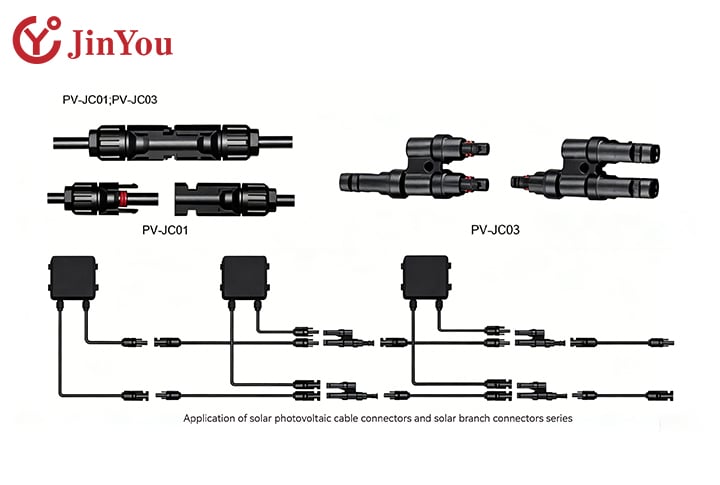
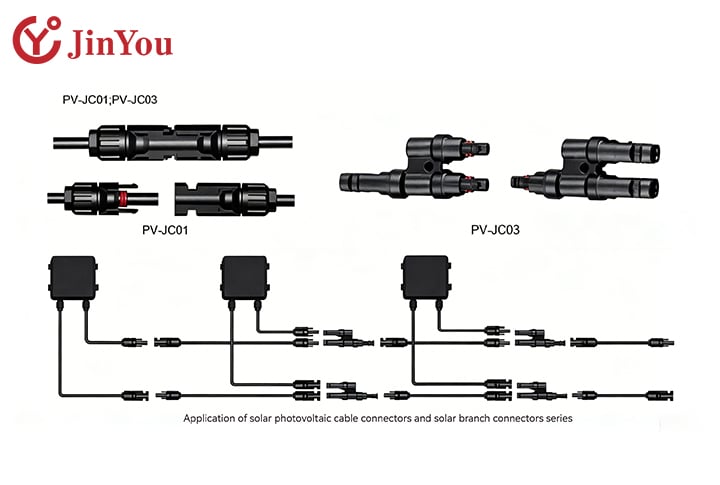
A connector is not a detachable afterthought. IEC 62852 addresses DC connectors for photovoltaic systems, while product and installation acceptance still depend on the exact mating pair, contact, cable outer diameter, seal, crimp tool, assembly method, and project rules.
| Interface Item | Buyer Input | Quote Confirmation |
|---|---|---|
| Connector pair | Manufacturer, family, male/female part numbers, and mating equipment | Exact supplied pair and any excluded cross-mating |
| Contact | Contact part number and conductor range | Contact-to-strand and contact-to-cross-section fit |
| Seal or gland | Cable outer-diameter range and ingress requirement | Seal range bound to the finished cable diameter |
| Crimp | Approved tool, die, locator, and inspection method | Factory or field termination responsibility |
| Verification | Pull, resistance, polarity, visual, or project test requirement | Agreed sample and production record |
// WARNING
Why Physical Mating Is Not Enough
A connector can physically mate while the pair remains outside an evaluated combination. The IAEI review and SolarPower Europe procurement guidance both separate apparent fit from evaluated compatibility, because small differences in contact metal, plastic, seal geometry, cable diameter, or factory changes can affect the connection. The trade-off between factory termination and field assembly belongs in the quotation; procurement should identify the connector maker and model, mating equipment, contact, seal, approved cable outer-diameter range, crimp tool and die, assembly instruction, and responsible party.
Installation Environment and Cable Selection
A buyer can receive a nominal PV cable size but still lack the run length, current, voltage-drop, grouping, ambient, and installation inputs needed for a design decision. IEC 62548-1:2023 addresses PV array design, including DC wiring, protection, switching, and earthing; IEC 60364-7-712:2025 addresses PV electrical installations. Those scopes sit beside the cable product record, not inside it.
01
Rooftop solar installations
Provide roof type, cable route, grouping, conduit or tray, ambient and roof-adjacent temperature, sunlight exposure, support method, and fire requirement. The installer or project engineer decides ampacity and voltage-drop treatment under the applicable rules.
02
Utility-scale solar projects
Provide the solar PV string layout, run lengths, combiner or inverter interface, grouping, support spacing, site temperature, cleaning chemicals, and packing sequence. Long runs can make conductor sizing, cable loss, installation logistics, and exposure-driven degradation move together.
03
Wet, floating, or coastal exposure
State immersion, splash, humidity, salt-laden atmosphere, water-entry protection, connector sealing, and cable support. Do not assume a weather-resistant sheath proves underwater or direct-burial suitability.
04
Desert and high-UV exposure
State maximum site temperature, UV radiation, sand, abrasion, thermal cycling, and mechanical support. “UV resistant” needs a product record and exposure scope; it is not a universal service-life promise.
05
Conduit, tray, and bundled routes
State the route, fill, grouping, bend points, pulling method, support, and ventilation. A cable that can withstand outdoor environments still needs the right installation and derating decision.
06
Destination-market approval
State the country, authority, customer specification, and requested standard or listing. EN 50618, IEC 62930, UL 4703, 600V, 2kV, and other labels belong to different market and product records; none should be selected from a keyword alone.
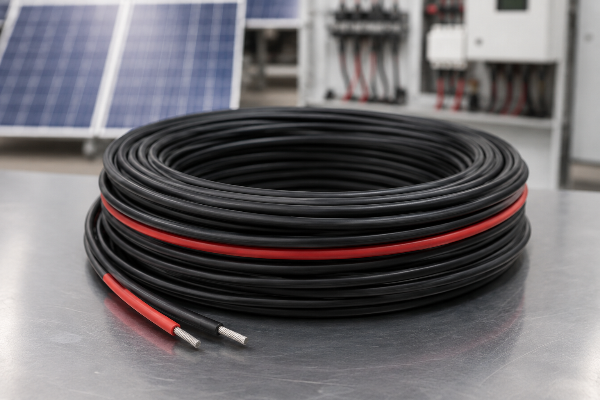
Environment-to-evidence matrix
| Condition | Product evidence to request | Project decision kept separate |
|---|---|---|
| Sunlight and UV | Exact product construction, marking, and relevant UV test or certification scope | Route, support, inspection, and expected exposure |
| Moisture or wet location | Product qualification for the stated wet condition and matching seal range | Drainage, entry, submersion, and system enclosure |
| Direct burial | Applicable category, listing, certificate, or explicit product marking for burial use | Trench, protection, soil, depth, local code, and maintenance access |
| High temperatures | Product temperature scope and test basis for the exact construction | Ambient, grouping, roof effect, current, and derating |
| Movement and bending | Finished diameter, bend requirement, flexibility, and connector/cable interface | Tracker movement, support, pull path, and maintenance handling |
| Fire and smoke requirement | Exact standard, class, report, and product range | Building, route, evacuation, and local approval requirements |
PV Cable Standards, Ratings, and Specification Matrix
IEC 62930:2017 defines a product-standard scope for single-core cross-linked insulated and sheathed cable on the photovoltaic DC side up to and including 1.5 kV DC. It does not choose the cable size, approve a connector pair, verify a JINYOU model, or settle local installation acceptance.
NOTICE
Why no borrowed product table appears here
A model-specific conductor range, finished diameter, resistance, temperature, fire class, burial claim, or test value must come from the current JINYOU product record for the exact configuration. Until that record is attached to the quotation, the safe specification is the project input matrix below.
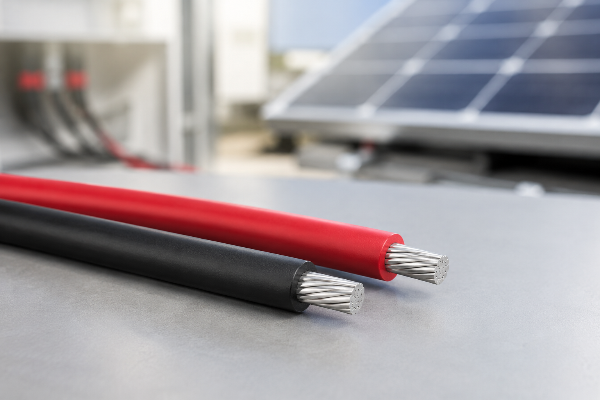
SPEC MATRIX
| RFQ item | Required project input | What the quotation must bind |
|---|---|---|
| 01 · Destination | Country, authority, owner specification, and language | Applicable product family and evidence path |
| 02 · Circuit | Module lead, string, combiner, inverter, grounding, control, AC, or other duty | Correct wire and cable category |
| 03 · Voltage | System voltage and required cable voltage class | Exact model rating in its product record |
| 04 · Current | Design current, protection, and engineering basis | Proposed conductor size for project approval |
| 05 · Conductor | Copper or aluminum, plating, cross-section or AWG, and strand class | Material and construction supplied |
| 06 · Construction | Insulation, outer sheath, cores, colors, and marking | Bill of materials and print legend |
| 07 · Environment | Sunlight, UV, moisture, chemicals, sand, temperature, and movement | Product qualification scope and exclusions |
| 08 · Installation | Free air, tray, conduit, bundled, buried, floating, rooftop, or tracker route | Product suitability items that need evidence |
| 09 · Connector | Manufacturer, model, contacts, seals, cable OD range, and mating equipment | Supplied parts and prohibited substitutions |
| 10 · Termination | Factory or field assembly, tool, die, locator, training, and tests | Responsible party and acceptance record |
| 11 · Length | Cut length, tolerance, roll, reel, or drum quantity | Finished length and packing unit |
| 12 · Evidence | Certificate, test report, inspection, material, or traceability requirement | Named documents included in the order |
| 13 · Quantity | Order quantity, release plan, sample need, and forecast | Price basis and production release |
| 14 · Delivery | Destination, Incoterm, target date, and shipping marks | Commercial and logistics scope |
ACTION
Send Your Cable Specification
Build the RFQ. Turn known project inputs into a copyable request without calculating a safety-critical cable size.
Open the PV Cable RFQ BuilderACTION
Check the evidence set
Review whether a certificate or report is bound to the exact product and current order.
Open the Product Evidence CheckerACTION
Route the cable category
Compare circuit and environment inputs before selecting a product family.
Open the PV Cable Selection MatrixPricing, Samples, and Production Planning
Photovoltaic cable price follows the selected family, conductor material and cross-section, insulation and sheath construction, color and print, cut or drum length, connector and termination scope, test and document package, quantity, packing, destination, and trade terms. A fixed public price is the wrong answer when the specification that drives the order remains open.
What moves the quotation
Cost driver
Why it changes the order
Input that reduces rework
Conductor and cross-section
Changes metal content, termination range, reel weight, and electrical design
Material, mm² or AWG, strand class, and quantity
Insulation and sheath
Changes material system, qualification route, marking, and process setup
Exact standard, environment, and fire or wet-location need
Color and print
Changes compound or masterbatch, print setup, and SKU separation
Color code, legend artwork, language, and meter marking
Length and packing
Changes production changeovers, waste, handling, and freight
Cut length, roll/reel/drum format, labels, pallet, and destination
Connector and termination
Adds matched contacts, seals, tools, assembly, and inspection work
Exact part numbers and factory-versus-field responsibility
Evidence package
Adds record preparation, sample scope, testing, or third-party coordination
Named documents, acceptance criteria, and approving party
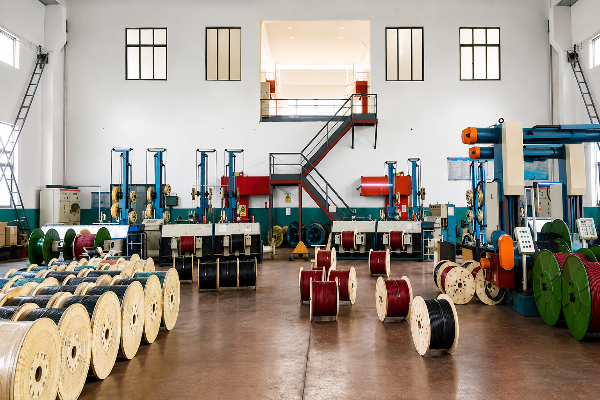
Commercial commitments
- Production runs are scheduled at 25-35 working days after specification and commercial approval, confirmed with your quotation.
- Standard sample availability is checked against stock; freight and any custom-sample production cost are confirmed before dispatch.
- T/T or L/C, with deposit and balance milestones confirmed in the quotation.
- We ship FOB or CIF; other Incoterms are reviewed on request.
Schedule starts after scope approval
Sample review, product-document review, print approval, packing approval, and commercial approval are separate milestones. Put each required approval in the enquiry so the production date is not based on an unfinished specification.
Product Verification and Quality Documents
Evidence risk rises when a standard title, product record, and project approval are conflated, because those three objects answer different questions. Rather than a badge-only comparison, JINYOU Cable engineers the quotation around the requested model, conductor-size range, construction, and product record. IEC 62930:2017 defines a standard scope; it is not a replacement for a current product-bound record or project approval.
Standard scope
The standard says what product or test domain it covers. IEC 62930, EN 50618, UL 4703, IEC 62852, and installation standards do not prove that a named JINYOU item holds a current approval.
Product evidence
The certificate, listing, report, or data sheet should bind the holder, manufacturer, exact model or family, conductor-size range, construction, record number, issuer, and current status.
Project acceptance
The EPC, owner, distributor, inspector, or authority decides whether the submitted product record satisfies the destination and project specification.
“If a record cannot be tied to the exact model, size range, and construction in the purchase order, it is not yet product evidence for that order.”
JINYOU Cable RFQ review rule
Evidence-object checklist
| Object | Minimum binding fields | What it cannot prove alone |
|---|---|---|
| Product data sheet | Model, construction, sizes, ratings, tests, revision, and manufacturer | Current third-party certification or site approval |
| Certificate or listing | Holder, model/family, size scope, standard, number, issuer, and validity | Correct installation, cable sizing, or connector cross-mating |
| Type-test report | Sample identity, construction, method, result, laboratory, and date | Every production lot unless the acceptance plan says so |
| Production inspection record | Order or batch identity, checks, acceptance criteria, result, and authorization | Design suitability for the complete solar power system |
| Connector record | Pair, contacts, seal range, cable OD, tooling, assembly, and test | Compatibility with an unnamed or substituted connector |
| Project submittal | Product evidence plus drawing, route, quantities, revisions, and approvals | Future changes not included in the approved revision |
From Project Requirements to Production Release
Send the destination market, circuit application, voltage, cable size or gauge, environment, quantity, and required product documents.
We separate core photovoltaic wire from grounding, control, AC power, wet, offshore, desert, and other adjacent cable solutions.
We identify missing conductor, sheath, marking, packing, connector, contact, seal, tool, termination, and evidence inputs.
Stock sample availability, freight, and custom-sample production cost are confirmed before dispatch where a sample is required.
Model, construction, marking, packing, documents, payment milestones, and Incoterm are fixed in the approved quotation.
Production is scheduled after specification and commercial approval, followed by the agreed packing and document handoff.
Responsibility line
We identify the remaining specification and evidence items before production is released; the approved quotation and product documents define the order scope.
14-point PV power cable RFQ checklist
Electrical and market inputs
- Destination market and authority
- Circuit application and connection points
- System voltage and cable rating requirement
- Conductor material
- Cross-section in mm² or AWG
- Core arrangement, color, and marking
- Environment and installation route
Interface and commercial inputs
- Connector manufacturer and model
- Contact, terminal, seal, and crimp-tool details
- Factory or field termination responsibility
- Required product and inspection documents
- Quantity, cut length, and packing
- Destination and Incoterm
- Sample need and target delivery date
Application Limits and Alternative Cable Choices
A solar label should not force the wrong cable into a circuit. Use the application and approval basis to move the request into the correct category.
01
Alternating-current collection or export
Limit Factor
DC photovoltaic cable does not replace every AC voltage, ampacity, insulation, and installation requirement
What To Specify
The project-specified AC power cable category and design basis
02
Grounding or bonding
Limit Factor
A current-carrying solar conductor is not the protective grounding path
What To Specify
Grounding cable and bonding design with the required copper or aluminum conductor
03
Control, sensor, or communication circuit
Limit Factor
Power conductors do not automatically meet signal, shielding, or interface needs
What To Specify
The matching control or signal cable
04
Direct burial, permanent immersion, or special exposure
Limit Factor
Outdoor durability does not establish every burial, water, salt, chemical, or extreme-temperature qualification
What To Specify
A product specifically qualified and marked for the stated environment
05
Mixed connector makes
Limit Factor
Physical fit does not prove long-term material, seal, contact, or approval compatibility
What To Specify
An approved mating pair or a project-approved adapter strategy
06
Incomplete electrical design
Limit Factor
A supplier cannot safely replace current, voltage drop, protection, derating, and code calculations with a product guess
What To Specify
Engineer-approved sizing inputs before order release
Lifecycle decision, not a universal payback claim
The 2025 NREL, Sandia, and EPRI connector study links poorly installed, mismatched, or poorly designed and manufactured connectors to maintenance cost and lost production. Its project numbers belong to the studied model, so this page uses the mechanism—not a borrowed savings percentage.
Send Your PV Cable Requirement
Send the project information you already have. Our review will identify the remaining product, evidence, interface, and commercial items that need confirmation.
Project Information Requirement
- 01 Destination market and application
- 02 Voltage, conductor size or AWG, and quantity
- 03 Environment, route, connector, and termination scope
- 04 Required product records, packing, destination, and target date
PV Power Cable FAQ
It carries DC power between modules, strings, combiner equipment, and the photovoltaic-side inverter.
Send the destination market, circuit, voltage, current or approved cable size, conductor, insulation or standard requirement, environment, route, connector system, termination responsibility, length, quantity, packing, documents, sample need, Incoterm, and target date. Unknown fields can be marked for review.
Match the project specification and authority requirements to an exact, current product record.
They are not interchangeable designations. An H1Z2Z2-K datasheet must still match the quoted size, construction, record, and project approval.
Specify the actual system voltage and the cable rating required by the electrical design and destination rules. IEC 62930 covers a defined PV cable product scope up to 1.5 kV DC, while 600V, 2kV, and other market labels require their own product and approval records.
The project engineer should consider design current, protection, ambient temperature, grouping, route, run length, voltage drop, terminals, and applicable code. JINYOU can quote the approved mm² or AWG input and flag missing interface data, but this commercial page does not replace the calculation.
Yes. Send the route, exposure, support, interface, and evidence requirements for quotation review.
Send the color code, print legend, language, meter marking, cut length, roll/reel/drum format, label fields, pallet needs, and destination. We review those OEM items with the product construction and quantity rather than treating them as a separate decoration request.
Name the connector manufacturer and model, mating equipment, contact part number, cable outer-diameter range, seal or gland, approved crimp tool and die, and factory-versus-field termination responsibility. “MC4 compatible” alone does not bind those interfaces.
Verify the holder, manufacturer, exact model or series, conductor-size range, construction, standard, record number, issuer, revision or validity, and searchable status. Then map that record to the ordered configuration and project submittal.
No. A current product-bound record and project acceptance remain separate evidence objects.
Standard sample availability is checked against stock; freight and any custom-sample production cost are confirmed before dispatch. State the product family, size, length, connector need, documents, and delivery address in the sample request.
Production runs are scheduled at 25-35 working days after specification and commercial approval, confirmed with your quotation. Product-document, print, sample, packing, or commercial approvals that remain open are not yet a production release.
T/T or L/C, with deposit and balance milestones confirmed in the quotation. We ship FOB or CIF; other Incoterms are reviewed on request.
Missing market requirements, cable size, environment, connector parts, termination responsibility, marking artwork, packing details, certificate scope, sample decisions, or approval ownership can stop a clean release. The 14-point checklist exposes those gaps before the order enters production.

