Get in touch with JINYOU Cable Company

-
CALL US +86 181 1623 2461
-
EMAIL sales@jinyougroup.cn
Solar Cable Supplier Audit Services
- Model-level document review
- Standards scope mapping
- Batch traceability checks
- OEM evidence support
Our solar cable supplier audit service turns existing certificates, test reports and production records into a decision-ready evidence path. We confirm the exact model, destination, connector interface and shipping documents before your team orders production quantities.
Send the model number, datasheet or certificate at the start so the review can run alongside tender preparation.
SYS.VIEW // 0x489
LIVE.FEED
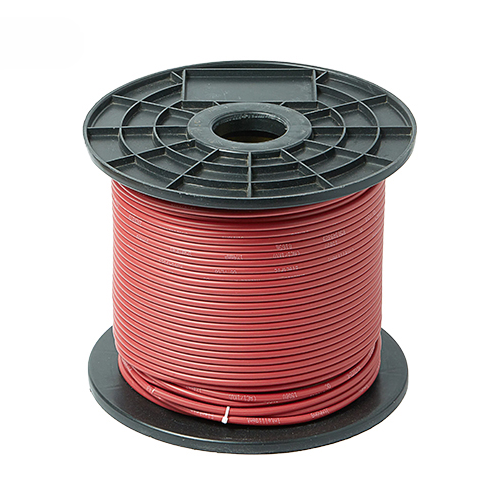
TARGET: JINYOU Cable solar cable production line
01
Model and scope
We match the offered cable model to the named standard and size range.
02
Site and holder
We check that certificate holder and production site are visible in the file set.
03
Batch evidence
We connect raw-material lots, reel marks, test records and shipment references.
04
Application fit
We capture route, connector, environment and destination-authority inputs.
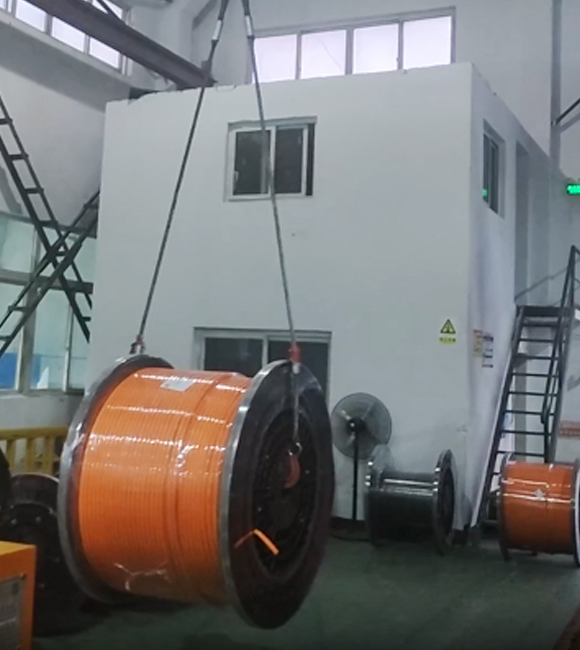
Solar Cable Supplier Audit Proof Requirements
A good audit goes beyond asking whether a certificate exists. It checks whether the certificate covers the cable offered, links production records back to controlled inputs and tests application fit. The document does not clearly name our cable model or production site when a generic file is used, so that gap is recorded before approval.
AUDIT VERIFICATION MATRIX // 4-STEP CHECK
SYS-ID: JY-AUDIT-2026
Document and identity review
We compare the legal supplier name, certificate holder, model designation, conductor construction, size range, voltage statement, production site and validity date. A generic file is flagged when it does not identify the product offered in your request for quotation.
Test-evidence review
Type-test evidence, routine production checks and shipment inspection records remain separate. Each result is mapped to its method, sample or batch identifier, acceptance criterion and revision so your quality team can reproduce the decision.
Traceability mapping
We build a practical chain from incoming conductor and compound records to extrusion line, reel label, final test and shipping unit. The chain makes a repeat-order comparison possible when material, line setting or document revision changes.
OEM dossier preparation
We assemble the data fields your engineering, procurement and compliance teams need in one RFQ packet. The dossier can include a model matrix, document index, inspection request and open-issue list for the supplier to complete.
JINYOU quality review principle
We use one review path that connects model identity, evidence and application fit. Open fields stay visible until the supplier closes them or your team accepts a documented exception. If a file does not state the cable model or production site, we hold approval and request the missing match before RFQ release.
“A certificate shows the scope tested; the reel and batch record show what left the line.”
Audit principle: a standard describes a scope; a certificate describes a certified product or system; a batch record shows what was made and released. Those evidence layers remain separate.
Release gate: A certificate does not always equal the shipment, so model, site and batch evidence are validated before release.
One label does not fit every marketplace; destination authority, connector and route requirements can change the decision.
Solar Cable Families and Evidence Fields
We evaluate cable families by build and use case rather than by brand label alone. Construction, size, voltage, insulation system, sheath and connector interface are the selection keys for comparison.
PV1-F and H1Z2Z2-K references
We check the designation printed on the cable against the datasheet and certificate. The audit records conductor material, insulation and sheath description, marking sequence, size, voltage and environmental claims for the exact model.
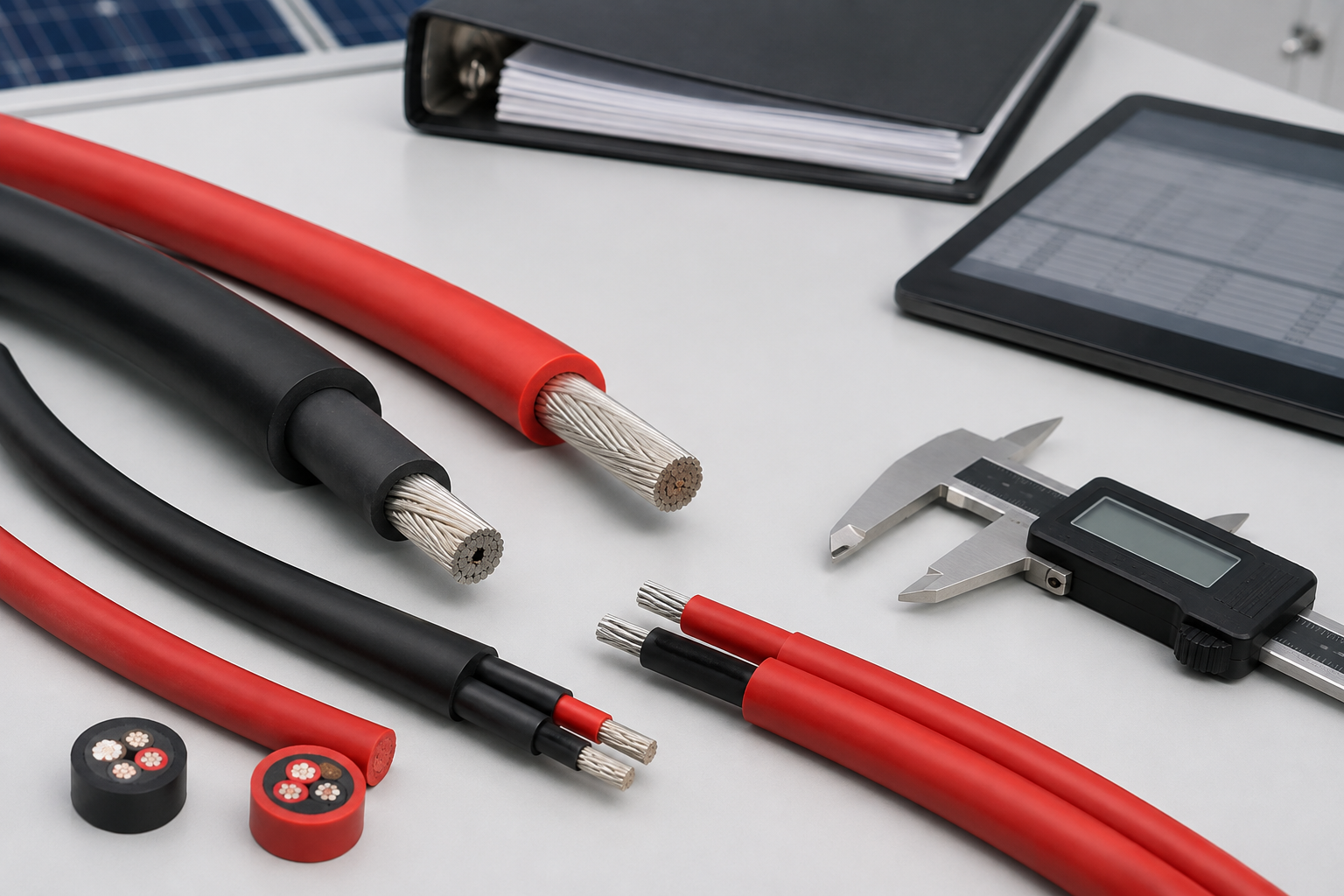
Utility and rooftop DC cable
We map the route, sunlight exposure, temperature, bending, support and entry conditions to the cable selection. A roof string, tracker loop and buried transition can require different installation evidence even when the cable family is similar.

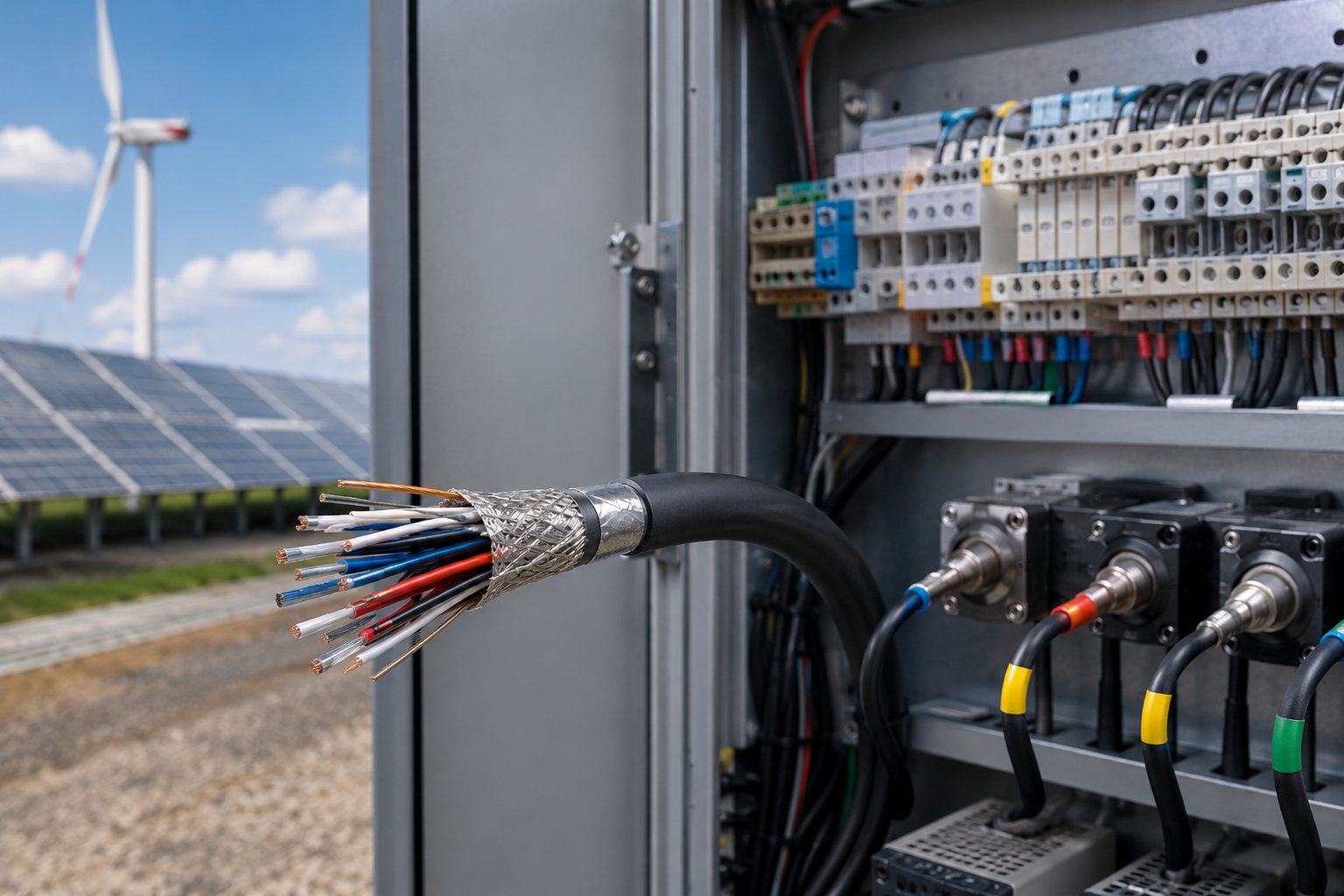
Control and monitoring cable
We identify signal purpose, shielding, conductor layout and termination requirements before the quote is compared. This prevents a power-cable document from being used as proof for a control or instrumentation assembly.
Energy-storage and EV cable systems
We treat storage and vehicle applications as separate evidence paths. The dossier lists interface, temperature, routing, insulation and test requirements instead of assuming that a photovoltaic certificate transfers to another assembly.

Cable Construction and Marking Evidence
Physical inspection links cable finish and marking to shipping paperwork. Field names stay consistent from sample review through production release, so discrepancies can be identified before loading.
| Audit field | What we review | Buyer decision |
|---|---|---|
| Conductor | Material, strand construction, cross-section and incoming material record | Accept only when the offered construction matches the approved model |
| Insulation & sheath | Compound description, layer sequence, colour and dimensional record | Confirm the declared construction is the construction tested |
| Surface & print | Legibility, spacing, model, voltage and standard marking | Match the reel print to the document index |
| Reel & packing | Reel ID, length statement, labels, seals and packing photos | Keep the shipment identifier with the receiving record |
| Connector interface | Manufacturer, series, polarity, crimp or termination instruction | Prevent mismatched mating parts at installation |
| Document revision | Issue date, revision code, approval owner and superseded files | Release one current set for the purchase order |
PHYSICAL QC & REEL MARKING INSPECTION
A clean surface or printed approval mark does not replace model-level documentation or batch records. Buyers worry about anonymous or counterfeit cable and unclear markings, so reel identity and the document index stay together.
Standards Scope by Region and Project Stage
A common assumption is that the label alone settles the decision, but the key distinction is not simply which standard appears on the label. The matrix combines the standard, market authority, project stage and evidence needed to decide whether an EN 50618 cable, IEC 62930 cable or UL 4703 PV wire fits the project; a generic TÜV/UL label is not enough for the exact size and voltage ordered. The root cause of a weak comparison is a document gap, because these labels are not interchangeable and a certificate is not a substitute for model, site and batch evidence; JINYOU Cable maps published scope to your destination authority and keeps the comparison tied to the intended project stage.
01 //
PROCESS
VALIDATION
- Model Match
- Scope Map
- Batch Trace
IEC 62930
Published scope or review rule
PV cable scope up to and including 1.5 kV DC
How we use it
Check voltage statement and exact construction in the model file
EN 50618
Published scope or review rule
Flexible Class 5 halogen-free cables, 1.5–240 mm², in the UL comparison summary
How we use it
Check size range and flexible-conductor requirement in the certificate
IEC 62930 broader range
Published scope or review rule
UL’s comparison describes stranded and flexible stranded scope up to 400 mm²
How we use it
Read the certificate scope instead of transferring a range between models
UL 4703 PV wire
Published scope or review rule
North American PV wire standard with listing information searchable in UL Product iQ
How we use it
Verify listing/category, model and marking with the destination authority
Three-way model match
Published scope or review rule
Model on offer, model in certificate and model on reel label
How we use it
Hold release when any one of the three identifiers differs
Four-link traceability chain
Published scope or review rule
Raw-material lot, production line, reel or batch and shipment reference
How we use it
Request the missing link before repeat-order approval
Connector authority check
Published scope or review rule
Connector manufacturer and series confirmed before mating
How we use it
Align cable assembly with the installation authority and panel interface
Revision control
Published scope or review rule
Current issue, approval owner and superseded document listed
How we use it
Prevent an obsolete test report from becoming the release basis
Project voltage input
Published scope or review rule
Record the nominal DC value in volts, including any 1,500 V boundary
How we use it
Escalate values above the planning band for project-specific review
Temperature input
Published scope or review rule
Record design temperature in °C; 90 °C is a review prompt, not a certification limit
How we use it
Ask for the applicable thermal test scope and installation conditions
02 //
RESOURCES
CAPACITY
LOCSHANGHAI
REGGLOBAL
OUTREADY
RFQ Review, Documentation and Delivery Planning
Quotation scope follows conductor type, insulation system, size, quantity, packing and destination documents. The cheapest quote is not always the best evidence path: a low line-item price can hide missing tests, labels or receiving documents, so we compare evidence fields alongside cost. A missing document costs you time at receiving, even when the cable itself is suitable.
How your review is produced
Send your model, quantity band and target market. We return a written document request with assumptions, open fields and the next evidence checkpoint, then confirm production and delivery timing in the quotation after model, quantity and document scope are approved.
What moves the quotation
JY-RFQ-MATRIX| Input | Why it changes the request | What to send |
|---|---|---|
| Model & construction | Sets the applicable document and test path | Datasheet, drawing or printed model code |
| Quantity & reel plan | Changes production release and packing records | Annual demand, order lot and reel preference |
| Destination | Changes authority, marking and import-document needs | Country, project authority and delivery term |
| Connector or assembly | Changes interface and inspection requirements | Connector manufacturer, series and mating instruction |
Release stages
01. Inquiry intake
We capture application, destination, model and required standards.
02. Document review
We reconcile certificate, test report, datasheet, marking and site.
03. Production release
We record the approved revision, batch fields and inspection request before manufacture.
04. Shipment handoff
We align reel labels, packing evidence and the document index with your receiving team.
The documentation and delivery package can be quoted as part of the same RFQ, with exceptions written beside the affected line rather than hidden in a general note.
Testing Evidence from Sample to Production Batch
This process separates a sample result from records for the production run. Type-test data sets the benchmark; routine checks and batch records show what happened on your order. An approved sample may not repeat after a material, line or revision change; the standard fix of relying on one sample report does not close that gap, so we need the relevant batch and revision identifiers to make a valid comparison.
How every evidence package is checked
01. Scope check
We confirm the standard edition, cable model, size and voltage statement.
02. Method check
We identify dimensional, electrical, mechanical, thermal, chemical and environmental tests that apply.
03. Sample or batch
We link each result to a sample, reel, batch or production release identifier.
04. Calibration & revision
We review equipment status, test method revision and approval ownership.
05. Exception closure
We record deviations, corrective action and the decision owner before shipment.
Measurement assurance: Batch traceability links material and reels; metrological traceability links results to a calibration chain. Ask for measurement uncertainty, laboratory scope, issuing-lab accreditation and equipment status before treating a test result as comparable.
Documents we request
Current datasheet and controlled drawing
Certificate or listing record for the exact model
Type-test or research-test report with method and issue date
Batch, reel, inspection and packing records
Quality handoff
We give your quality team a field-by-field review, not a pass/fail slogan. If a document is incomplete, the open field remains visible in the checklist and the supplier receives a precise request for closure.
JINYOU’s supplied company profile describes a Shanghai facility with automated production and testing systems for renewable-energy cables. That first-party context supports the process discussion; it does not replace a model-level certificate or batch release record.
How We Work with Engineering and Procurement Teams
STEP 01
Share the starting file
Send your cable model, datasheet, certificate or test report.
STEP 02
Set the project boundary
We capture market, route, environment, connector and quantity.
STEP 03
Build the evidence matrix
We map each requirement to a document, test, marking or traceability record.
STEP 04
Resolve gaps
We return focused questions for the supplier and identify what must be confirmed before release.
STEP 05
Align the RFQ
We place accepted wording, inspection scope and document deliverables beside the commercial line.
STEP 06
Prepare repeat-order control
We carry model, revision, batch and change-control fields into the next order.
Design notes that prevent rework
| Specify early | Why it matters | Evidence to retain |
|---|---|---|
| Exact cable designation | Stops a family name from being substituted for a model | Approved datasheet and reel print |
| Conductor and size | Aligns electrical and mechanical review | Construction table and incoming record |
| Route and exposure | Connects the cable choice to installation conditions | Route sketch and authority notes |
| Connector series | Prevents incompatible mating parts | Manufacturer instruction and assembly record |
| Inspection and packing | Makes receiving checks comparable across lots | Inspection request, photos and reel list |
Production and Cable Evidence in Context
JINYOU Cable capability context
Shanghai Jinyou Jinhong Intelligent Electric Co.Ltd. was established in 2006 and supplies high-performance cables for solar photovoltaic cable manufacturing. Custom OEM cable design, energy storage cable projects are supported, electric-vehicle cable projects are supported, automated production machinery operates in Shanghai, testing systems support quality control, integrated electrical systems are included, and renewable energy applications are the stated market. JINYOU Cable is a supplier in more than 40 countries, according to the supplied company profile; these first-party capabilities explain the review handoff while exact model evidence still governs approval.
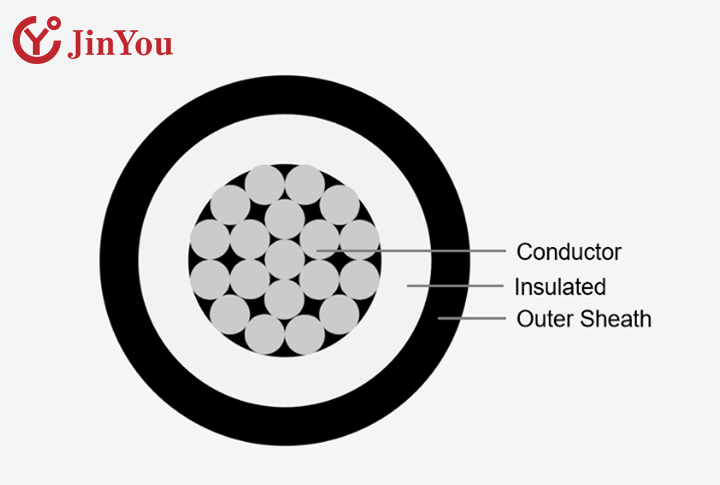
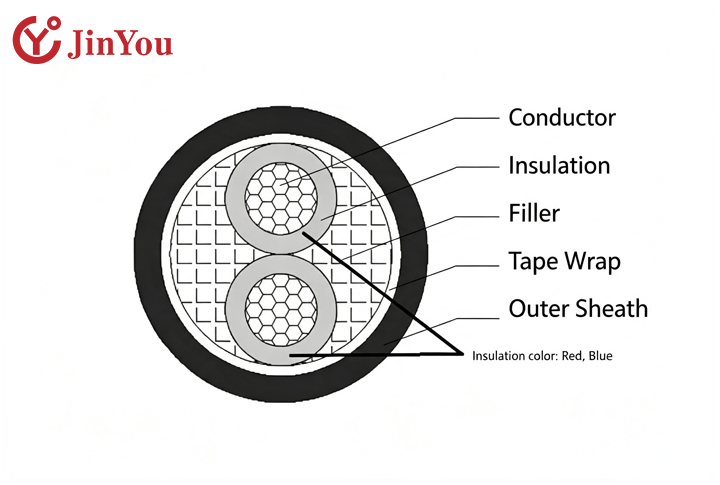
Photovoltaic cable construction reference: conductor, insulation and outer sheath.
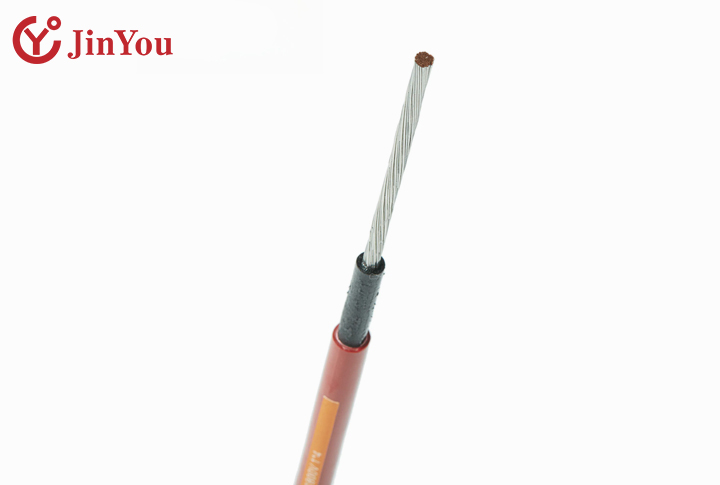
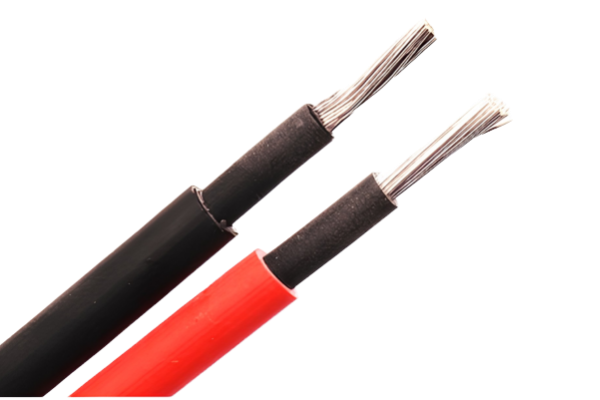
PV1-F product reference from the supplied JINYOU Cable image library.
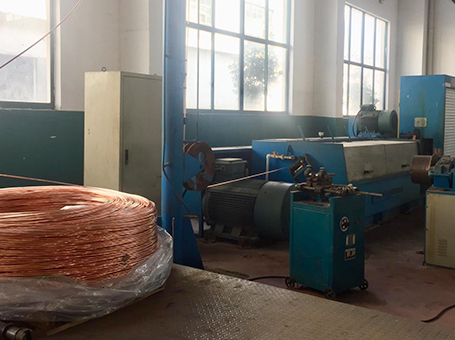
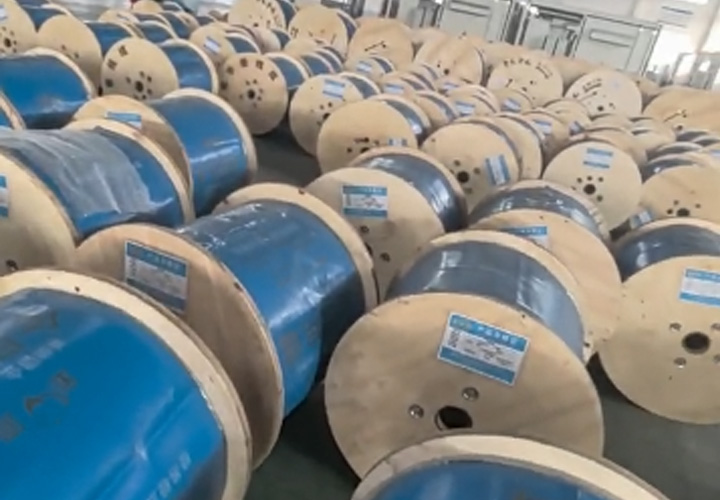
Factory-line reference for the production conversation; request current equipment and calibration records during an audit.
Applications we support
APP.01
Rooftop solar
Review roof exposure, cable support, entry points, connector mating and receiving labels before installation.
APP.02
Utility-scale PV
Align model, reel, batch, route and shipment records for a larger repeat-order and inspection plan.
APP.03
Energy-storage integration
Keep storage interfaces and cable evidence separate from photovoltaic claims so the approval path stays specific.
APP.04
OEM cable assemblies
Carry your drawing, connector, marking and revision fields into a controlled custom cable dossier.

When a Certificate-Only Review Is Not Enough
A genuine document can still be the wrong evidence for a particular order. Unlike a certificate-only review, this matrix joins model identity, laboratory scope, calibration chain and reel evidence in one release record; the right call is to confirm against route, connector and authority inputs before a compliant label leads to the wrong choice.
Situation
Why it creates risk
Better next step
Generic certificate without model or site
The file may not cover the cable offered
Request holder, model, size, site and validity fields
Standard label used as application proof
Route, environment or authority requirements may differ
Provide route, connector and destination inputs for a fit review; mismatched DC connectors can fail in the field and create fire risk.
Approved sample with no change control
Material, line or revision changes can break repeatability
Link release revision, batch record and written change approval
Lowest price compared without documents
Missing tests, labels or packing work reappears at receiving
Compare a complete RFQ evidence package line by line
Engineering & Procurement Toolkits
Solar Cable Audit Checklist
Systematically verify conductor, insulation, marking, and packaging evidence against approved models to prevent loading discrepancies.
Open Audit ChecklistStandards Scope Matrix
Cross-reference IEC, EN, and UL requirements for DC voltage, thermal design, and physical cross-section parameters across regions.
Compare MatrixRFQ Document Pack Builder
Assemble precise technical specifications, testing records, and certification deliverables to align with commercial purchase orders.
Build Document PackStart with the exact model, certificate holder, production site, size range, voltage statement, standard, validity and reel marking. Then connect the approved file to batch and shipment records.
No. UL’s comparison gives different construction and size scopes for EN 50618 and IEC 62930, so your authority and project specification decide which evidence applies.
Ask for the exact product record and check the listing or certification information in UL Product iQ when applicable. Match the model and marking to the cable offered, not only to a supplier brochure.
Not by itself. A repeat-order review also needs batch or reel identifiers, production records, release results and change-control links.
NT WorkSafe reports failures linked to mismatched DC connectors and advises installers to mate connectors from the same manufacturer under AS/NZS 5033:2021. Include connector manufacturer, series and mating instruction in the request.
Yes. Send the certificate, datasheet or cable photo and we will return a field-by-field review of model, scope, site, marking, validity and open questions.
Include model, conductor and size, voltage, standard, destination, route, connector, quantity, reel plan, inspection scope and required shipment documents. This gives suppliers the same acceptance basis.
Product standards and installation rules address different decisions. Give the route, exposure, support, entry and local authority requirements so the cable selection is checked in context.
Missing method, sample, result, revision or approval fields are marked and returned as a focused closure request. The item remains open until the document set is complete or your team accepts a documented exception.

