Get in touch with JINYOU Cable Company

-
CALL US +86 181 1623 2461
-
EMAIL sales@jinyougroup.cn
Cable Certification Documentation for Solar & PV Projects
JINYOU Cable helps E.P.P. teams support solar cable selection evidence: destination-market standard, model identifier, test documents, marking and installation fit.
Use this page to brief a document-fit review before a purchase order. Confirm exact model scope, issuer, validity and production status against the file set.
At a glance
A clear handoff from standard name to approval file
An evidence pack helps match model, market pathway and installation; an EN 50618 pathway differs and cannot represent every solar cable standard. Mismatch risks delay and rework on a 1,500 V DC route.
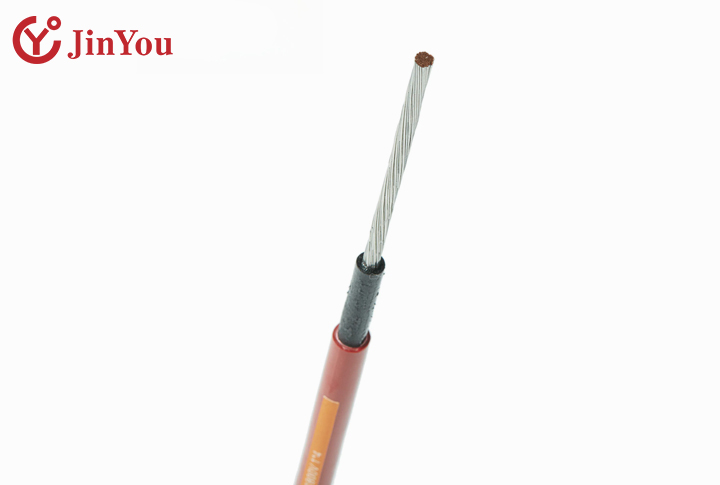
Relevant JINYOU solar/PV product asset; confirm the selected model and evidence scope for each project.
Review focus
Market, DC role and standard
Evidence focus
Model, size, voltage, marking, issuer
Project focus
Rooftop, utility, storage or EV
Next step
Share files for technical review
From cable standard to a usable buyer file
JINYOU Cable designs and manufactures high-performance cables and integrated electrical systems for renewable-energy applications. Its profile describes custom OEM support, Shanghai production and testing systems; the checkpoints below serve engineering, procurement and owner teams around 1,500 V DC and 90 °C references.
JINYOU_OEM
Market and standard mapping
Separate EN 50618 cable, IEC 62930 and UL 4703 PV wire routes by destination market, cable construction and PV DC use.
Model-to-document matching
Match the exact model, conductor size, voltage, insulation, sheath, marking and certificate or report reference before approval.
OEM file preparation
Organize datasheets, declarations, test evidence, revision history and traceability notes for the people who will quote, install and accept the cable.
INSPECT
Construction evidence
Materials information belongs beside the certificate. A certificate label rarely addresses installation questions. For an EN 50618 or UL 4703, ask for material and construction fields so that E.P.P. teams can compare against a document’s scope.
Conductor
What the buyer should see
Conductor type, class, size and drawing reference
JINYOU handoff
Confirm against the model datasheet
Insulation and sheath
What the buyer should see
Material family, temperature context and halogen statement where required
JINYOU handoff
Confirm against project and market route
Marking
What the buyer should see
Print legend, standard reference, voltage and traceability code
JINYOU handoff
Check sample marking against the file set
Connector or termination
What the buyer should see
Interface, polarity and compatibility notes
JINYOU handoff
Review with the installation drawing
Compliance evidence needs control points
RoHS and REACH deal with material, where a certificate or test document answers a specific standard; past documents might carry differences, creating delay, rejection and liability due to program scope, factory marking and document version. JINYOU Cable advises comparison of EN 50618, UL 4703 and IEC 62930 evidence on the specific 1,500 V DC model.
Standards map
Solar cable standards: EN 50618, IEC 62930 and UL 4703. The Solar Document-Fit Map first uses buyer destination, followed by analysis of PV DC role, construction and evidence of the model. Below are details from standard publishers: figures and descriptions below are not from JINYOU cable designs.
Reference point
Published scope
How to use it
IEC 62930 PV DC voltage
Up to 1.5 kV DC
Check the route
IEC 62930 conductor temperature
90 °C normal continuous maximum
Compare thermal design
IEC 62930 construction
Single-core cable with cross-linked insulation and sheath
Match the model construction
BS EN 50618 construction
Low-smoke halogen-free, flexible single-core cable with cross-linked insulation and sheath
Check the European route
BS EN 50618 PV DC voltage
1.5 kV DC between conductors and to earth
Confirm the certificate scope
RoHS cable context
Cables can fall within substance restrictions
Request current declaration
REACH Article 33
Duty above 0.1% w/w for Candidate List substances
Ask for the material statement
BSI’s BS EN 50618 page and IEC’s IEC 62930 page describe separate PV cable scopes.
Tie either reference to the cable construction, voltage and certificate instead of treating them as interchangeable labels.
UL Solutions’ current solar-materials certification page lists UL 4703 as the United States Standard for PV wire.
Confirm the mark, model, size, voltage and production location against the project’s acceptance requirement.
Solar panel and PV system RFQs may specify solar cable, PV cable, solar wire or DC cable to connect solar panels to an inverter, conduit or charge controllers. Check cable types, voltage drop, voltage rating, compatibility, installation, solar installations, rooftop installations, PVC, cross-link, XLPE and copper conductors against the drawing.
- Wiring route and wiring separation
- Wiring bend radius and wiring support
- Wiring label, wiring polarity and wiring termination
United States tenders may list UL 4703, UL 44, PV wire, photovoltaic wire, solar photovoltaic, AWG, 600V, 10 AWG and AWG sizing, Type PV, direct burial, sunlight resistant, UV exposure, 90°C wet, wet or dry, polyethylene, RHW-2, VW-1, VW-1 flame, USE-2, tin, cross-linked polyethylene, strand count, stranded strand construction, NEC, insulate and compliant. These are acceptance examples; confirm the exact model, marking and scope.
Pricing follows the
document and installation scope
Submit an order requesting the following to initiate a custom OEM product review: target market, standard pathway, construction, voltage, section, amount, packaging, documentation.
Destination country and acceptance body
Standard or specification named in the tender
Model, voltage, conductor size, color and route
Installation environment, quantity and delivery terms
Required certificates, declarations, reports and revision level
Quality file
Quality and approval checks
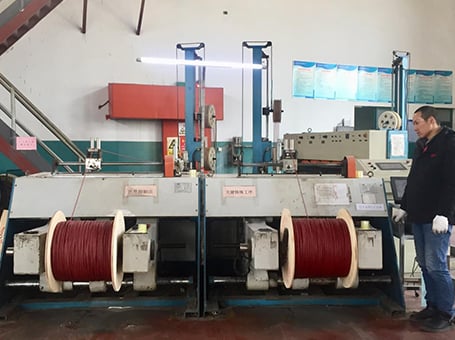
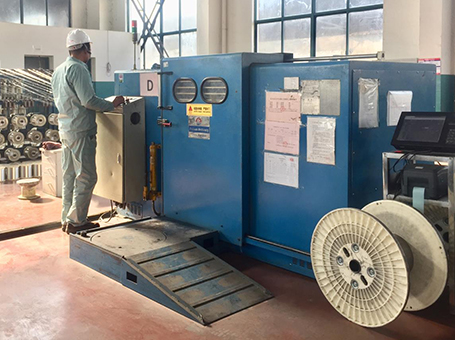
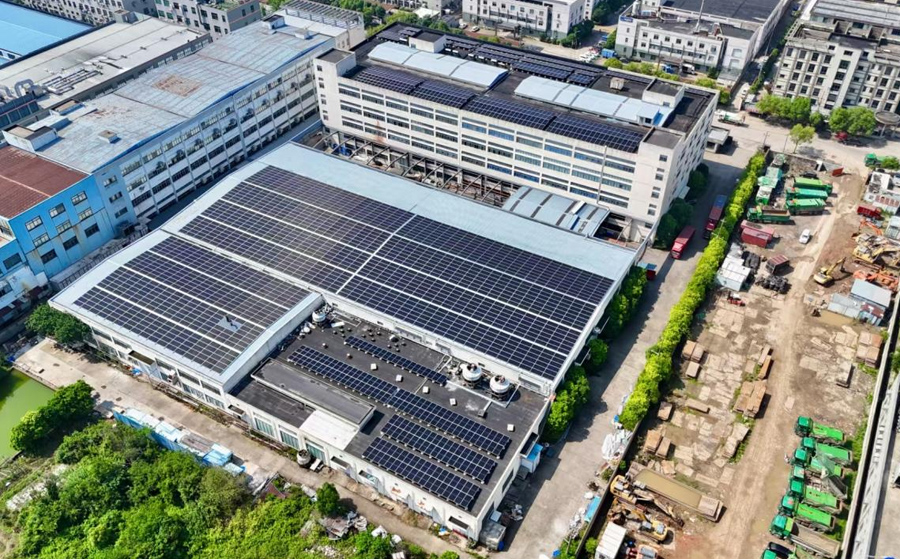
Shanghai is home to JINYOU’s automated production and testing systems; please ask to view the evidence of your chosen model – avoid jumping to conclusions based on photos or generic descriptions.
A model mismatch can create rejection or rework because certification program scope, factory mark and revision may differ. For a 1,500 V DC project, compare the EN 50618, UL 4703 or IEC 62930 reference with the exact model and current test results; request the evidence check.
Model name, revision, size, voltage and marking agree across the datasheet and certificate.
Issuer, standard, factory, test basis and validity cover the cable being ordered.
Change control, surveillance or batch traceability is addressed where the acceptance route requires it.
A five-step document-fit handoff
begin with what you have and then pinpoint and fix gaps in evidence prior to final quotes and approval.
1
Share market, standard and project role.
2
Share model, drawing, size and voltage.
3
Match an EN 50618 certificate, report and declarations to the order.
4
Check marking, traceability and installation fit.
5
Agree the RFQ scope and next technical action.
Low-friction offer
Upload a datasheet or drawing for a model-field and certificate-scope check.
Project offer
Share installation environment and quantity for technical guidance before quotation.
Use JINYOU evidence in the right order
JINYOU Cable’s official company profile describes a Shanghai manufacturer established in 2006 for solar power, storage and electric-vehicle cable applications. Use an EN 50618 or UL 4703 document only for the route-specific compliance question, and confirm project delivery and certification scope during review.
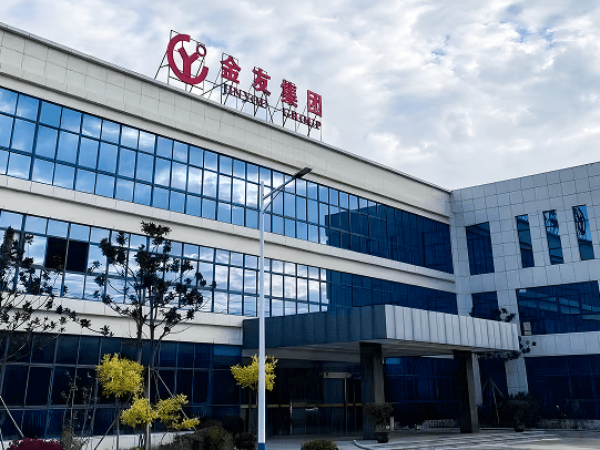
JINYOU capability facts for the brief
- JINYOU Cable’s design scope includes high-performance cables.
- Solar photovoltaic cable manufacturing is part of the product scope.
- Custom OEM cable design is available for agreed specifications.
- Energy storage cable projects are supported.
- Electric-vehicle cable projects are supported.
- Automated production machinery operates in Shanghai.
- Testing systems support quality control.
- Integrated electrical systems are included.
- Renewable energy applications are the stated market.
- The official company profile describes JINYOU as a supplier in more than 40 countries.
When a document pack is not ready to approve
It’s better to communicate “not yet” so the project stays safe until it can deliver reliable and credible results, rather than make generic claims. Use this pause to query for a single evidence element.
Engineering acceptance rule:
an EN 50618 or UL 4703 standard name is not a substitute for model, marking and traceability evidence.
Buyer signals translated into checks
Buyer signal
“A standard name on a datasheet may not cover the exact cable purchased.”
Route note
“A U.S. project may need UL PV Wire/NRTL evidence; a TÜV certificate alone may not satisfy the local approval route.”
Field note
“Buyers ask for standard, model, voltage, size, route, packing and document needs before a quote is usable.”
Control rule
“A missing compliance file should hold acceptance until acceptable documentation is supplied.”
Listing check
“PV wire called ‘solar wire’ without listing evidence creates uncertainty.”
Installation note
“High-voltage DC wiring mistakes can be caused by an under-specified breaker or label.”
Not always interchangeable: the wrong choice costs you an approval loop; the trade-off is where to look instead.
Not necessarily a certificate gap:
Confirm against the model and choose the right route
Risk
the model or size is absent.
Next Action
Risk
ongoing production controls are unclear.
Next Action
Risk
the acceptance body may require a different mark or scope.
Next Action
Look for issuer, standard, model, size, voltage, production site, validity and marking or traceability references.
No; related photovoltaic uses do not make their construction language or published scope interchangeable.
UL Solutions lists UL 4703 as the United States Standard for PV wire; confirm mark, model, size, voltage and production scope for the project.
A certificate communicates a defined conformity scope; a test report records results for a stated sample and basis.
No; material obligations and technical safety or performance evidence are separate file roles.
A photo supports product discussion but cannot prove current model scope; share the datasheet and document references.
Send market, standard, model, voltage, size, environment, quantity and any acceptance-body instruction.
Yes, as a custom OEM discussion whose file list follows the agreed construction, market route and testing basis.

