Get in touch with JINYOU Cable Company

-
CALL US +86 181 1623 2461
-
EMAIL sales@jinyougroup.cn
Rooftop Solar Cable for Commercial PV Projects
Jinyou rooftop solar cable sourcing begins with the commercial PV configuration, electrical specifications, and evidence your project needs—not with a generic cable label. A usable RFQ identifies the proposed module or string circuits, roof zones, support and protection details, termination scope, marking, quantity, and document requirements so Jinyou can confirm the cable and quotation scope in writing.
Decision scope
Commercial rooftop module and string DC cable
Reference option
H1Z2Z2-K construction for bounded comparison
OEM review
Electrical, route, color, marking, packing, and evidence inputs
Commercial output
Written cable configuration, document scope, quotation, and schedule
Commercial Rooftop PV Cable Capabilities
Jinyou manufactures cable solutions for solar power, energy storage, and electric vehicles. For rooftop solar projects, this page focuses on photovoltaic cable and PV wire used in specified DC connections; AC feeders, grounding, communications, mounting hardware, solar connectors, and installation labor require their own written scope.
A complete RFQ states system voltage, current, conductor sizing basis, run length, route exposure, support, protection, inverter transition, and the project-required listing. The quotation should identify the accepted cable construction and evidence supplied; project engineering and approval remain separate.
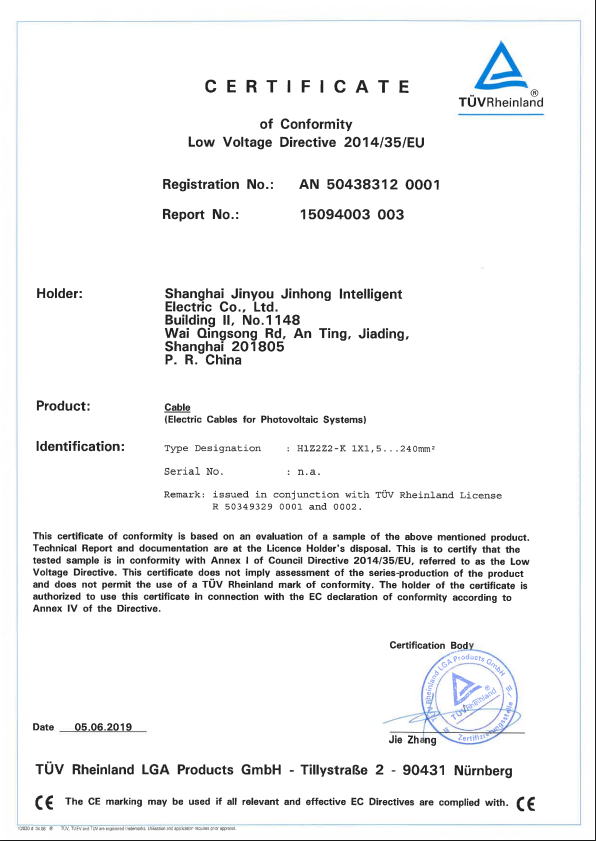
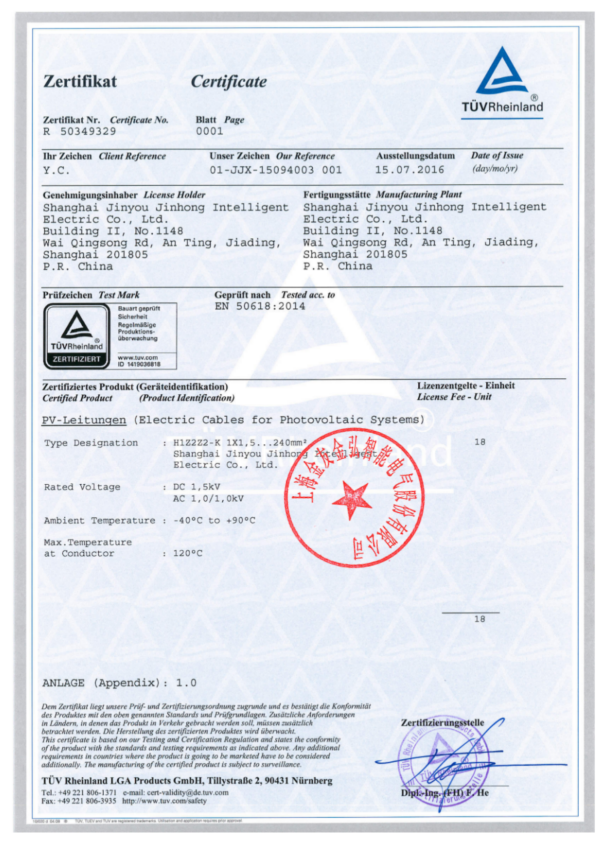
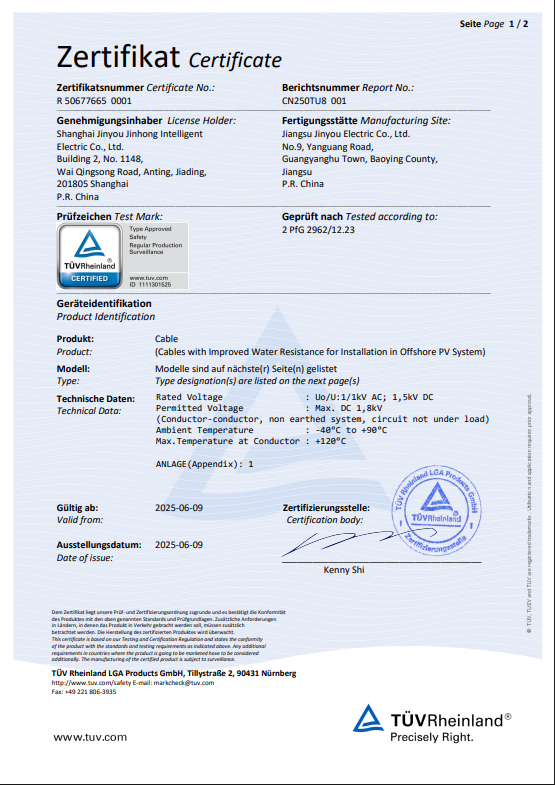
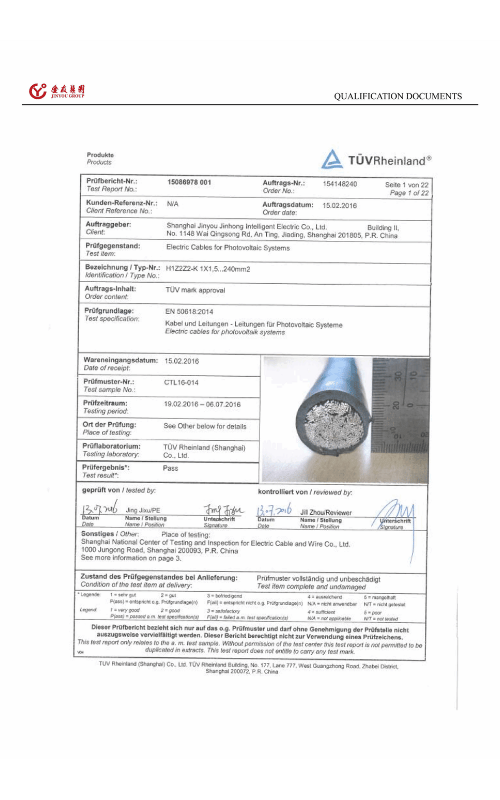
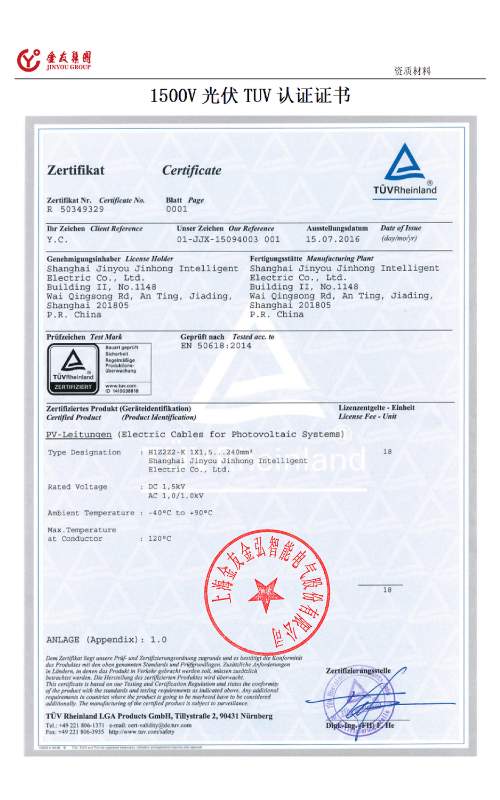
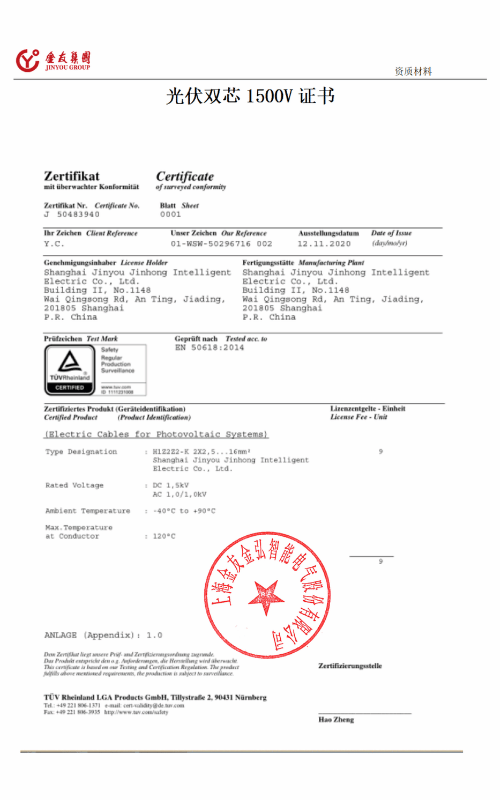
The supplied H1Z2Z2-K solar cable construction can serve as a reference point. That designation does not by itself establish a United States listing or authority-having-jurisdiction acceptance.
Custom OEM photovoltaic cable services are available for project-specific installation environments. Color, cable marking, packaging, and the requested test or document set are confirmed in writing.
The quotation aligns the cable product, required evidence, quantity, and shipment handoff. The result gives the EPC, procurement team, and quality reviewer one written basis for comparison.
Inputs to include in the RFQ
- Rooftop module and string circuit position within the PV system
- DC voltage, design current, cable-size basis, and run length
- Exposed roof, supported rail or tray, conduit, and entry transitions
- Connector family, termination method, tooling, sealing, and acceptance owner
- Custom color, printed marking, label, roll or drum preference, and quantity
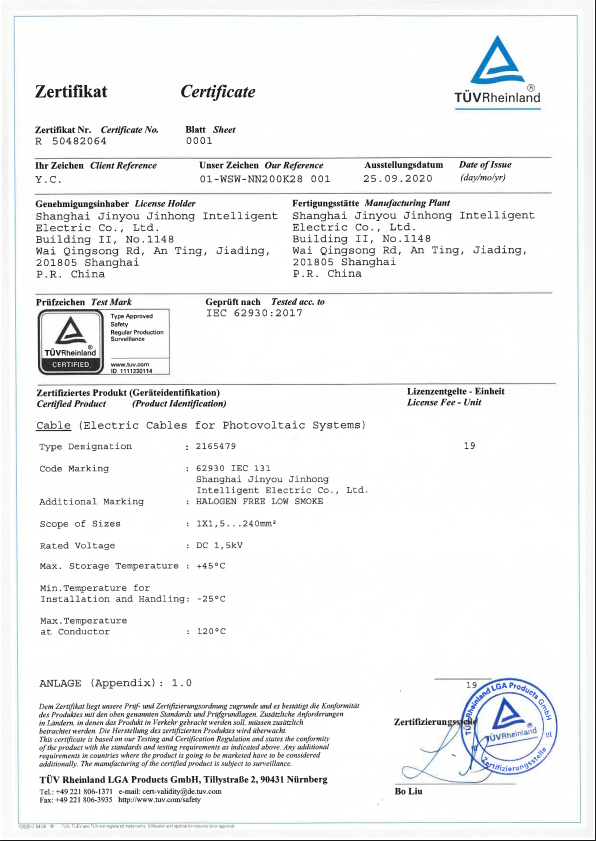
- Project-required listing, test scope, datasheet, and shipment documents
Cable Construction and Electrical Inputs
A solar cable manufacturer cannot just choose a conductor based on power or voltage. Project engineers must provide the design current, permitted voltage drop, sizing basis, conduit fill, and termination limits; route qualification separately records circuit length, bundling, bend-radius limits, insulation choice, exposure, and durable support.
Conductor input
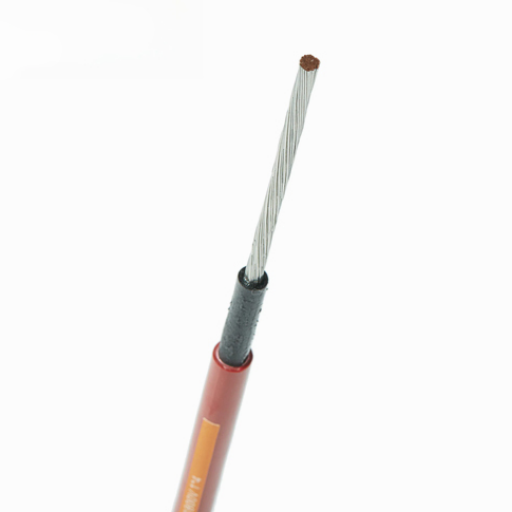
State copper or other specified conductor material, class, cross-section or AWG basis, current, and termination range. If the project specification requires tinned copper, name that input explicitly; do not use a retail 10 AWG answer as a substitute for project sizing.
Insulation and sheath input
State the outdoor, wet-condition, UV, heat, contact, pulling, and mechanical-protection conditions the cable must face. Product evidence and the route design must address different parts of that decision.
System electrical input
State DC voltage, operating and design current, string arrangement, inverter-side interface, run length, and voltage-drop basis. Production follows the written cable requirement; Jinyou does not issue the project’s electrical design.
Route input
Mark every change between free or under-module runs, rail or tray support, conduit, roof entry, indoor path, and equipment termination. Each change can alter the evidence and decision owner.
Acceptance input
Identify the adopted code edition, project specification, required UL listing or other product listing, applicable IEC or EN reference, equipment instructions, and the authority who will accept the installation.
Connector input
Give both connector brands and models, cable outside-diameter range, contact range, crimp tool, seal, field or factory termination scope, and inspection method. Physical fit alone is not a pairing decision.
Jinyou H1Z2Z2-K reference snapshot
| Reference item | Published value | Use in this page |
|---|---|---|
| System voltage reference | DC 1500 V | Starting option for written review, not a universal rooftop rating |
| Finished-product withstand-voltage test | AC 6.5 kV for 5 minutes, no breakdown | Published test condition and result for the supplied reference |
| Insulation tensile-strength reference | Jinyou-published minimum 8.0 N/mm² | Published insulation test value for the supplied reference |
| Sheath tensile-strength reference | Jinyou-published minimum 8.0 N/mm² | Published sheath test value for the supplied reference |
| Insulation elongation reference | Jinyou-published minimum 125% | Published insulation test value for the supplied reference |
| Sheath elongation reference | Jinyou-published minimum 125% | Published sheath test value for the supplied reference |
Project Marking, Color, and Packaging Inputs
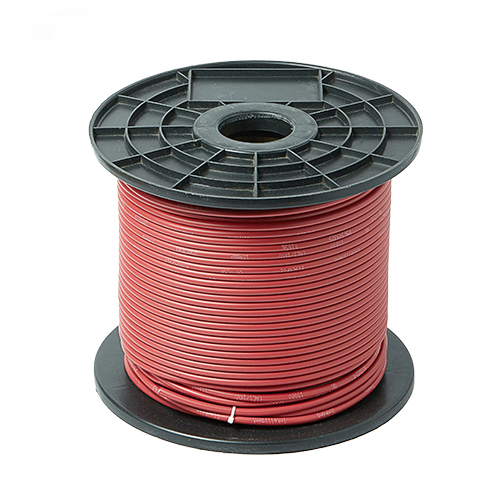
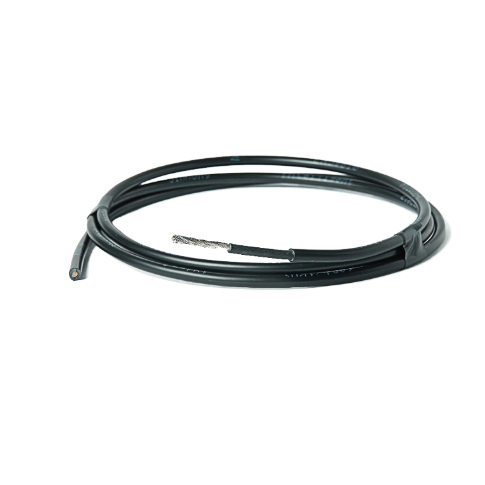
Custom solar cable identification and packing are reviewed as order inputs, not as afterthoughts. The published reference allows black or a customer requirement; do not assume red, a reel quantity, or a label format until the written quotation confirms it.
Option
Buyer input
Confirmed in
Cable color
Required color, circuit convention, and project drawing reference
Written cable specification and quotation
Printed marking
Requested text, standard or listing marks allowed by evidence, voltage, size, and traceability fields
Marking proof before production
Length presentation
Required cut lengths, tolerance policy, roll or drum preference, and total quantity
Quotation and packing plan
Labels
Purchase-order number, project, item, batch, length, and destination fields
Approved label layout
Documents
Datasheet, test scope, batch records, packing list, and any project-specific evidence
Quotation document schedule
Keep reel planning separate from electrical sizing
Cut-length and drum planning can reduce leftover cable and site handling, but it cannot choose the conductor. Use the planning worksheet after the engineer has fixed the route and cable basis.
Rooftop Route Responsibility Ledger
Outdoor PV cable can cross several conditions on one commercial roof. The matrix separates cable evidence from support, connector, enclosure, building, and field-acceptance decisions.

| Roof or route zone | Send with the RFQ | Risk to qualify | Evidence or decision owner |
|---|---|---|---|
| Under-module or exposed roof run | Roof material, cable position, sunlight, ambient, contact points, and access | Heat, UV exposure, roof contact, abrasion, debris, animals, and unsupported span | Cable product evidence plus project engineer |
| Supported rail or tray route | Support device, material, spacing plan, edge profile, grouping, and movement | Support aging, material compatibility, jacket damage, sagging, and bundling | Support-system evidence, route design, and cable suitability |
| Conduit or protected section | Conduit material, fill, wet condition, pull route, grouping, and ambient | Thermal adjustment, moisture, pulling stress, and transition damage | Applicable design rules, cable data, and installer method |
| Roof-to-building entry | Transition point, enclosure, penetration design, indoor path, labels, and access | Water entry, fire or building transition, cable damage, and inspection access | Project design, building requirements, and applicable authority |
| Inverter-side transition | Voltage, current, cable range, terminal or lug, bend space, and enclosure | Termination range, bend, strain, polarity, and equipment compatibility | Equipment instructions and written cable specification |
| Connector and termination interface | Both brands/models, contact and seal ranges, crimp tooling, assembly location, and inspection | Cross-mating, poor crimp, incomplete seating, contamination, moisture, and mechanical strain | Connector/equipment instructions and installer acceptance evidence |
Route plan first
Mark the route zones, transitions, support method, protected sections, and termination points. This prevents a single outdoor label from being treated as approval for every condition.
Evidence plan beside it
List the cable datasheet or test record, project-required listing, support evidence, connector instructions, installation checks, and final acceptance owner for each zone.
Carry the field failure points into the RFQ
- Cable-to-roof contact and abrasion: identify contact points, support, protection, movement, and inspection access.
- Plastic-tie survival: name the support product and evidence instead of assuming a generic tie remains suitable.
- Mixed connector families: record both brands and models before treating a pair as compatible.
- Poor crimping or incomplete seating: assign tooling, assembly, inspection, and acceptance responsibility.
- Roof entry, weather-tightness, and labeling: define the transition, enclosure, indoor path, labels, and decision owner.
- RFQs that omit route and evidence scope: return them for completion before fixing the cable reference.
The reason these interfaces stay separate is that a DC 1500 V cable reference is not a substitute for route and connection review. A hot connection is not always an undersized-conductor problem, and cable evidence and connector evidence are not interchangeable. The wrong answer is to treat a factory shipment as installed-system acceptance; the trade-off is more RFQ detail before quotation, but fewer hidden ownership gaps later. U.S. Department of Energy guidance addresses cable-management and connector-reliability risks at system level, while Jinyou confirms only the quoted cable and evidence scope.
Pricing Drivers and Delivery Planning
Pricing is based on the written cable requirement rather than an unspecified rooftop cable name. It changes with conductor material, cross-section, total length, quantity, color and marking, packing, and required tests or documents. Price and schedule are confirmed once those inputs are complete.
| Driver | Why it changes the quotation | Input that prevents rework |
|---|---|---|
| Conductor and material | Construction and material content define the production basis | Material, class, and approved construction reference |
| Cross-section | Conductor size changes material and processing requirements | Engineer-approved size or sizing basis |
| Total and cut length | Production quantity and cut plan affect setup and packing | Total demand, cut list, and allowed length tolerance |
| Order quantity | Setup, materials, and packing are allocated across the order | Current order and forecast bands |
| Color and marking | Custom identification requires an approved production proof | Color requirement and exact marking text |
| Roll or drum packing | Length presentation changes handling and packing work | Preferred package, destination limits, and label fields |
| Tests and documents | Project evidence can add review, test, and record scope | Named listing, test, certificate, report, and traceability requirements |
From complete inputs to a written schedule
- Complete the RFQ. Send the electrical basis, route zones, quantity, marking, packing, and evidence needs.
- Review the cable and evidence scope. This review identifies missing interfaces and records the cable basis to be quoted.
- Confirm price and schedule. The written quotation states the accepted scope, commercial terms, and production timing.
Lifecycle value without a false payback claim
A clear route, connector, evidence, and commissioning handoff can reduce avoidable clarification and rework. Jinyou does not publish a cable-specific saving, payback period, or service-life multiplier because the reviewed evidence addresses the whole PV system, not one supplier purchase.
Production Control and Evidence Review
Shanghai Jinyou Jinhong Intelligent Electric Co., Ltd. is a Shanghai-based wire and cable manufacturer. We use automated production machinery and testing systems in the Shanghai facility, while the exact tests, records, and shipment documents for your order are fixed in the quotation.

Quality checkpoints to confirm in the quotation
- Material basis to confirm. Ask the quotation to identify the conductor, insulation, sheath, and identification inputs tied to the order.
- In-process controls to confirm. Ask which production and marking checks apply to the written cable requirement.
- Test scope to confirm. Define the electrical and mechanical tests, product or batch context, and acceptance record required.
- Record schedule to confirm. List the test and shipment records that must accompany the agreed evidence package.
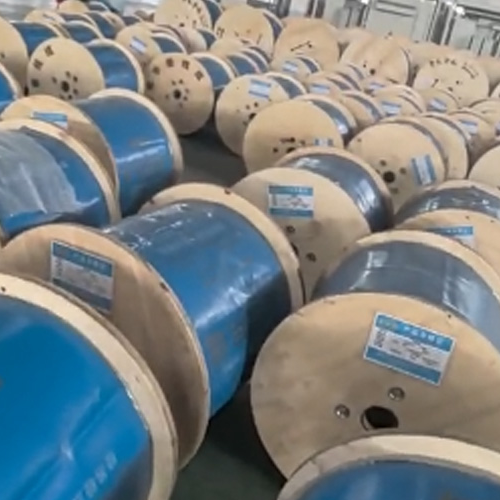
Evidence to confirm with the quote
- Cable datasheet, construction, and test scope
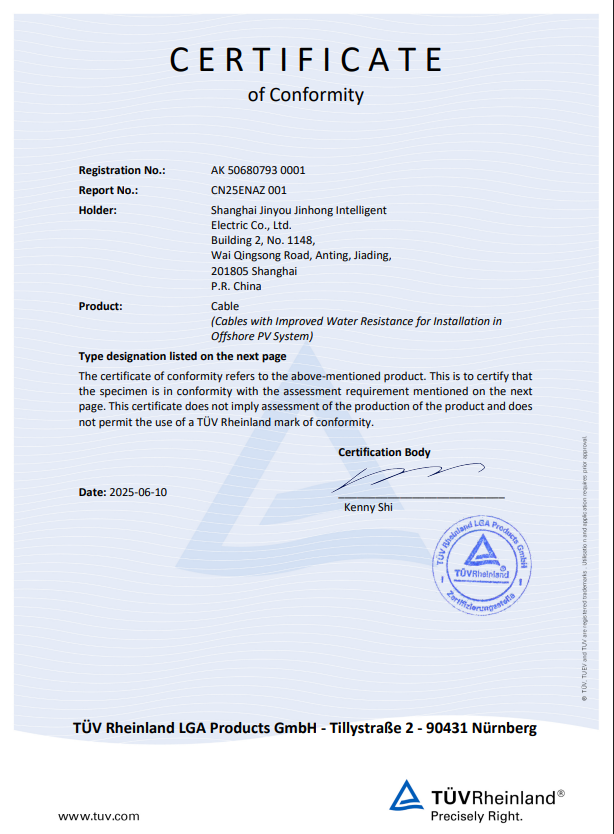
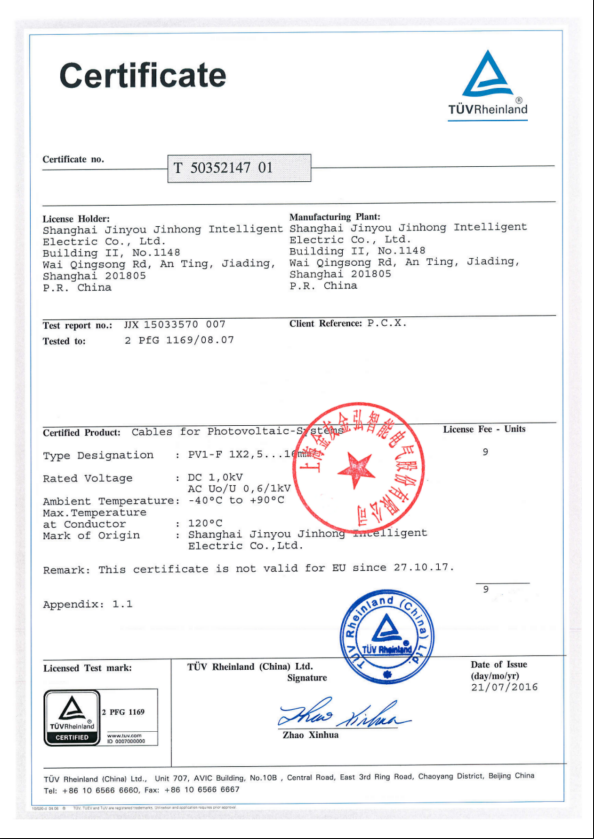
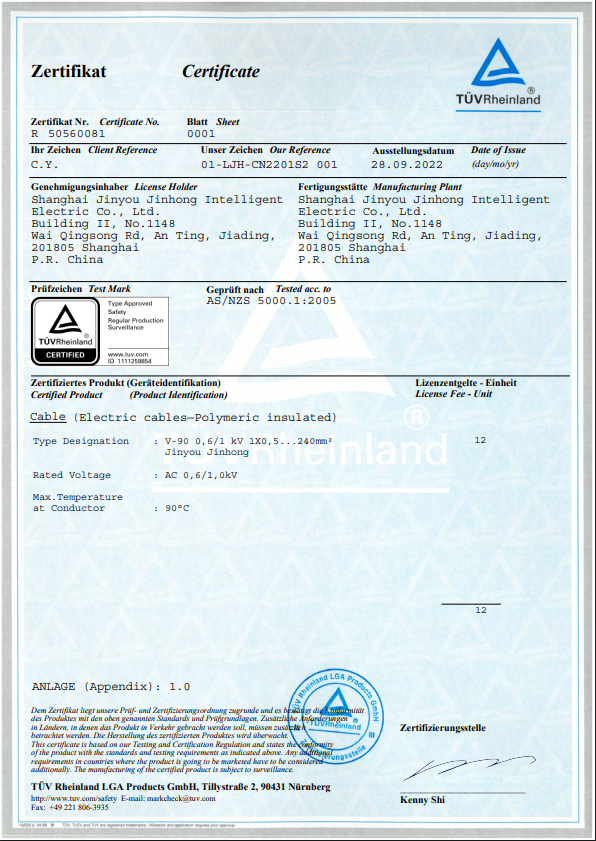
- Project-required UL or other listing and the exact evidence object
- Color, marking proof, labels, packing, and traceability fields
- Batch or shipment documents requested by the quality plan

Interfaces outside a cable test record
- Support hardware selection, aging, spacing, and installation
- Connector matching, contact range, crimping, sealing, and seating
- Roof entry, enclosure, indoor transition, and building work
- Array testing, commissioning, inspection, and AHJ acceptance
Connector reliability work sponsored by the U.S. Department of Energy treats poor installation, mismatch, design, and manufacture as separate risk sources.[6] That is why we ask for connector and termination responsibility even when the RFQ begins with the cable.
Check the RFQ before submission
The checker flags missing electrical, route, procurement, and evidence inputs. It does not approve a design or certify a product.
RFQ Scope to Shipment
Submit electrical and route inputs. Include voltage, current, sizing basis, length, route zones, termination, quantity, and evidence needs.
Separate the roof zones. Mark exposed, supported, protected, entry, inverter, and connector interfaces in the RFQ.
Confirm the product reference. The quotation records the accepted construction, marking, packing, test, and document scope.
Confirm price and schedule. Commercial terms, timing, and stated exceptions are tied to that written scope.
Confirm production and testing. The quotation identifies the controls and test evidence that apply to the approved order basis.
Confirm packing and shipment. Cut lengths, packing, labels, and shipment-document instructions are fixed before production.
Change control
A change to current, size, route, connector, marking, quantity, packing, listing, test, or document scope must be reflected in the written specification and quotation. An email note that never reaches the approved order basis is not a production instruction.
Post-shipment handoff
Cable delivery does not prove the installed condition. Support and connector installation, roof entry, array testing, whole-system testing, commissioning, inspection, and AHJ acceptance remain with the named project parties.
Rooftop DC Interface Handoff
We supply a defined cable product and its agreed evidence for the stated circuit position. The scope map keeps the solar panel cable, field interfaces, and final system acceptance from being collapsed into one promise.
Module and string connection area
Send module leads, string arrangement, DC voltage/current, cable route start, connector family, and field-termination scope.
Supported rooftop DC run
Send roof zones, support/protection plan, cable grouping, ambient and wet conditions, route length, and inspection access.
Rooftop-to-inverter transition
Send entry and enclosure conditions, indoor transition, inverter terminal range, bend space, labels, and acceptance owner.
Cable layer
Jinyou confirms the quoted photovoltaic cable construction, marking, packing, and test or document scope.
Interface layer
Support hardware, connectors, terminations, enclosures, and mounting parts need their own product and installation evidence.[2][6]
Field acceptance layer
The engineer, installer, commissioning party, inspector, and AHJ confirm the installed renewable energy system against applicable requirements.
Resources
Rooftop Solar Cable Planning Tools
Rooftop Solar Cable FAQs
The best fit is the cable whose voltage, current, sizing basis, conductor and insulation construction, listing, route exposure, support, protection, and termination range match the written project requirements. Start with the Rooftop Route Responsibility Ledger and use the H1Z2Z2-K values above only as a reference option.
Not every route is decided the same way. Identify exposed sections, protected sections, wet conditions, roof entry, physical-damage risks, the adopted NEC edition, equipment instructions, and the AHJ; the project engineer then selects the wiring method.[4]
Send design current, DC voltage, allowed voltage drop, one-way and circuit length, conductor material, installation method, ambient, grouping, conduit fill, termination range, and the engineering sizing basis. A fixed 10 AWG recommendation or a retail extension cable does not answer that project question.
Identify each roof zone, contact point, mounting or support method, rail or tray section, conduit, enclosure, building entry, inverter transition, connector, bend, grouping condition, and inspection-access point. Supplement with drawings or photographs if a written description could be misinterpreted.
It can be reviewed as a DC photovoltaic cable construction for the stated circuit and route. The reference includes DC 1500 V and the published test values above, but the required United States listing, wiring method, equipment fit, and AHJ acceptance remain separate checks.[4]
Use a route drawing that identifies the roof material, cable position, support device, edge and contact conditions, sunlight and wet exposure, enclosure or penetration point, indoor path, labels, and access. Keep the cable and building-work requirements as separate approval items.
Name the datasheet, construction or marking proof, project-required listing evidence, electrical or mechanical test scope, batch or traceability record, packing list, and any shipment certificate required by the quality plan. A testing system at the factory does not mean every possible report ships by default.
Quantity, marking, and packaging change material allocation, setup, cut planning, print proof, labels, handling, and packing. Send total and forecast quantity, cut lengths, required color, exact marking, roll or drum preference, destination limits, and label fields for a useful quotation.
Submit the cable, route, quantity, evidence, and required-date inputs together. After review, we confirm the accepted configuration, commercial terms, and schedule in writing; this page does not commit to a specific rush turnaround.

