Get in touch with JINYOU Cable Company

-
CALL US +86 181 1623 2461
-
EMAIL sales@jinyougroup.cn
ISO 9001:2015 & IATF 16949 Certified
EV & Charging Cables
EV Charging Cables for EVSE, Automotive and Energy Projects
Jinyou Cable supports design/engineering, procurement and quality teams as they move an EV cable need from requirements to a controlled RFQ. Focus first on the application and electrical interface, then close voltage/current and thermal route, followed by construction/routing and evidence before a configuration is quoted.
- EV charging cable assemblies
- EV high voltage cable
- Automotive cable integration
- Custom OEM review
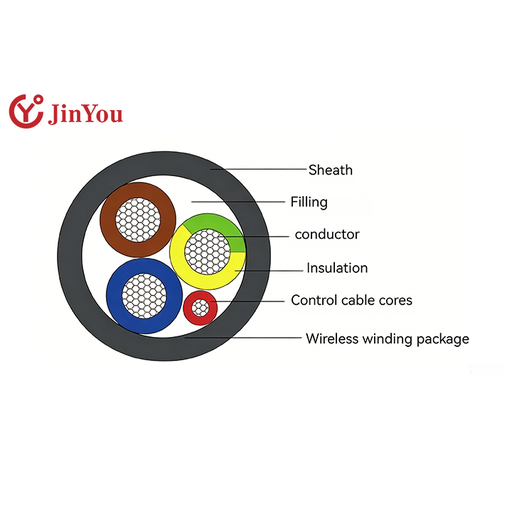
0+
V DC High Voltage
0%
Quality Tested
0+
Export Countries
0H
RFQ Response
Match the Cable to the Integration Challenge
An EV cable need will usually transit an electrical boundary, a physical route and an evidence plan. This page collects decisions around these topics so that a connector name or voltage marking is not the end of the engineering the need implies.
Interface fit
Record the vehicle inlet or EVSE connection, pin assignment, signal conductors, termination and target market. Type 1, Type 2, CCS and SAE J3400 describe different interface contexts and require project confirmation.
Electrical and thermal duty
State maximum voltage, continuous and short-duration current, duty cycle, ambient conditions and whether the cable is uncooled or thermally managed. IEC 62893 and IEC 61851 provide standards context; they do not select a Jinyou configuration.
Mechanical and evidence fit
Length, bend, torsion, abrasion, connector support, packaging and the requested test documents belong in the same RFQ. The approved drawing and revision should identify the assembly that the evidence covers.
Scope separation prevents a costly mismatch
An EV charging cable connects charging equipment and a vehicle inlet, while an EV high voltage cable or automotive high voltage cable is generally part of an in-vehicle power circuit. They can share a supplier, but their interface, environment and evidence questions are not interchangeable. IEC 62893-1 provides the charging-cable context.
Search intent still needs an engineering boundary
Buyers researching electric car charging cable types, EV charging cable manufacturer options, EV charging cable specifications or automotive high voltage cable manufacturers are often solving different interface problems. Those phrases help route the conversation; they are not a substitute for the application record.
EV Charging Cable Families and Configurations
Use the four cards below to route a project to the right conversation. The linked legacy pages were checked for directly relevant material; they currently provide no usable product specifications, so open fields remain RFQ questions rather than inferred claims. The applicable connector and charging-system context follows the IEC 62893-1 review route.
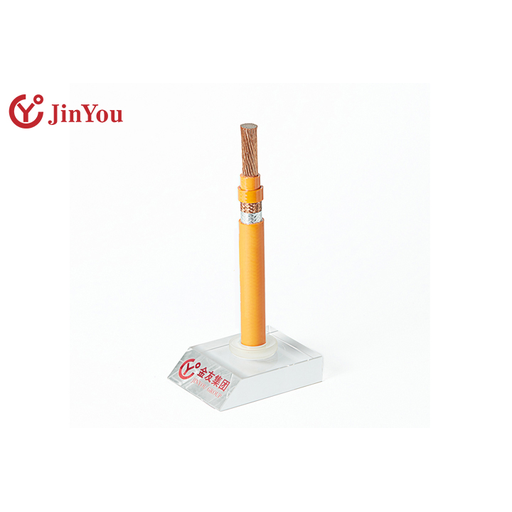
EV high voltage cable
EV High-Voltage Cable
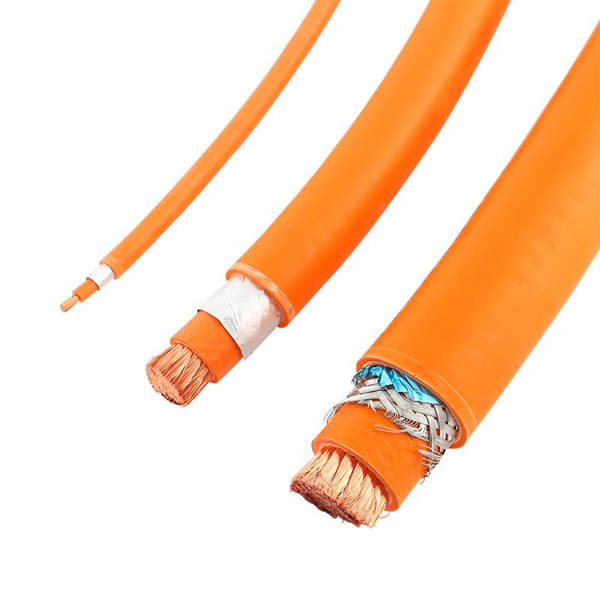
For high-voltage power paths inside an electric vehicle or related vehicle system. Review battery, inverter, motor and auxiliary-unit interfaces with shielding, insulation, temperature, bend and test requirements.
Confirm: system voltage/current, conductor construction, shielding and bonding, routing, environment, termination and evidence.
Automotive cable
Automotive Cable
For vehicle cable integration where the vehicle-wiring boundary, operating environment and assembly responsibility need to be defined with the OEM or system integrator.
Confirm: vehicle platform, circuits, connector and pinout, shielding, packaging, validation plan, revision control and annual demand.

EVSE charging cable
EV Charging Cable
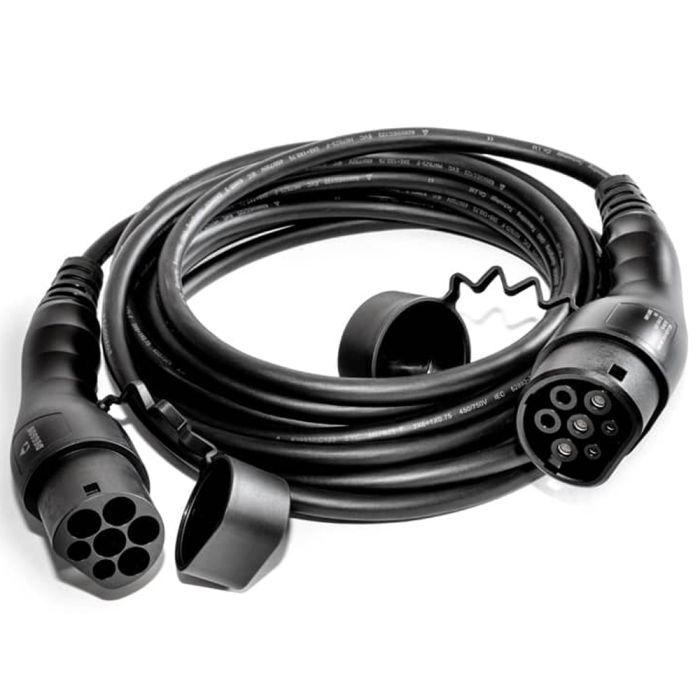
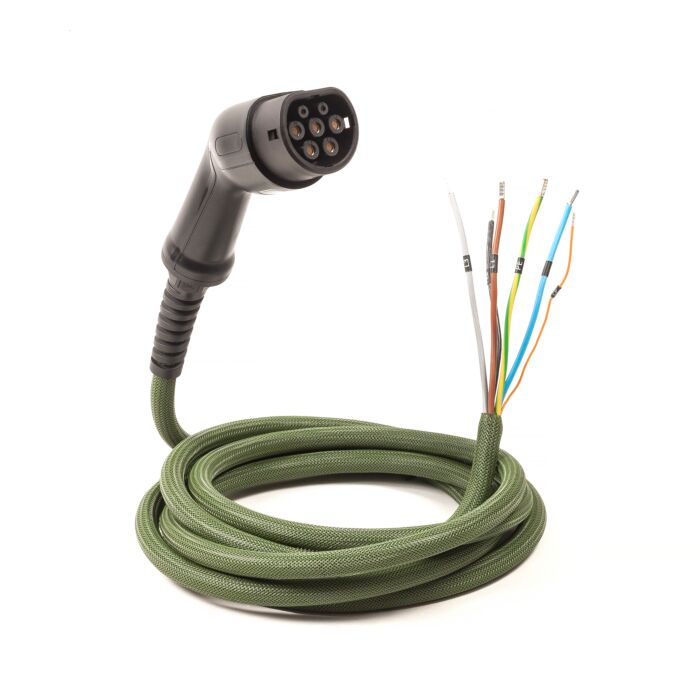
For AC or general EVSE cable assemblies between charging equipment and the vehicle. The charging mode, connector family and use environment set the review path.
Confirm: AC or DC, connector/inlet, current profile, length, flexing, strain relief, market standard and required documents.
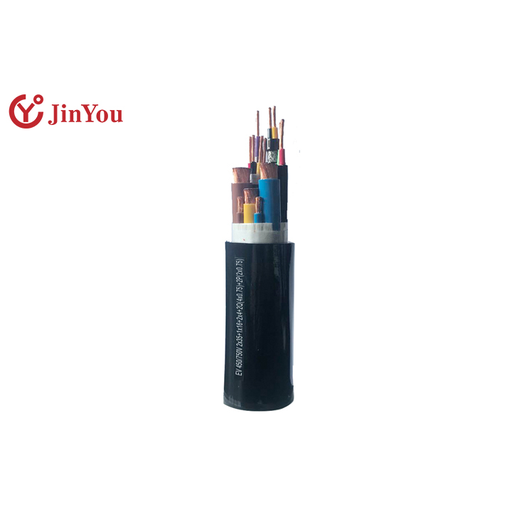
DC EV charging cable
EV DC Charging Cable
For DC charging equipment and vehicle-inlet assemblies. Thermal management, contact temperature, control signals and cable handling must be reviewed as one system.
Confirm: DC voltage/current, connector family, cooling route, sensors, duty cycle, cable management, length and test plan.
EV High-Voltage and Automotive Cable Integration
EV high voltage cable, EV HV cable and automotive high voltage cable are closely related phrases, but they can describe different application contexts. A power path inside a vehicle has different connector, shielding, vibration, temperature and service questions from an EVSE path between charging equipment and a vehicle inlet. The DC equipment boundary is described in IEC 61851-23.
| Integration point | Engineering question | RFQ evidence to request |
|---|---|---|
| Battery and inverter path | What are the electrical duty, transient conditions and insulation boundaries? | System diagram, voltage/current profile, construction and test requirements |
| Motor or auxiliary drive | What are the routing, vibration, bend and abrasion exposures? | Installation drawing, bend limits, support points and environmental profile |
| Shielding and EMC | Where is the shield terminated and how is continuity verified? | Shield design, bonding method, continuity test and acceptance criteria |
| Vehicle wiring boundary | Who owns the connector, terminal, overmould and change approval? | Controlled connector reference, pinout, drawing revision and change process |
Configure an EV Cable Around Your Real RFQ
A well-defined brief speeds clarification and makes quotation revisions easier to compare. Send the answers you know, mark missing fields as questions, and record any assumption that would change the production or evidence boundary. Use IEC 62893-1 as the general charging-cable reference when selecting the applicable clause.
| RFQ group | Inputs to provide | Why it changes the review |
|---|---|---|
| Application | Vehicle, EVSE, charging station, energy-storage or mixed program | Determines cable family, environment and ownership boundary |
| Interface | Connector/inlet family, mating part, pinout, signal and sensor requirements | Prevents a compatible-looking connector from being treated as interchangeable |
| Electrical duty | Maximum voltage, continuous/peak current, duty cycle and derating method | Sets conductor, contact and thermal review questions |
| Construction | Conductor, insulation, jacket, shielding, drain/bonding and termination | Links the drawing to material and validation evidence |
| Mechanical route | Length, bend, torsion, abrasion, pull, support and storage method | Controls handling, service reach and strain-relief decisions |
| Environment | Ambient/storage temperature, moisture, oil/chemical exposure and installation location | Separates material suitability from a generic cable label |
| Evidence | Applicable standard edition, tests, reports, certificates and document format | Defines what the proposed configuration must prove |
| Commercial | Quantity, annual volume, branding, packaging, destination, MOQ and delivery boundary | Allows a scoped offer without inventing price or lead time |
Charging Cable Selection Matrix
This comparison chart aids directing discussion, but it is not a substitute for a controlled product specification document; AC, DC, EVSE and in-vehicle HV requests each route through a distinct channel for conformity verification. The right call is to confirm against the connection boundary; a longer cable is not always the better choice. Connector and charging-system context can be checked against IEC 62893-1.
| Project route | Interface boundary | Primary design focus | First evidence request |
|---|---|---|---|
| AC EV charging cable | EVSE to vehicle inlet | Connector, control conductors, flexing and installation reach | Mating interface, mode/standard, current profile and length |
| DC EV charging cable | DC EVSE to vehicle inlet | Current path, contact temperature, thermal route, sensors and handling | DC duty, cooling route, connector/inlet and test plan |
| EV high-voltage cable | Vehicle battery/inverter/motor system | Shielding, insulation, vibration, bend, EMC and vehicle packaging | System diagram, voltage/current, route and connector drawings |
| Automotive cable integration | OEM vehicle-wiring or subsystem boundary | Assembly ownership, revision control, validation and supply continuity | Platform scope, pinout, drawings, validation and volume |
Decision Rule
Choose the route from the connection boundary first. Then use voltage, current, thermal, mechanical and documentation inputs to close the configuration. A page label such as “fast charging” is not enough to select a cable assembly and is not a substitute for the approved record.
Compliance, Testing and Documentation to Confirm
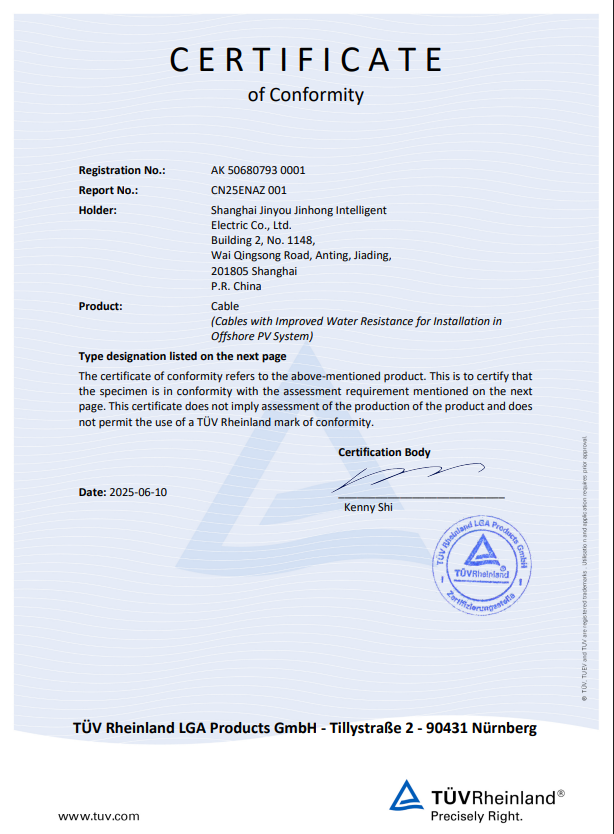
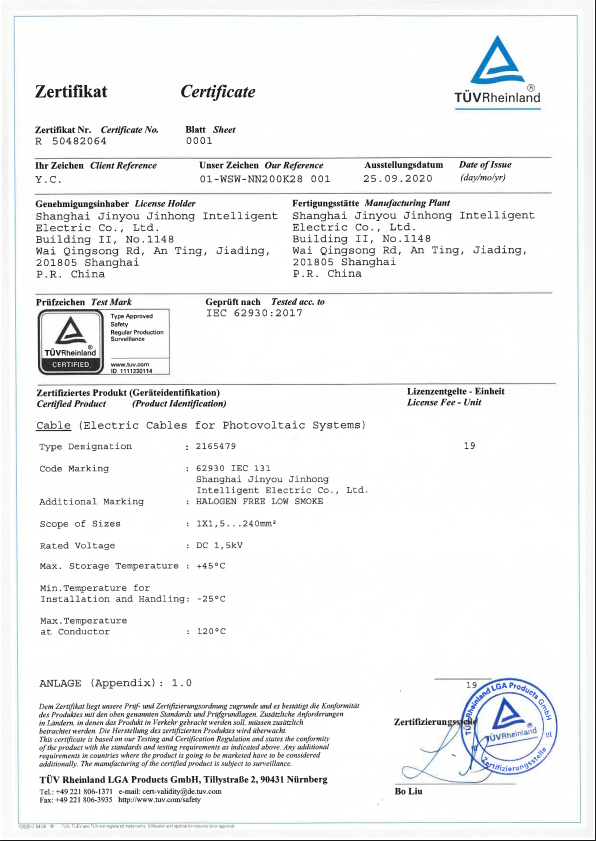
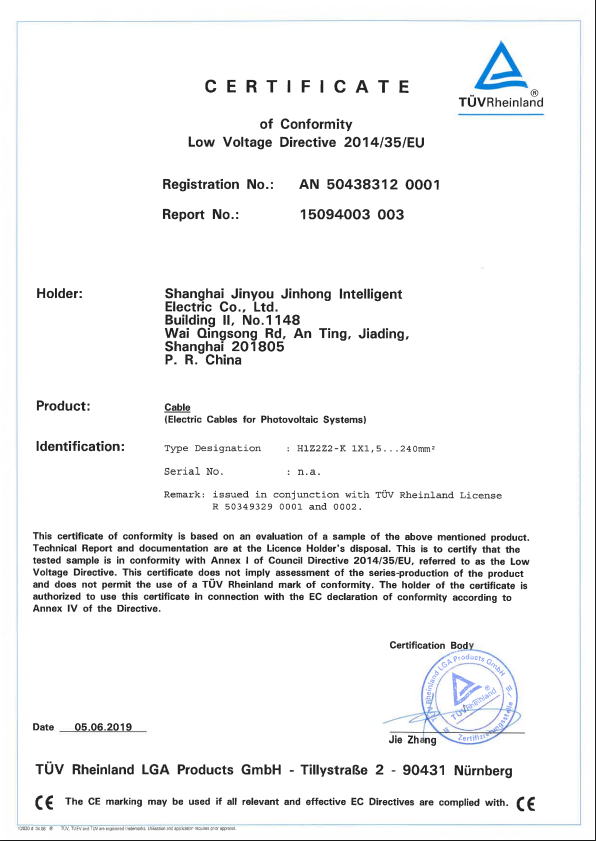
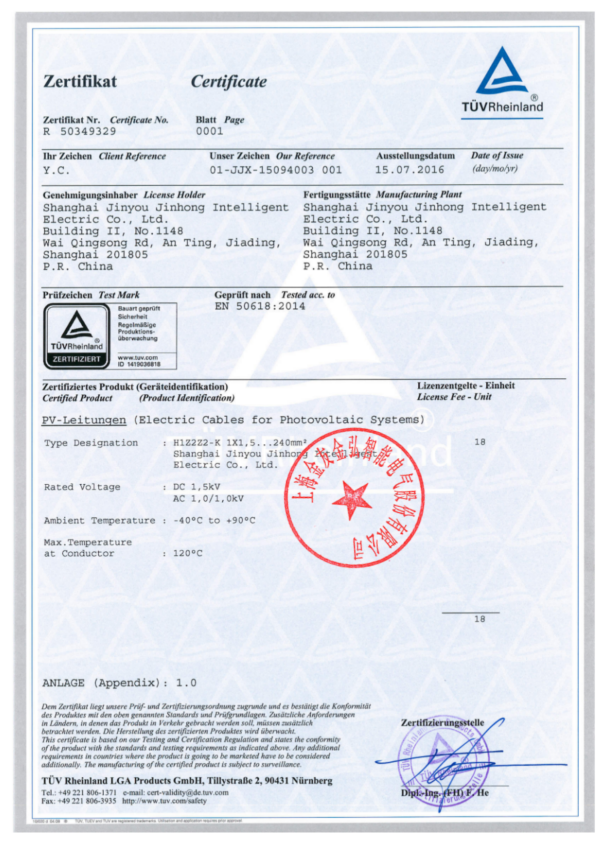
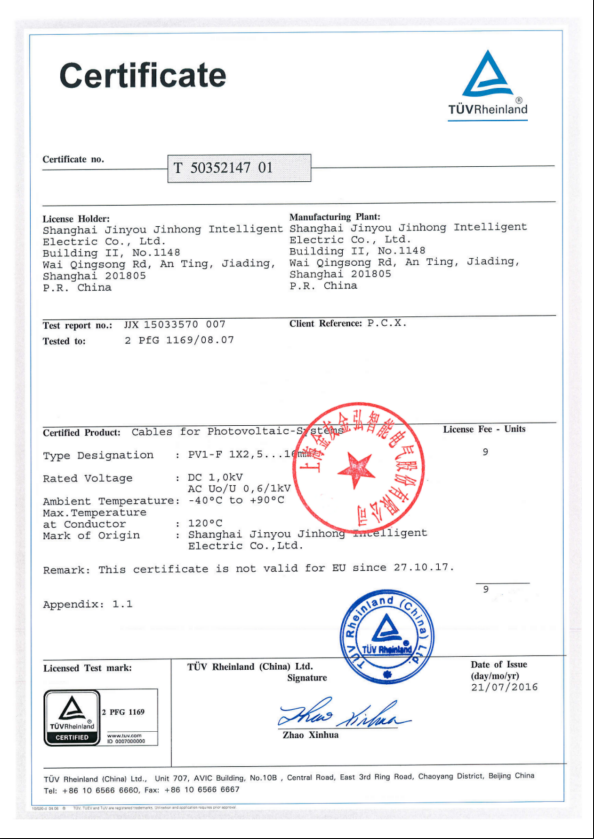
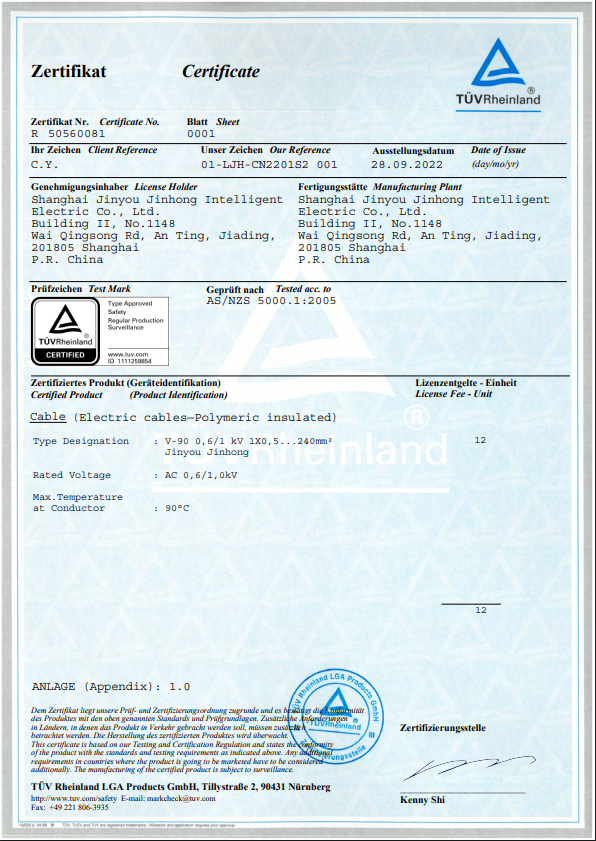
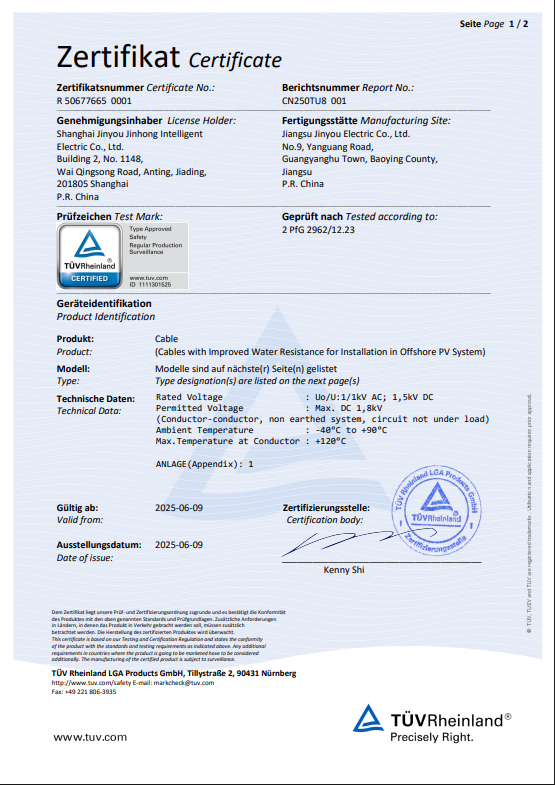
Standards identify technical review items, but they do not show that a particular Jinyou cable configuration has passed them. The root cause of an evidence gap is often a mismatch between the requested duty and the document being reviewed. Use the quotation, drawings and production records to identify the model, revision, document owner, test report and acceptance criteria that support the applicable requirements.
Charging-cable standards context
Standard IEC 62893-1:2017 covers general requirements for flexible EV charging cables and references IEC 62196 and IEC 61851 for connector and charging-system context. The applicable cable part and edition are confirmed for the target market.
DC supply-equipment context
Standard IEC 61851-23:2023 addresses DC EV supply equipment. A DC cable request must still state the vehicle-side interface, duty, thermal route, sensors and the evidence expected for the assembly.
| Named standard reference | Published numeric scope | How the buyer should use it |
|---|---|---|
| Reference: IEC 62893-1:2017 AC cable scope | Up to and including 0.6/1 kV AC | Use as standards context; confirm the applicable cable type and edition. |
| Reference: IEC 62893-1:2017 DC cable scope | Up to and including 1,500 V DC | Use as standards context; do not treat it as a Jinyou product rating. |
| Reference: IEC 62893-1:2017 conductor temperature | 90 °C maximum conductor temperature | Confirm the project construction, duty cycle and measurement layer. |
| Reference: IEC 61851-23:2023 side A AC | Up to 1,000 V AC | Use for DC EVSE system context and verify the actual system boundary. |
| Reference: IEC 61851-23:2023 side A DC | Up to 1,500 V DC | Use for system context; connector, current and thermal evidence remain open. |
| Reference: IEC 61851-23:2023 side B DC | Up to 1,500 V DC | Confirm the vehicle-side configuration and the evidence required by the market. |
| Evidence object | Configuration link | Buyer check |
|---|---|---|
| Drawing and specification | Model, connector, construction and revision | Does the document describe the offered assembly? |
| Electrical and insulation tests | Voltage/current duty, insulation and continuity criteria | Are the test conditions and acceptance criteria stated? |
| Mechanical and environmental tests | Bend, pull, abrasion, temperature and exposure | Do they represent the installation and service route? |
| Conformity or market file | Target market, standard edition and responsible party | Is it tied to the exact model and revision rather than a company badge? |
×
![Enlarged EV Charging Cable]()
Procurement Path: Sample, Quote and Production Handoff
- Send the application brief, electrical interfaces, target market, service conditions, lengths and quantities.
- Review the cable family and keep EVSE, DC charging, EV high-voltage and automotive paths distinct.
- Close open questions around connector, construction, shielding, bending, testing and documentation.
- Align drawings, tests and conformity records with the proposed model and revision.
- Agree sample, quantity, packaging and delivery boundaries before commercial release.
- Apply controlled engineering and change processes to production orders.
- Schedule is configuration-led
- Price, MOQ, lead time and warranty are confirmed only after the technical and commercial boundary is documented. This page intentionally does not publish an unverified range.
Quality Assurance and Configuration Evidence
Jinyou’s profile mentions an automated production facility in China with integrated test capabilities. For a prospective customer, the next step is understanding how this company-level capacity translates into a specific cable assembly being provided.
Input Control
- Model and revision
- Connector, pinout and termination
- Voltage, current and duty
- Length, routing and environment
Evidence Control
- Applicable standard and edition
- Test plan and acceptance criteria
- Drawing-to-report traceability
- Packaging and change records
EV Charging Cable Engineering Resources
EV Cable RFQ Readiness Checklist
Mark the inputs already defined in your brief. The result measures information completeness only; it does not approve a cable configuration.
Access Tool →
EV Cable Route Matrix
Choose the application and interface boundary to route the first engineering conversation. The result is a review path, not a product approval.
Access Tool →
EV Cable Specification Summary
Enter known values to create a compact handoff summary. Blank fields stay visible as open questions.
Access Tool →
EV Cable Buyer FAQs
For standards context, buyers can start with IEC 62893-1 and then confirm the applicable connector, charging-system and market requirements for the proposed configuration.
An EV charging cable connects charging equipment to a vehicle inlet. An EV high voltage cable or automotive high voltage cable is generally part of an in-vehicle power circuit. The product family and evidence path should stay separate even when one supplier supports both.
No. Voltage must be reviewed with current, duty cycle, connector, conductor and insulation construction, temperature, routing and the applicable evidence plan.
Start with the charging equipment and vehicle interface, then state the charging mode, electrical duty, cable-management route and market requirements. DC requests also need a thermal-management and sensor decision.
Jinyou describes custom OEM services and specialized products for defined installation environments. Length, termination, branding, construction and validation remain project-confirmed inputs.
Include the vehicle platform, battery/inverter/motor connection, voltage/current profile, shielding and bonding, routing, vibration and temperature conditions, connector drawings, validation plan and annual volume.
Request the exact drawing, specification, test plan, test result or conformity record needed by engineering and quality. The quotation should identify the model and revision covered by each object.
No verified price, MOQ or lead-time value is published on this page. Those terms are confirmed after the technical and commercial scope is reviewed.

