Get in touch with JINYOU Cable Company

-
CALL US +86 181 1623 2461
-
EMAIL sales@jinyougroup.cn
Floating PV Cable for Wet and Moving Solar Routes
A useful floating PV cable quote for solar PV begins with the route, not with a generic waterproof label. Jinyou Cable reviews water exposure, platform movement, electrical duty, connector and termination scope, quantity, packing, and the evidence tied to the requested size.
Within 24 hours
Inquiry response on business days, reviewed by an engineer
7–15 working days
Production runs scheduled and confirmed with your quotation
L/C or T/T
Payment terms for the commercial review
Floating Route Exposure Matrix
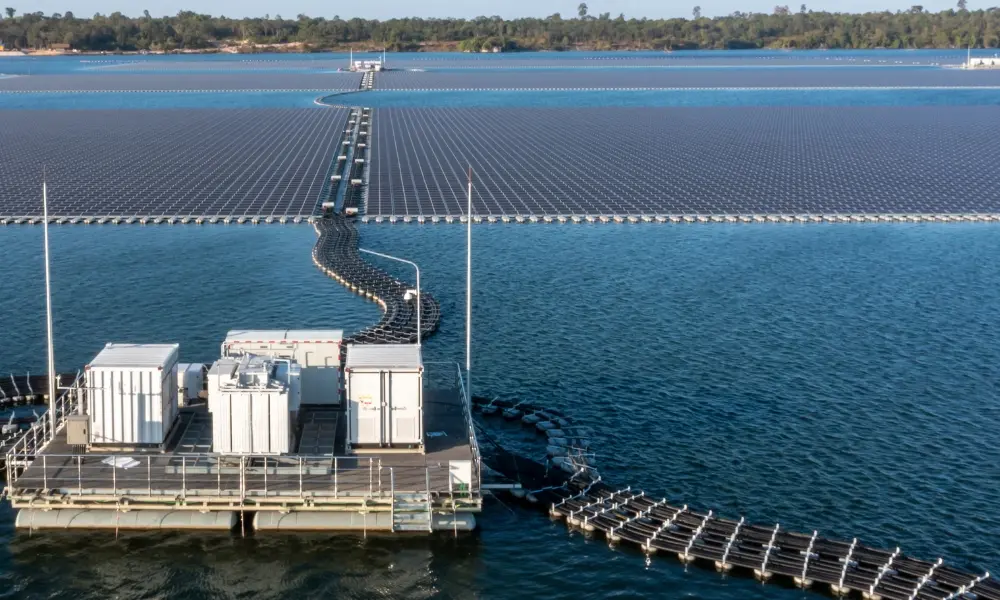
The same circuit can meet different conditions as it crosses a floating photovoltaic system near the water surface. World Bank guidance treats cable routing, water ingress, cyclic mechanical stress, ultraviolet exposure, corrosion, grounding connections, and connector immersion as separate review items rather than one catch-all property.
| Route segment | Water and environment | Movement and support | Electrical and interface input | Evidence to request / Next decision |
|---|---|---|---|---|
| Floating structure Module, solar panels and string interconnection on floats | Humidity, spray, intermittent contact, UV, pond or reservoir conditions | Support spacing, abrasion points, cable slack, maintenance access | PV circuit voltage, design current, conductor area, connector and junction-box location | Exact size and construction sheet; environmental claim scope Continue only after product and installation inputs match |
| Moving transition Between moving floating sections or fixed interfaces | Contact duration, freshwater or saltwater, conductivity, temperature and freeze conditions | Dynamic motion, bend path, strain relief, anchor interaction and tension | Isolation, insulation monitoring, earth-fault detection, termination position | Movement, bend, support and termination evidence for the named model Confirm the interface; do not infer duty from the adjacent segment |
| Platform to shore Floating system export or transition | Water depth, level change, shore abrasion, nearshore or inland context | Protected route, slack control, strain relief and access for inspection | Route length, voltage drop, inverter or transformer position, grounding continuity | Route drawing, electrical calculation and cable-family decision Escalate when the route becomes a submerged export or shore-crossing design |
| Shore-side continuation Fixed installation beyond the water route | Burial, conduit, sunlight, chemical exposure and local installation conditions | Pulling, fixed support, entry seals and transition termination | Ground-mounted solar or utility distribution requirements | Applicable fixed-route specification and jurisdictional documents Route to the correct cable family rather than stretching the floating scope |
Jinyou Floating PV Cable Range and Scope
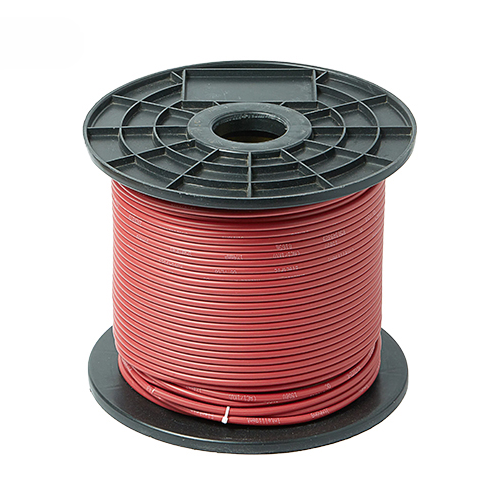
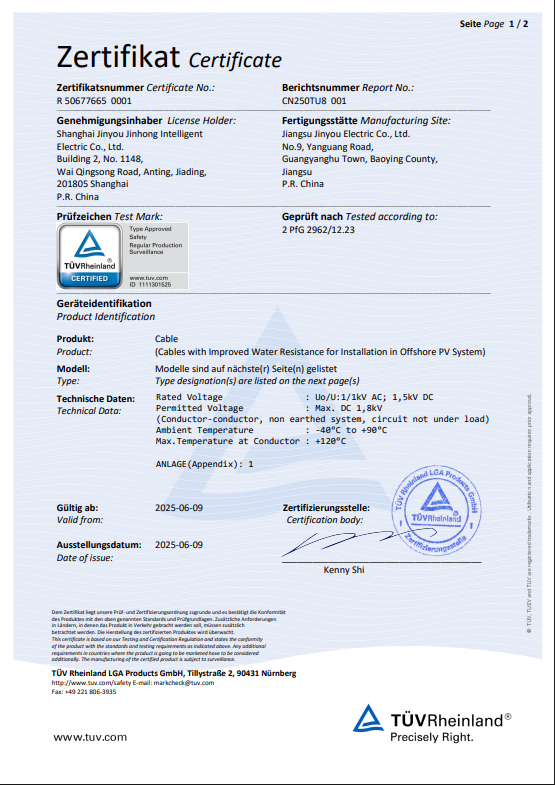
Our listed product family is OFF SHORE (WATERPROOF) PHOTOVOLTAIC CABLE, with a nominal conductor area range of 1.5–240 mm².[1] Contrary to the idea that a range proves one universal construction, every requested size still needs its construction, voltage, movement duty, environmental evidence, and packing confirmed.
Offshore photovoltaic cable and waterproof solar cable are common procurement phrases, but neither defines the water method, movement duty, connector boundary, or evidence for a selected size. Bind the Jinyou product name and requested mm² to the project quotation.
1.5–240 mm²
Use the nominal conductor area as the first sizing reference, then request a size-specific engineering document pack for the quotation.
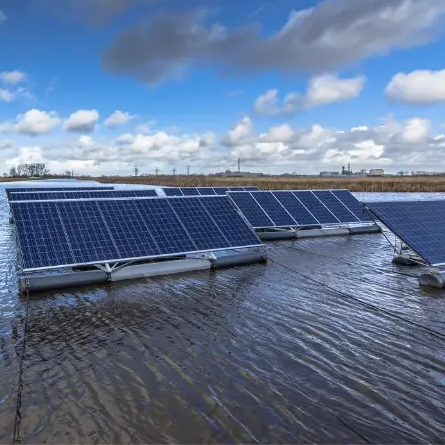
Wet, UV and corrosive routes
Record water medium, contact duration, temperature, freeze exposure, sunlight, sheath requirement, chemical context, and movement before selecting a solar cable.
Floating does not mean every underwater duty
Offshore, submerged, underwater, floating, and shore-side routes remain distinct until the electrical and mechanical design assigns a cable family.
Scope-preserving project review
- State the exact conductor area and requested length for the photovoltaic system and its renewable energy project boundary.
- Ask for construction, electrical rating, environmental test, and movement information for the selected floating PV size.
- Put connector, termination, junction-box, support, and grounding interfaces in the same review package.
- Keep inland water bodies, nearshore exposure, and open-offshore forcing separate instead of folding them into one product name.
12-Input Floating PV Cable RFQ Card
An inquiry that gives only a cable size or price-per-meter question leaves the solar array route unresolved. These 12 input groups turn the request into a reviewable floating solar cable brief without adding default project values.
Why the route belongs in the quotation
Unlike a size-only inquiry, the 12-input brief shows the trade-off between electrical sizing, mechanical movement, water exposure, interfaces, and documents. That difference reduces the risk of comparing quotations built around mismatched route assumptions.
DC circuit
Nominal system voltage and photovoltaic power topology.
Electrical load
Design current, target conductor area, one-way cable length, and allowed voltage drop.
Earthing
Grounding or equipotential-bonding architecture at the array and shore interfaces.
Protection
Isolation, insulation monitoring, and earth-fault detection requirements.
Route position
Floating platform, moving transition, shore approach, and inland, nearshore, or offshore context.
Water contact
Freshwater or saltwater, conductivity, contact mode, duration, and water level.
Temperature
Minimum and maximum conditions plus ice or freeze-thaw exposure.
Movement
Flex path, bend, support, tension, slack, strain relief, and maintenance access.
Interfaces
Connector, junction box, termination, inverter, and transformer position and exposure.
Environment
UV, corrosion, chemicals, animal damage, burial, and water-body sensitivity.
Commercial quantity
Total quantity, cut lengths, project stages, roll or drum preference.
Documents
Required data sheet, test method, standard, certificate detail, inspection, and packing record.
Floating Platform to Shore Route Decisions
The cable route should follow both the electrical architecture and the physical movement of the FPV installation. A peer-reviewed offshore floating photovoltaic study separates enclosed inland systems from marine applications and shows that underwater export and onshore equipment placement can produce different layouts.
ENGINEERING REVIEW RULE
A floating PV cable installation drawing should identify each moving, wet, supported, terminated, and fixed segment. A cable label is not a substitute for that route drawing, because even 4 mm² and 6 mm² candidates can meet different support and interface conditions; send your engineering drawing with the RFQ for supplier review.
Movement changes the handoff
A common assumption is that extra slack resolves a moving transition; it does not always control bend path, tension, abrasion, or connector elevation. The trade-off between movement allowance and restraint must be confirmed against the mooring and support design.
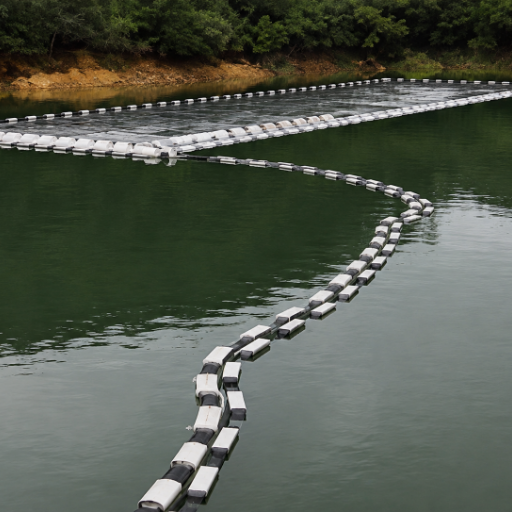
Floating structure
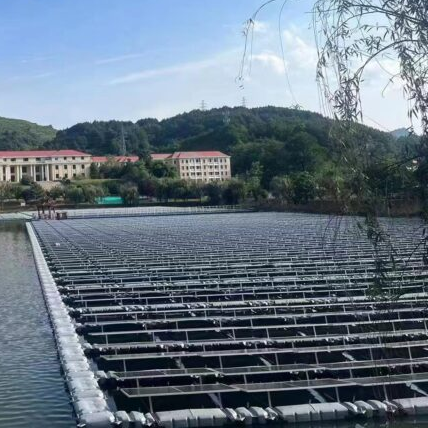
- Map every module, connector, string and combiner interface.
- Keep the cable supported away from abrasion and uncontrolled slack.
- Record inspection access across the floating platform.
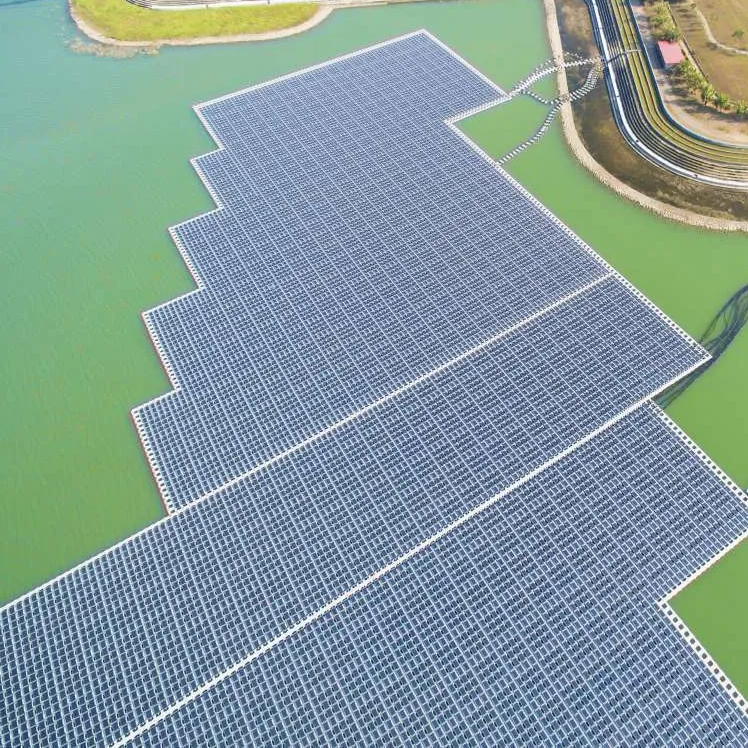
Moving transition
- Define movement amplitude, bend path, water contact and strain relief.
- Check the anchor or mooring interaction rather than adding slack without control.
- Place terminations where their exposure and maintenance plan are known.
Shore and fixed continuation
- Confirm shore entry, burial or conduit, equipment position and route length.
- Review voltage drop and protective design with the full direct-current circuit.
- Assign underwater export, utility-scale, or ground-mounted work to its correct cable family.
Installation handoff
Put the support method, maximum movement path, connector elevation, strain-relief point, shore entry, and accessible inspection points on one route drawing. The cable supplier, installer, and system designer can then review the same boundaries without treating product selection as approval of the complete solar power system.
Product Evidence for Water, Movement and Environment
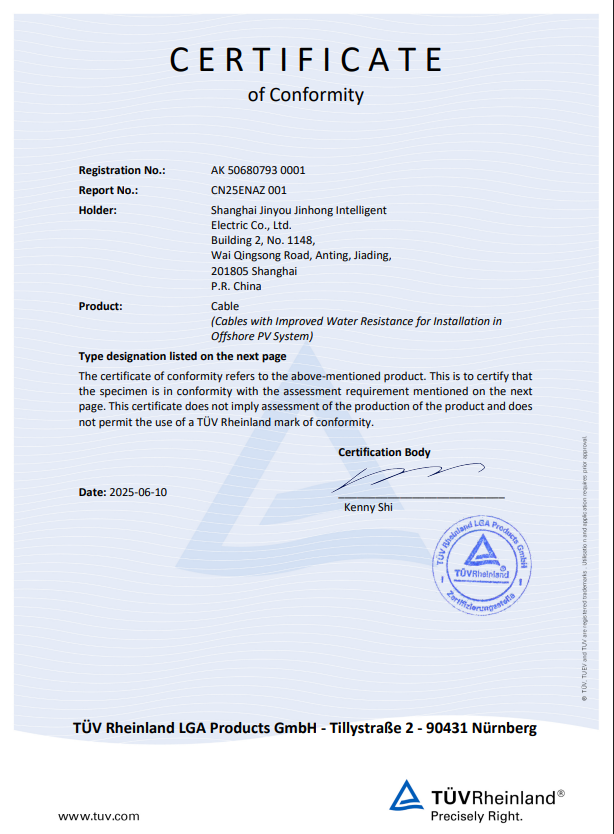
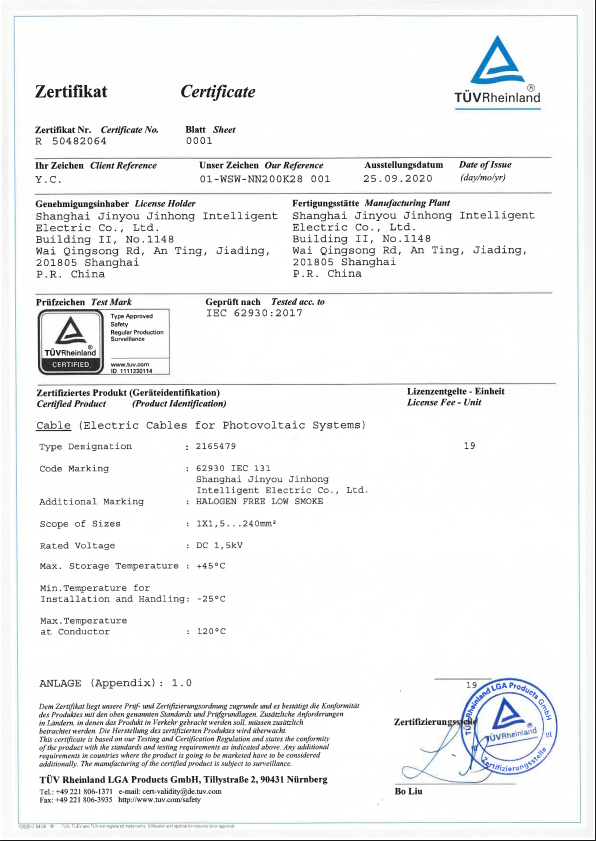
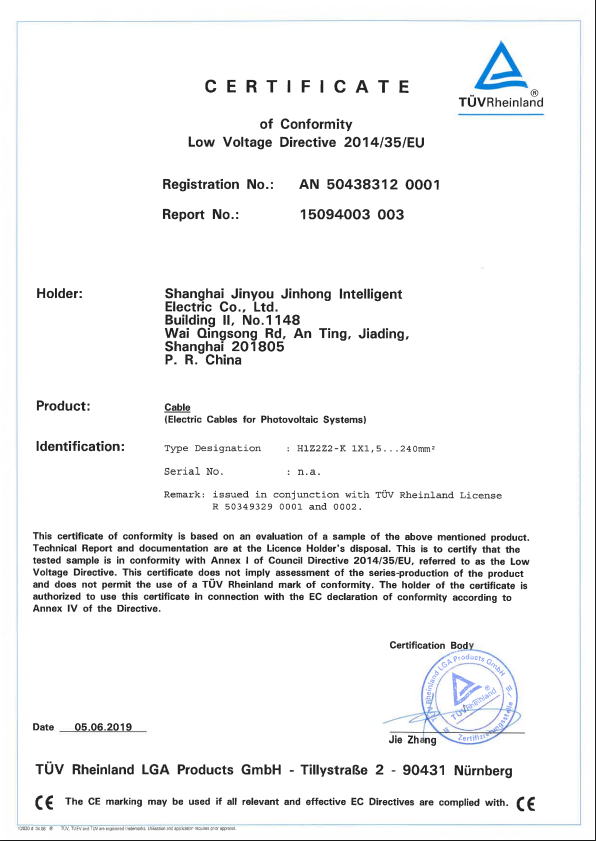
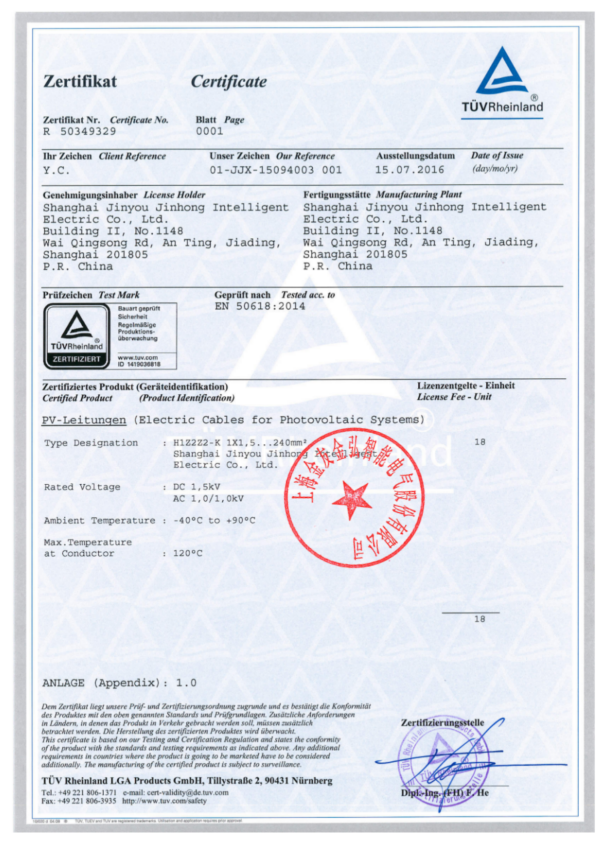
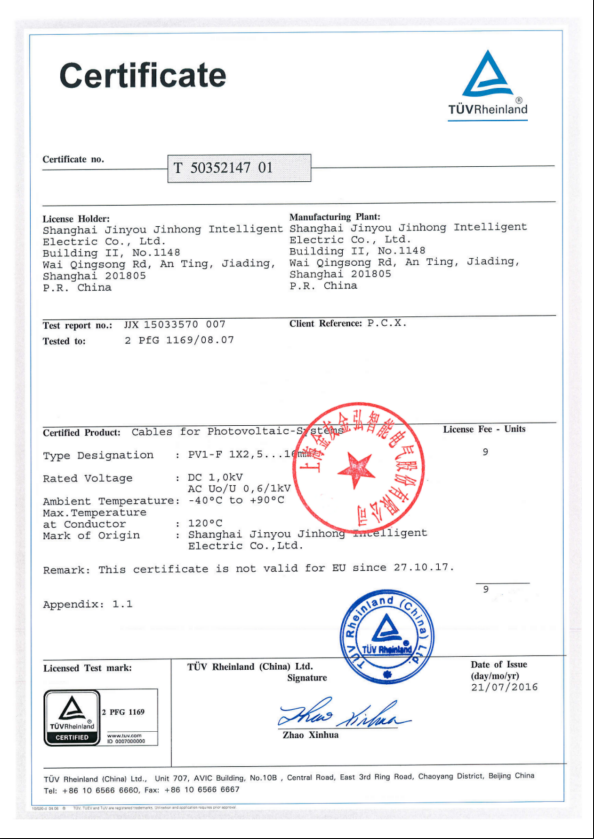
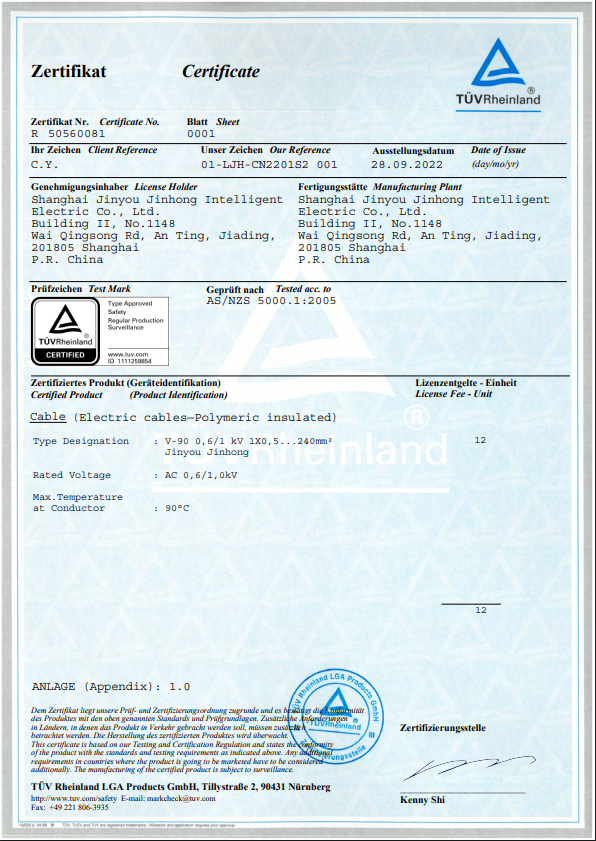
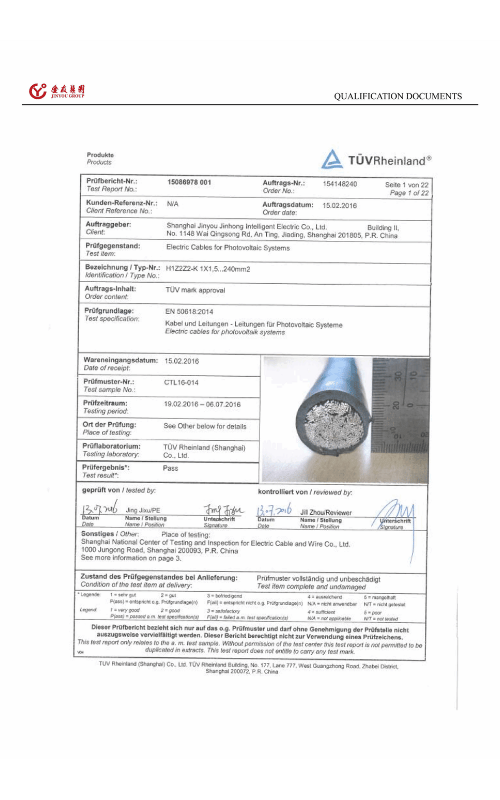
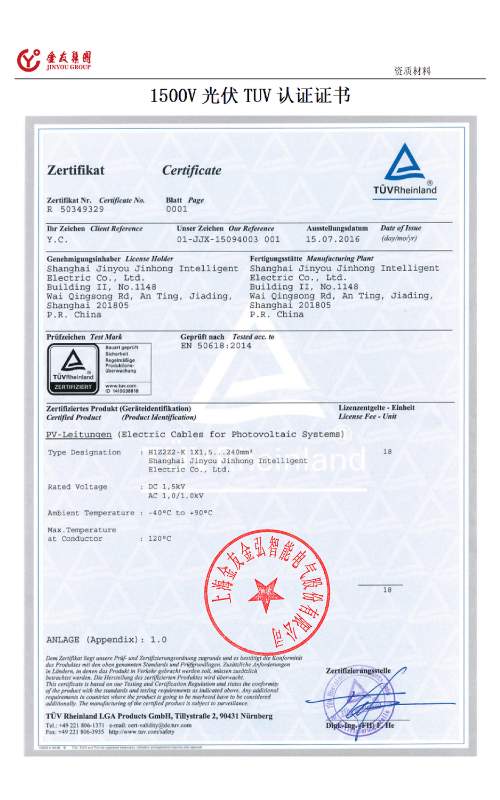
Link each environmental statement in the project pack to the named cable model or series, requested conductor area, test or assessment method, acceptance criteria, and route segment. This keeps a family-page statement from being applied to every size or every floating PV system.
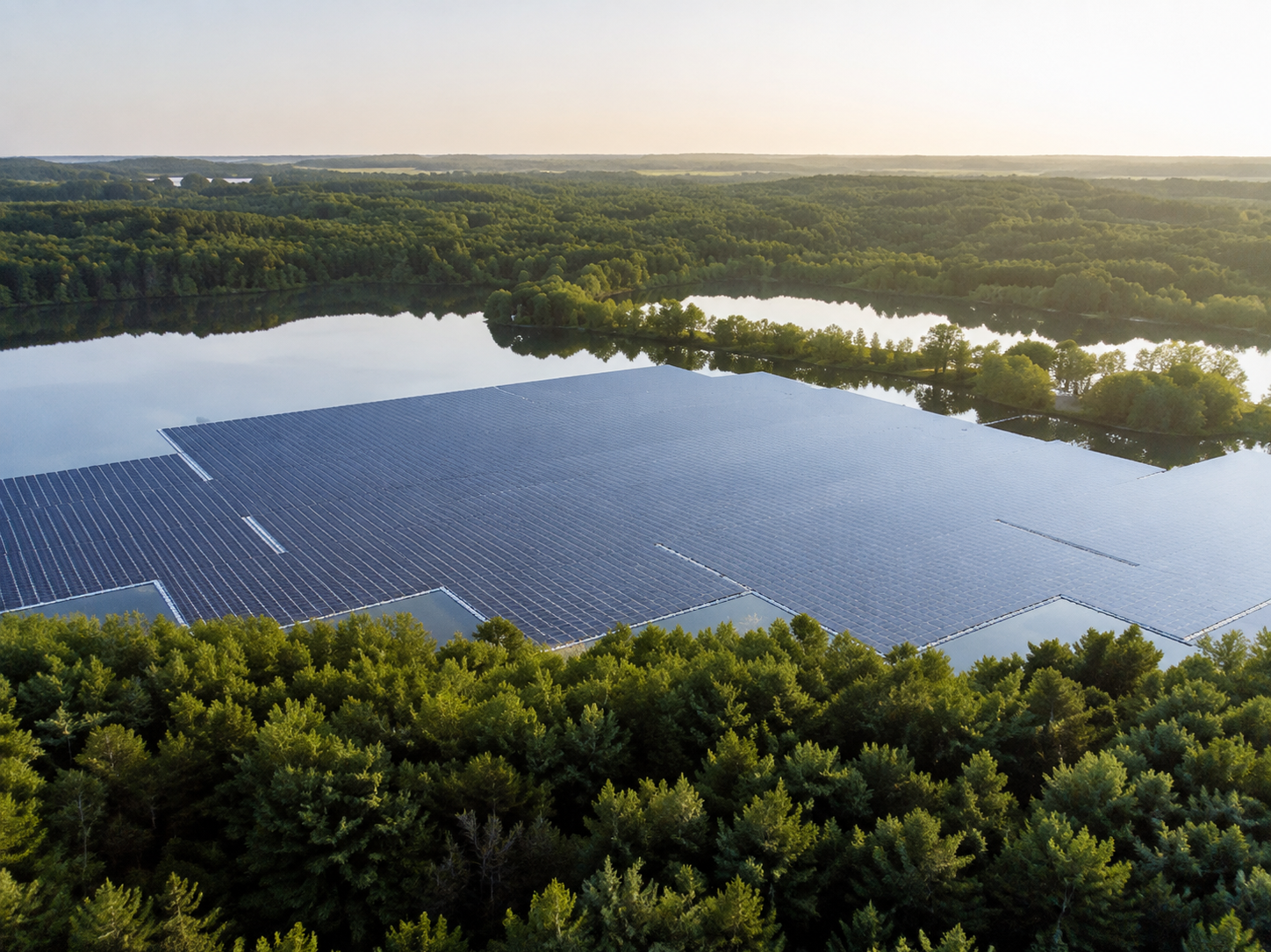
Close the model-to-route evidence gap
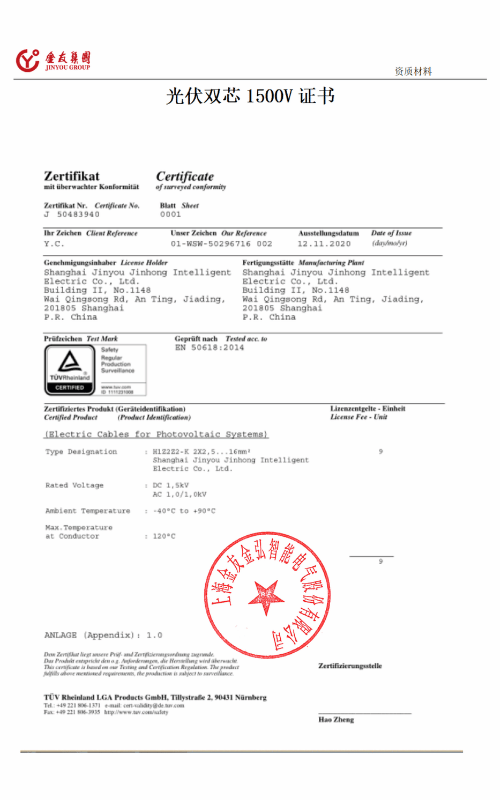
The risk is a model-and-route mismatch because the Jinyou 1.5–240 mm² family range does not define one test scope for every quotation. Unlike a generic waterproof label, a buyer or procurement team should confirm the requested mm², named method, acceptance criteria, route segment, and connector boundary against the size-specific Jinyou document pack.
Start with the Jinyou range
Record the product name, nominal conductor area, intended route, requested quantity, and packing basis from the customer-owned page.
Bind the chosen size
Obtain the construction, electrical rating, sheath and insulation information, water-test scope, movement or bend evidence, and interface compatibility that apply to the quotation.
Close the route interfaces
Confirm support, connector and termination exposure, grounding continuity, isolation, monitoring, fault detection, shore transition, and maintenance responsibilities in the project design.
- Model or series and requested mm²
- Conductor, insulation and outer sheath construction
- Rated electrical conditions
- Named environmental method
- Duration, temperature and water medium
- Voltage and acceptance criteria
- Movement, bend and support scope
- Connector and termination compatibility
- Applicable documents and validity
- Inspection and maintenance record
IEA PVPS reports that cables, connectors, junction boxes, and protective materials in floating solar plants may face stresses beyond ground-mounted PV and therefore need application-specific reliability and maintenance attention. That supports a component-level review; it does not give Jinyou an unverified qualification.
Packing and Commercial Review
Packaging should follow the selected conductor area, total quantity, cut-length plan, handling method, and delivery sequence. Our reference page lists roll and plastic-drum examples for 4 mm² and 6 mm² cable plus the length examples below; the quotation confirms the available combination for your order.
Compare scope before unit price
For a buyer comparing solar cable for floating PV system price and scope, the cheapest per-meter line is not always the best commercial match when cut lengths, drums, documents, and route evidence differ. Send your specific quantity, 4 mm² or 6 mm² packing preference where applicable, and engineering document requirements for a comparable quotation.
| Quotation fact | Published or committed value | Scope boundary | Order action |
|---|---|---|---|
| Nominal conductor area | 1.5–240 mm² | Family-page range, not one universal construction | Confirm the selected size and document pack |
| 4 mm² packing forms | Roll or plastic drum | Published examples, not every possible combination | Submit handling and packing preference |
| 4 mm² length examples | 100 m, 200 m, 500 m, 1,000 m | Published examples, not a fixed cut-length promise | Submit total quantity and required cut lengths |
| 6 mm² packing forms | Roll or plastic drum | Published examples, not every possible combination | Submit handling and packing preference |
| 6 mm² length examples | 100 m, 200 m, 500 m, 1,000 m | Published examples, not a fixed cut-length promise | Submit total quantity and required cut lengths |
| Inquiry response | Within 24 hours on business days | Response timing, not final project approval | Send the 12-input RFQ brief |
| Production schedule | 7–15 working days | Confirmed with the quotation | State the requested production sequence |
| Payment terms | L/C or T/T | Commercial term for quotation review | Confirm the selected term in the order |
Inquiry response
Quotes are returned within 24 hours on business days, reviewed by an engineer.
Production schedule
Production runs are scheduled at 7–15 working days, confirmed with your quotation.
Payment terms
Payment terms are L/C or T/T.
Price comparison inputs
- Named product and conductor area
- Total quantity, project batches and cut lengths
- Route exposure and movement scope
- Required construction, tests and documents
- Roll or drum handling preference
- Requested production and delivery sequence
Engineering & Sizing Tools
Frequently Asked Questions: Floating PV Cable
How do I get power from a moving raft to shore safely?
Define the floating structure, moving transition, any submerged or export segment, and the fixed shore route separately. Give the cable supplier and system designer one drawing that records movement, support, connector elevation, strain relief, water contact, shore entry, and protection boundaries.
Does the cable rating cover the connector and termination?
No. Treat connector and termination evidence as separate project inputs.
What does a limited annual immersion statement mean across service years?
It states only the documented duration, conditions, model scope, and acceptance criteria. It does not establish continuous immersion or lifetime suitability.
Should voltage, cable gauge, protection, and inverter placement be decided together?
Yes. System voltage, design current, one-way length, conductor area, voltage drop, grounding, isolation, fault detection, and equipment position interact; use the DC Voltage Drop Checker only as a screening tool within that design review.
What changes when the water freezes?
Freeze adds temperature, movement, abrasion, support, and inspection-access questions to the route review.
What size range does Jinyou list for its offshore waterproof photovoltaic cable?
The customer-owned product page lists nominal conductor areas from 1.5 to 240 mm². The selected size still needs its own construction, electrical, environmental, movement, and packing review.
What should be included in a floating PV cable quotation request?
Use all 12 groups in the RFQ Card: circuit, load, earthing, protection, route, water, temperature, movement, interfaces, environment, quantity and packing, and required documents. The RFQ Builder turns those inputs into a copy-ready brief.
Which documents should a buyer request for a claimed environmental rating?
Request a model- or series-bound data sheet, named method, test conditions, acceptance criteria, applicable certificate details, validity, size scope, and connector or termination compatibility. Keep those documents with the final quotation and installation record.

