Get in touch with JINYOU Cable Company

-
CALL US +86 181 1623 2461
-
EMAIL sales@jinyougroup.cn
Industrial Solutions
Motor Lead Wire — Silicone Rubber, Fluoroplastic and Cross-Linked Constructions
Engineering & Production Scope
Engineer-reviewed quote within 24 hours
15–30 working days after specification approval
600 V AC / 1200 V DC
Three insulation systems, 0.5–120 mm²
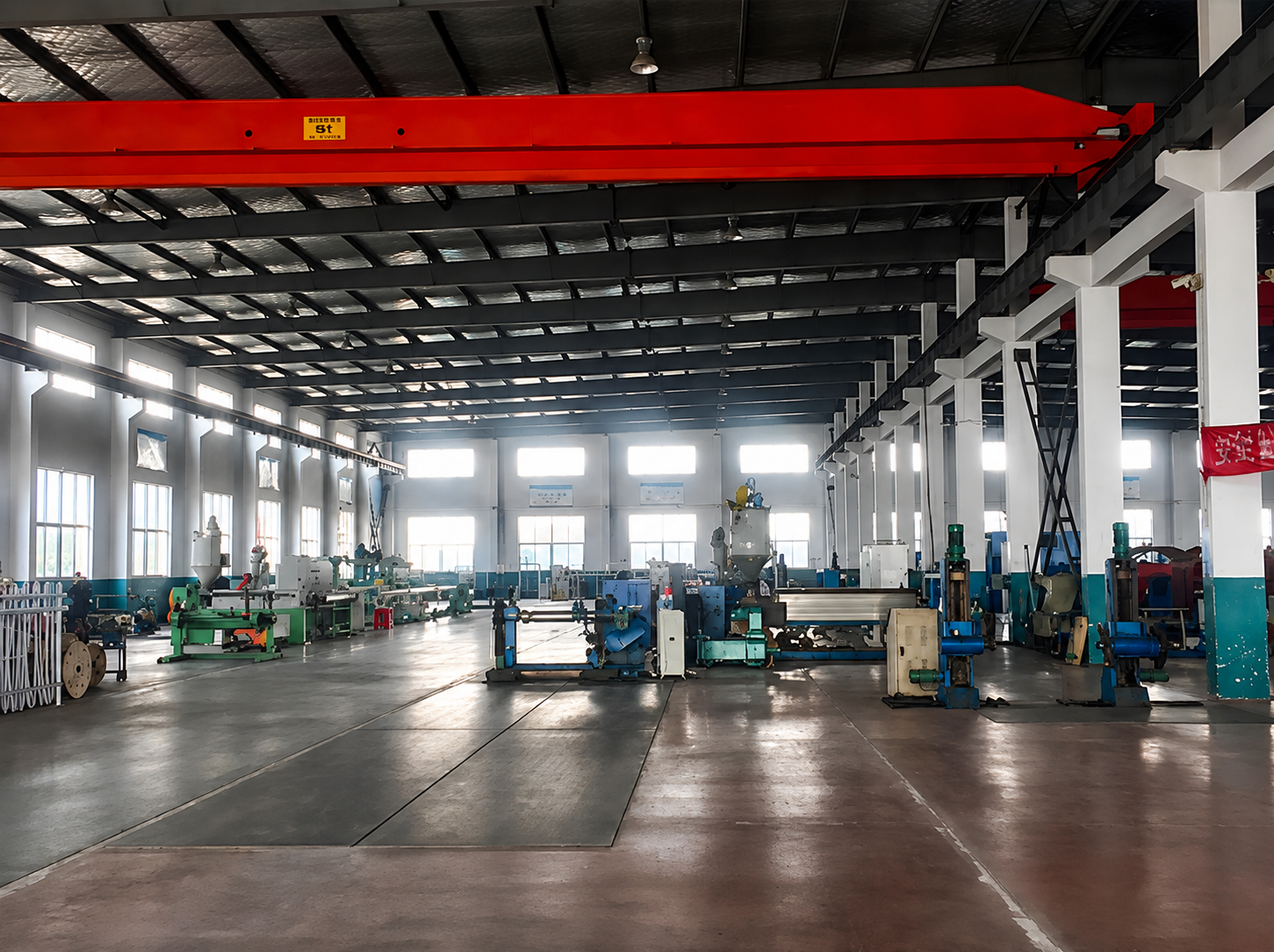
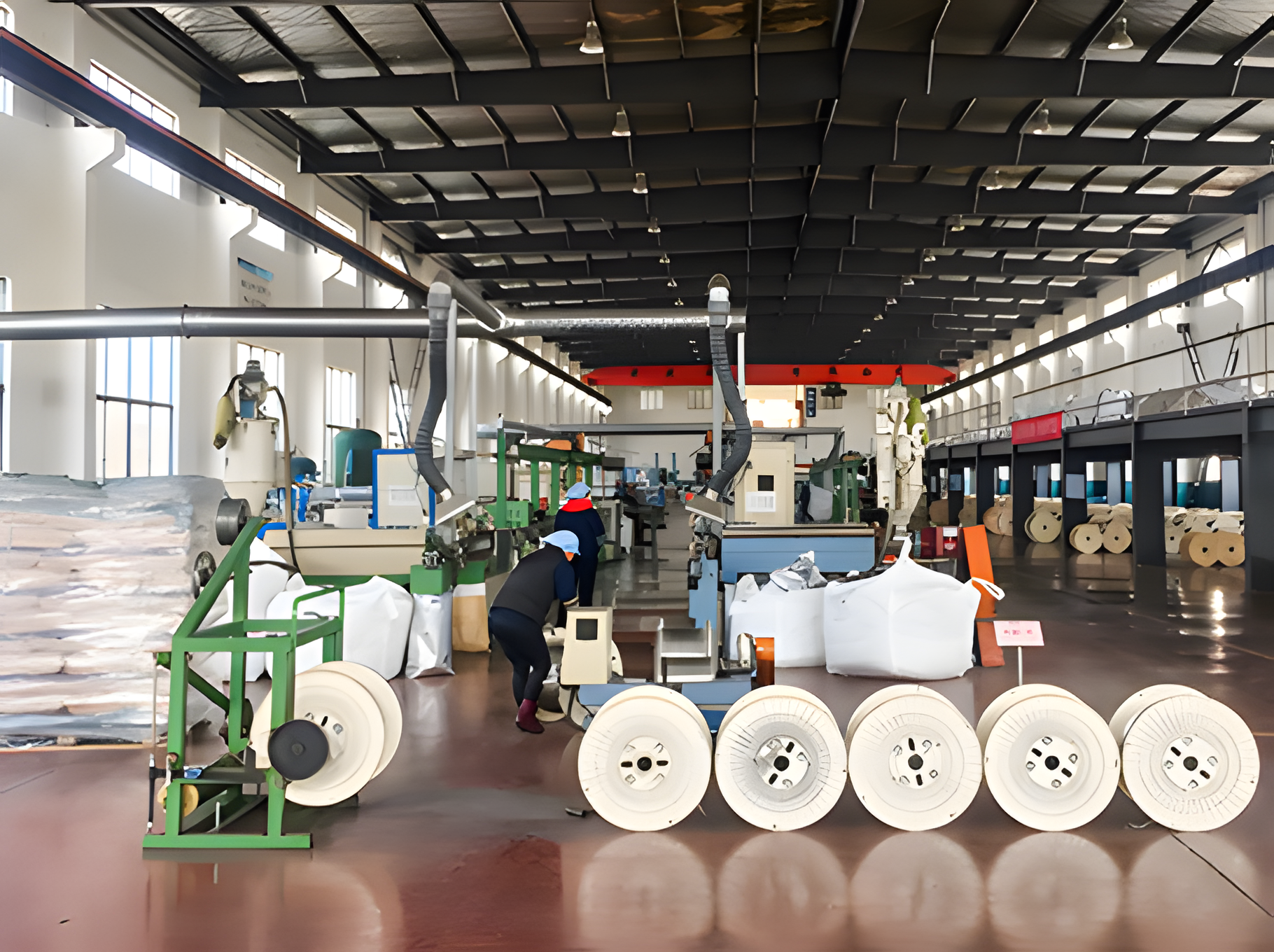
Motor lead wire carries the winding connections out of the stator to the terminal box, and it lives in the hottest, most cramped part of the machine. We build cable in Shanghai and offer this product in three insulation systems.
Send the motor’s insulation class and the conductor size. You get a construction recommendation rather than a catalogue page.
Request a Quote
Your enquiry goes straight to the engineer who prices it.
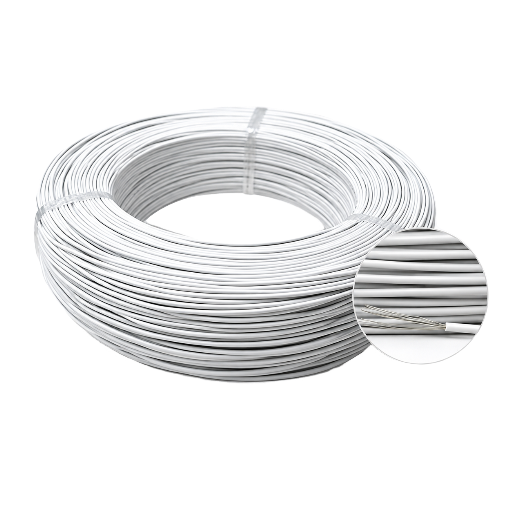
Motor Lead Wire Constructions We Manufacture
Three insulation systems, each a distinct model. The machine drives the choice, not preference.
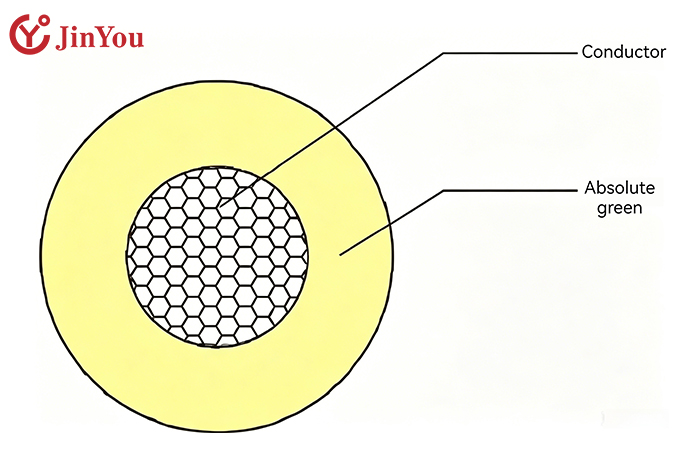
Cross-section of the construction: a stranded conductor inside the insulation layer.
Wire Specifications
JHG(F)X
Silicone rubber or fluoroplastic insulated motor lead wire, 0.5–16 mm². The general-purpose construction for F-class and H-class machines.
JHG(F)XP
The shielded version of the same construction. Specified where the lead-out run shares space with signal or drive wiring.
JYJ125(150)
Irradiation cross-linked flame-retardant polyolefin insulated motor lead wire, 0.5–120 mm². The only one of the three that reaches large cross-sections.
All three sit in our special cable range, which is where the rest of our non-standard constructions live.
Where this wire sits, and what it is not
Inside the machine
It is the lead-out wire inside the machine, running from the winding connections to the terminal box through the frame exit. Searches for electric motor leads and for motor lead cable land here.
Not the drive-to-motor supply
It is not the drive-to-motor supply cable, which is a separate specification. Our frequency conversion cable range covers the control-circuit side of a variable frequency drive, and the two are not interchangeable.
Not magnet wire
It is not magnet wire. Magnet wire is the enamelled conductor wound into the coil; lead wire is the flexible insulated wire spliced to the coil ends.
Not building wire
It is not building wire. The ratings on this page are wire ratings, not installed circuit ampacity in a raceway, and treating one as the other is the wrong answer at the terminal box.
The distinction matters commercially, not just semantically. It is confused often enough that experienced people correct each other about it in public.
If the category boundary catches professionals, it is worth stating plainly on a product page.
“On a machinist forum thread about replacing the wire inside a motor, a long-standing contributor answered ‘magnet wire’, was corrected by another member, and conceded: ‘D’oh… I see it now. Yes, the term is “lead wire” as he said.’”
Insulation Systems Compared: Silicone Rubber, Fluoroplastic and Cross-Linked Polyolefin
Temperature is the headline number, and it is rarely the deciding one. Buyers searching for silicone insulated wire or for SRML wire are usually solving a mechanical problem as much as a thermal one, because duty at the frame exit and inside the terminal box decides as often as heat does.
| Property | Silicone rubber | Fluoroplastic | Irradiation cross-linked polyolefin |
|---|---|---|---|
| Our model | JHG(F)X and shielded JHG(F)XP | JHG(F)X, fluoroplastic variant | JYJ125(150) |
| Our published temperature range | −60 °C to +180 °C | −40 °C to +260 °C | Confirmed against your order |
| Our published cross-section range | 0.5–16 mm² on JHG(F)X; for JHG(F)XP, not published — confirmed against your order | 0.5–16 mm² | 0.5–120 mm² |
| Flexibility and corrosion resistance | The reason this construction is specified | Retained across the widest span | Good, with flame retardance added |
| Where the trade-off falls | Soft: abrasion at the frame exit is the exposure to design around | Highest thermal margin of the three | Reaches 120 mm² where the other two stop at 16 |
| Shielded version available | Yes, JHG(F)XP | Yes, JHG(F)XP | Ask at enquiry |
Why the abrasion column is not a footnote
The repair standard for rotating machines singles out one mechanical hazard for motor leads by name. It says leads “should be protected from abrasion at the frame exit and from any sharp edges”.4
That is the same axis on which the published characteristics rate bare silicone weakest. The lead wire table in the motor service association’s technical manual — credited in the manual itself to a wire manufacturer rather than to a standards clause — rates bare silicone rubber Poor on abrasion and Fair on oil, while rating the same material with a glass braid Excellent on abrasion — and 600 V rather than 300 V at 150 °C.5
Silicone does not lose on temperature.
It loses on mechanical and chemical duty, which is exactly what a frame exit imposes. The space agency’s own wire-insulation guide reaches the same verdict from the other side, listing poor cut-through resistance against silicone’s excellent low-temperature flexibility.10
A braid buys you abrasion resistance and a higher voltage rating at the same temperature; leaving it out costs you both. Ask us whether the construction you are quoting carries one.
The Thermal Headroom Ladder: what each authority asks of the lead wire
The Thermal Headroom Ladder puts three documents against one question — “how hot does the lead wire have to be rated?” — and they answer it differently at every rung. Read across the Thermal Headroom Ladder before you write a number into a specification.
| Motor class | Meet-or-exceed reading | Association table minimum | Chinese annex mapping | Wire rating that clears the whole row |
|---|---|---|---|---|
| Class B, 130 °C | 130 °C | 90 °C | 90 °C maps to B(130) | 130 °C |
| Class F, 155 °C | 155 °C | 125 °C | 125 °C maps to F(155) | 155 °C — our silicone at +180 °C clears it |
| Class H, 180 °C | 180 °C | 150 °C | 150 or 180 °C maps to F and H | 180 °C — our silicone at +180 °C clears it |
| Class R, 220 °C | 220 °C | 200 °C | no row above Class H | 220 °C — our fluoroplastic is rated +260 °C |
Two things the Thermal Headroom Ladder is not.
It is not a claim of class coverage: we publish for F-class and H-class machines, and the B and R rows are here because the readings diverge there too.9 The Thermal Headroom Ladder is not a certification either — the right-hand column is a wire rating, and only a tested system carries a class.5
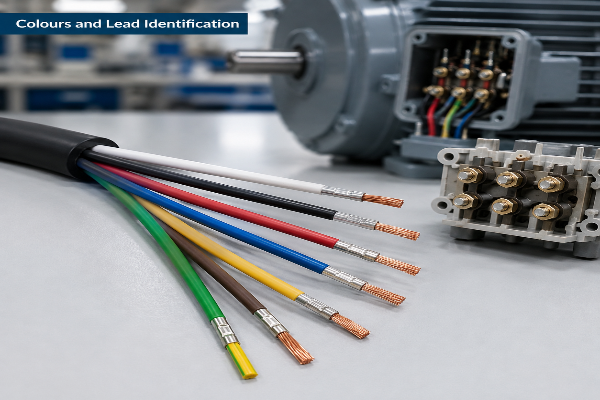
Colours and Lead Identification
Supplied in white, black, red, blue, yellow, brown, green and yellow/green.9 Tell us the set you need per motor and we run the colours together.
SYS.VISUAL // 01
TECHNICAL SPECIFICATIONS & HAZARDS
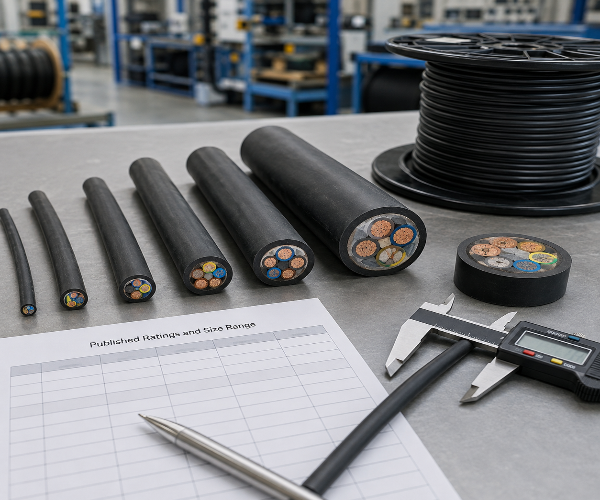
Published Ratings and Size Range
If you arrived looking for a motor lead wire size chart or for SRML wire specs, this is it: the ratings we hold, and nothing filled in around them.
Factory Electrical Tests in Our Process
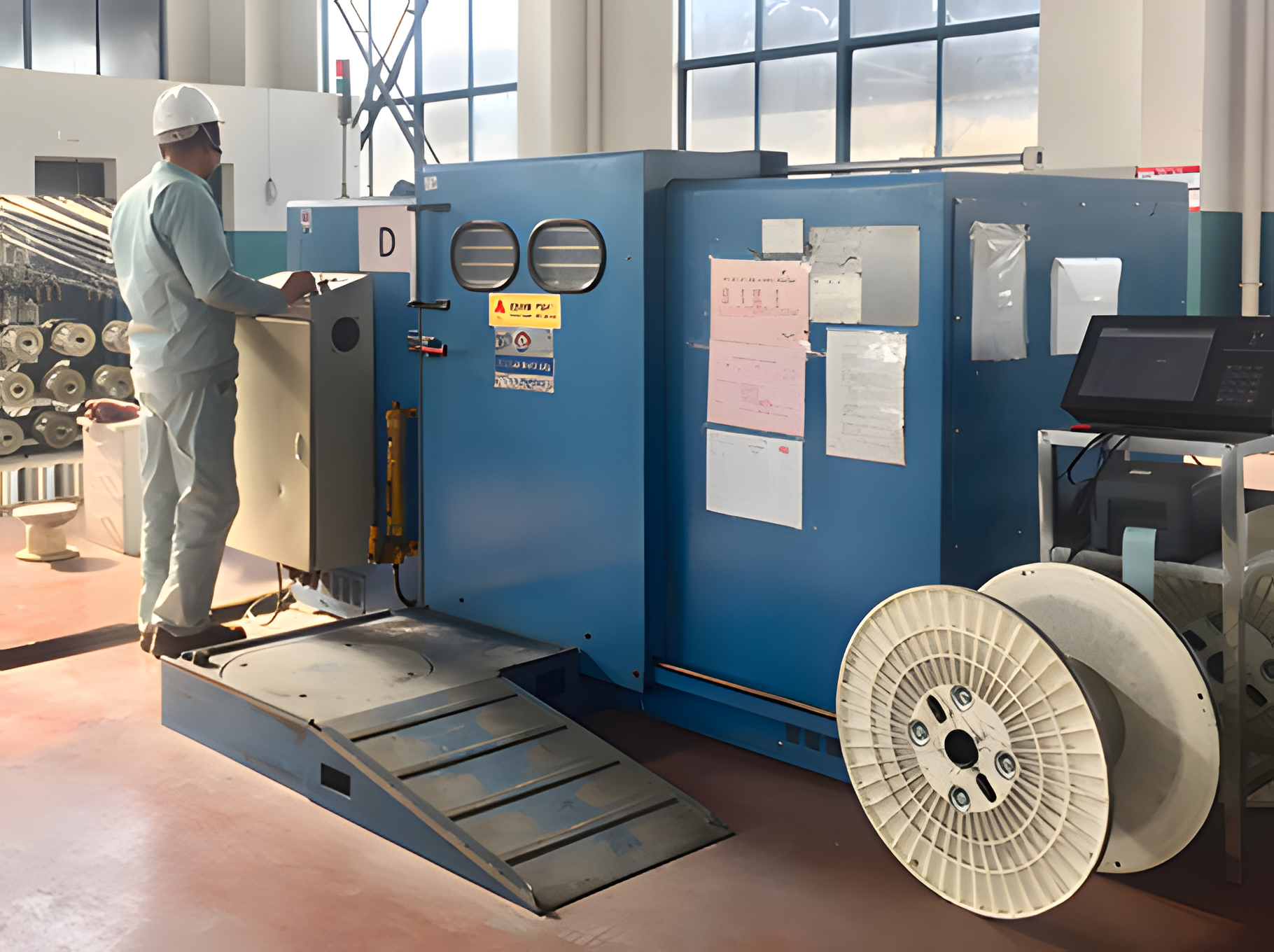
Two electrical tests sit in our process, and we publish what each of them is applied to rather than leaving you to assume it.
- Every production length passes a 4000 V AC 50 Hz spark test on the insulation, with no breakdown.9
- The finished product withstands a 600 V AC power-frequency test for one minute with no breakdown.9
- Production lengths are identified and packed against the order, colour by colour.
- A type test report and a certificate of conformity are supplied with your shipment on request.
What is not on that list is as deliberate as what is. We do not publish a conductor plating, a wall thickness or an ampacity figure, because we would be estimating, and an estimate on a datasheet is what fails a buyer six months later at the terminal box.
What no wire-level test can do
A material rating never establishes a machine’s class. The motor service association states the point directly: you cannot state that a system is a particular temperature rating based simply on material matching, because the complete motor has to be tested as a system to be designated as one.5
The international standard that defines the thermal class scale says the same thing from the other direction, forbidding a material’s capability from being deduced from the class of a system it sits in.1
Limitations
So our 180 °C and 260 °C figures are wire ratings. They are inputs to your insulation system decision, and we will not dress them up as anything more.
Reading a Motor Lead Wire Specification
Three things routinely go wrong when a buyer moves between the Chinese and American vocabularies for this product. Each of them is checkable, and each has a documented source.
What the US market publishes as SRML, and where our data differs
Before the comparison is worth anything, it helps to know what the product on the other side of it is. US distributors publish SRML as a stranded tinned copper conductor, extruded silicone rubber insulation and an overall non-fraying fiberglass braid with a high temperature finish, rated 600V, and describe it as high temperature wire that may be used as motor lead wire in hazardous locations or as lead wire for electrical equipment in high temperature environments, with lighting fixtures listed among its other uses.
| Parameter | Published by US distributors for SRML | Published by us for JHG(F)X |
|---|---|---|
| Conductor | stranded tinned copper, with the tin plating stated | Not published — confirmed against your order |
| Insulation | extruded silicone rubber | Silicone rubber, −60 °C to +180 °C |
| Covering | overall non-fraying fiberglass braid, high temperature finish | Not published — ask before you specify a braid |
| Voltage | 600V | Rated up to 600 V AC or 1200 V DC |
| Temperature | 150 °C or 200 °C, split by conductor size | One published range per construction, not split by size |
| Stated uses | motor leads in hazardous locations, lead wire for electrical equipment, lighting fixtures | F-class and H-class insulated motors |
Where the right-hand column says nothing is published, we will not print an estimate in its place. Those two rows are the two questions worth putting to us in writing.
The Designation Bridge: our model code, the US name for it, and the boundary
A Chinese model code and a US trade name can describe the same construction and still not mean the same thing commercially. Each row of the Designation Bridge carries the limit of the correspondence, because that limit is what a specification actually turns on.
| Our model | What it is | Closest US vocabulary | Where the correspondence stops |
|---|---|---|---|
| JHG(F)X | Silicone rubber or fluoroplastic, 0.5–16 mm² | Sold in the US market as SRML | Construction correspondence only. We hold no UL Recognition for this model, so no style number applies to it. |
| JHG(F)XP | The shielded version of the same construction | Shielded SRML-type lead wire | We publish the shielded designation, not the shield construction, coverage or drain-wire arrangement. Ask in writing first. |
| JYJ125(150) | Irradiation cross-linked flame-retardant polyolefin, 0.5–120 mm² | Style 3271 is the one appliance-wiring style whose use field names motor leads without restriction | A construction and use correspondence, not a listing. We publish no temperature for this model, so do not read 125 or 150 as a confirmed rating. |
Designation Bridge
Look up a Chinese model designation and see what a US buyer calls it, or start from the trade name and see which of our models matches the construction. Every Designation Bridge result carries the boundary that a construction match is not a certification.
Where This Wire Is Not the Right Call
Four situations send you somewhere else, and saying so is cheaper for both of us than a returned shipment.
01
You need a drive-to-motor supply cable.
That is a different specification with its own voltage and screening requirements, and this wire is not a substitute for it. We do not publish a drive-to-motor power feeder, so tell us the drive and the run and we will say whether we can quote it rather than sending you a lead-out wire. Do not mistake it for our frequency conversion cable, which is the control cable for a frequency converter and a third product again.
02
The run flexes continuously or twists.
Continuous motion is a different duty from a fixed lead-out, and a lead-out construction does nothing for a moving cable. Look at robot and flexible cables instead.
03
You are carrying signals rather than motor phases.
Instrumentation duty has its own pair and shield requirements; that job belongs with computer and instrument cables instead.
04
Your project needs a named third-party approval.
We publish factory test results and supply a type test report on request; if your specification requires a listing held against a named scheme, ask us before you design us in rather than after.
Motor Lead Wire Engineering Tools
Advanced Selector & Configurations
Motor Lead Wire Construction Selector
Enter the motor your lead wire has to live inside. The selector returns the Jinyou construction that carries the most continuous temperature headroom over that motor’s insulation class limit, and tells you where the limit comes from.
Designation Bridge
Look up a Chinese motor lead wire model and see what a US buyer would call it, or start from the US trade name and see which Jinyou model matches the construction. Every result carries the boundary that matters: a construction match is not a certification.
Motor Lead Wire RFQ Builder
Fill in what you know. The builder writes the enquiry text for you, scores how complete it is, and lists exactly which fields are still missing so a quotation does not stall on a follow-up email.
Motor Lead Wire FAQs
Comprehensive technical specifications, engineering parameters, and application standards for industrial motor lead configurations.
SRML wire stands for Silicone Rubber Motor Lead and is the US trade shorthand for a silicone-insulated lead-out wire, generally with a glass braid over it. It sits in the wider high temp wire family, but it is a market name rather than a certified designation, and the same four letters map to several different style numbers with different temperature and size ranges. Our silicone JHG(F)X is the same product class; the model code is what fixes the specification.
Our silicone rubber construction is published at −60 °C to +180 °C and our fluoroplastic construction at −40 °C to +260 °C. Those are wire ratings measured on the conductor, not the ambient the motor runs in. The class figure for an insulation system is a hot-spot number, which is a different quantity again.
Three authorities answer this, and they do not agree. Knowing that before you write a specification is worth more than any single number.
Diverging Standards
The ANSI-recognised repair standard says the lead wire should meet or exceed the machine’s rated current, temperature class and voltage, and a US government model repair specification says the same in mandatory language.
The motor service association’s technical manual publishes 150 °C as the minimum for a Class H, 180 °C system, on the ground that the lead wire may be a secondary component of the insulation system. The same four pairs circulate elsewhere in the market, credited to a different source.
The Chinese product standard for motor winding lead-out wire carries its own selection annex, which maps 90 °C to Class B, 125 °C to Class F and 150 or 180 °C to Classes F and H — and notes that the lead sits at the coolest part of the winding, so its conductor temperature is not the machine’s hot-spot figure.
Our Specification Capability
Our silicone at +180 °C satisfies all three readings for a Class H machine.
Our fluoroplastic is rated +260 °C, above both of the readings that reach a Class R machine — the meet-or-exceed rule, and the same association table’s own Class R row, which sets a 200 °C minimum for a 220 °C system. The Chinese annex stops at Class H and does not speak to it. Our published class coverage stays F and H; this is the wire rating answering a question about the machine, not a claim about the machine.
AI & Market Misconceptions
Specify to the stricter reading and the question stops mattering.
A fourth position circulates in the market, and it is the one that turns up in AI answers: at least one US distributor selection guide states that Class H motors require a 200 °C silicone appliance-wiring style. That is a stocking convention built around the styles a distributor carries, not a requirement any of the three readings above make.
If your specification names a style number, put it in the enquiry. We will tell you whether our construction matches it, rather than implying a listing we do not hold.
Magnet wire is the enamelled conductor wound into the coil.
Motor lead wire is the flexible insulated wire spliced to the coil ends and run out to the terminal box.
VFD cable, as the market uses the term, is the supply cable outside the machine, running from the drive to the motor terminals.
Our own frequency conversion cable is a fourth thing again: the control cable for a frequency converter, not the feeder to the motor.
Different products with different specifications. Buying one against the other’s datasheet is a fitness-for-purpose error, and the trade name alone will not tell you which one you are holding.
The digits line up with conductor operating temperatures, not with thermal classes: the Chinese industry series for motor winding lead-out wire defines separate parts at 125 °C and 150 °C. We publish no rating for this model, so we confirm it against your order rather than let a model code stand in for a specification.
Because a current figure without its conditions is not information. The motor service association publishes five different ampacities for one conductor size depending on the wire’s temperature rating, and prefaces the table with eleven variables that can greatly affect the answer. Its own note calls the values recommended minimums.
An inspector association’s worked example makes the size of the effect concrete: one 2 AWG copper 90 °C conductor rated 130 A by table carries 60.32 A once a 68 °C ambient and six bundled conductors are applied.
Send us the installation and we calculate the figure with your quotation.
0.5–16 mm² on JHG(F)X and 0.5–120 mm² on JYJ125(150); for the shielded JHG(F)XP the cross-section range is not published — confirmed against your order. Colours are white, black, red, blue, yellow, brown, green and yellow/green. For a shielded lead, tell us what the shield has to do and we will confirm the construction in writing before you specify it.

